
Your balcony floor is more than just a surface; it’s a technical challenge that most retailers aren’t brave enough to explain properly. Whether you’re researching artificial grass for balcony uk installations or just looking for a way to hide depressing concrete, the technical jargon can be a minefield. You want a lush escape, but the fear of water pooling or failing to meet strict fire safety standards often leads to indecision. We understand that hesitation because a small green space shouldn’t come with a high risk of building damage or non-compliance.
This is our frank 2026 guide to small green spaces, designed to give you the honest facts without any high-pressure sales tactics. You’ll learn the truth about what actually works on a high-rise versus a standard terrace and how to spot quality that lasts. We’ll preview the essential fire ratings you need to know, the best ways to ensure perfect drainage, and how to create a safe, pet-friendly oasis that stays green all year round. By the end, you’ll have the quiet confidence to transform your space into a foundational element of your home’s character.
Key Takeaways
- Transform a sterile concrete floor into a lush, low-maintenance retreat that enhances your urban living environment.
- Understand the technical essentials of artificial grass for balcony uk, from crucial fire safety ratings to drainage solutions that prevent water damage.
- Compare the real-world costs and upkeep of grass against traditional decking and tiles to see which truly fits your lifestyle.
- Master a simple, no-nonsense installation process that requires minimal tools and focuses on proper surface preparation for a flawless finish.
- Identify the specific fibre qualities and pile heights that prevent flattening, ensuring your green space remains resilient and attractive for years to come.
Why Artificial Grass is the Smartest Choice for UK Balconies
Living in a UK city usually means your outdoor space is a rectangle of grey concrete or weathered timber. It’s uninspiring and rarely used. Choosing artificial grass for balcony uk projects is about more than just aesthetics; it’s a practical way to reclaim a dead space. You aren’t just laying plastic; you’re creating a low-maintenance retreat that offers a genuine psychological boost every time you look out the window. It turns a cold, industrial platform into a foundational part of your home’s character.
The history and development of artificial turf has moved rapidly beyond the neon-green plastic of the past. Modern fibres are engineered to mimic real fescue, using a mix of blade shapes and “thatch” layers to create a realistic texture. It feels soft underfoot and looks natural, debunking the old “tacky” myth that often surrounds synthetic products. High-quality options now feature various shades of green and tan to replicate the depth of a traditional lawn.
Attempting real grass on a high-rise is a mistake you’ll only make once. Lugging a lawnmower through a living room isn’t just a chore; it’s a logistical nightmare. Beyond the cutting, real turf requires heavy soil that retains moisture, adding significant weight to your building’s structure. Artificial alternatives give you the greenery without the weight or the petrol fumes. It’s a clean, straightforward solution for urban living.
The Problem with Concrete and Timber
Concrete is a heat sink that radiates warmth long after the sun goes down, making small balconies uncomfortably hot in summer. In the winter, it looks cold and bleak. Timber has its own issues in our damp climate. North-facing balconies often see decking covered in slippery moss and algae within a single season. Artificial grass provides a protective barrier, preventing direct foot traffic from wearing down the original surface while offering a slip-resistant, comfortable finish that looks tidy in any month.
Year-Round Performance in British Weather
British weather is famously inconsistent, but your balcony shouldn’t be. High-quality turf is UV stabilised to prevent fading during those rare summer heatwaves. It’s also frost-resistant, so the fibres won’t become brittle or snap during a January freeze. When the sky is that familiar shade of leaden grey, having a permanent green view is the best antidote to a dull morning. Installing artificial grass for balcony uk environments ensures you have a vibrant, quick-draining space that requires nothing more than the occasional brush to look its best.
The Technical Bits: Pile Height, Drainage, and Fire Safety
Technical specifications aren’t just for industry professionals; they’re your best defense against a failed project. When selecting artificial grass for balcony uk installations, you need to look past the colour and focus on the engineering. It’s about how the product handles weight, water, and heat. Getting these details right ensures your small green space remains a foundational element of your home’s character rather than a maintenance headache.
Choosing the Right Pile Height
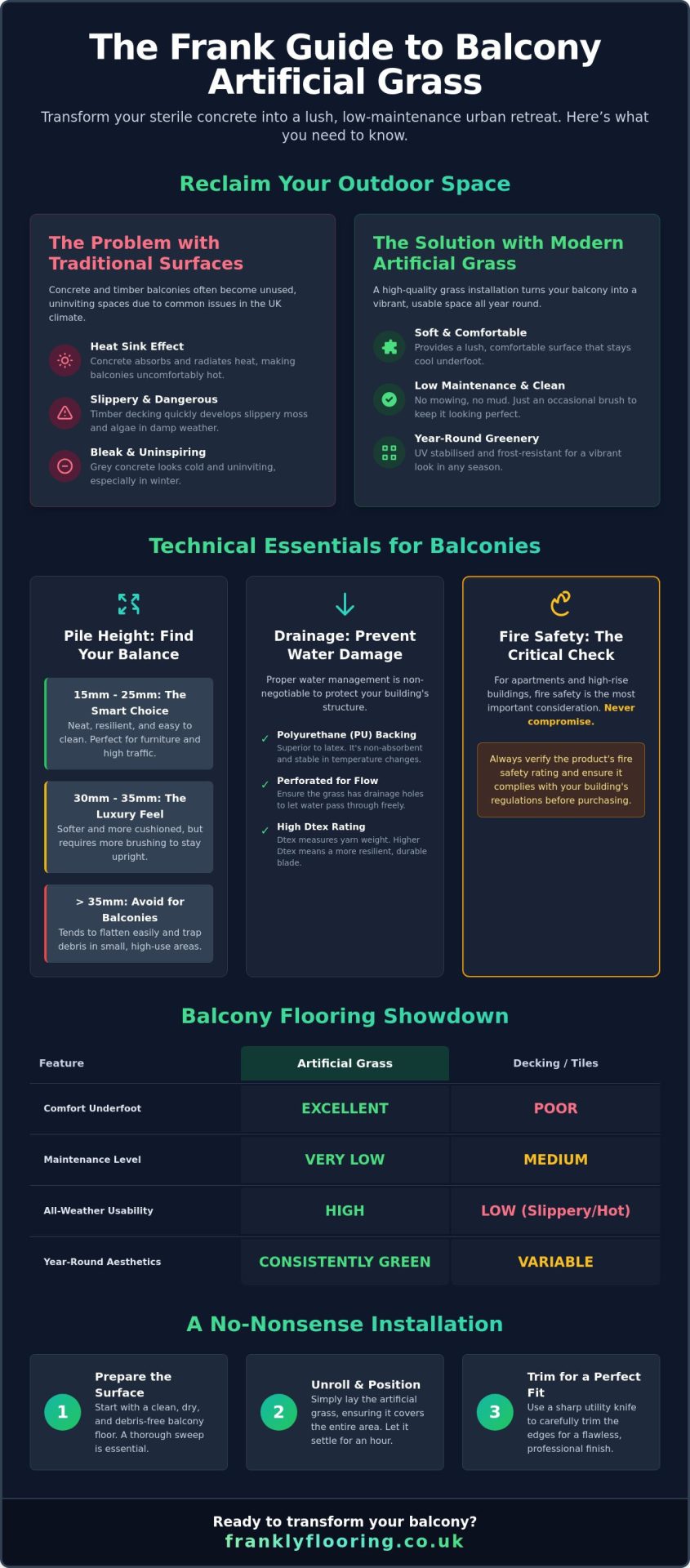
In a confined space, the height of the grass blades significantly impacts both look and utility. A 15mm to 25mm pile height is often the smartest choice for balconies. It’s neat, tidy, and doesn’t mat down easily under the weight of a bistro set or heavy planters. If you prefer a luxury feel for barefoot lounging, a 30mm to 35mm pile offers more cushion, but it requires more frequent brushing to keep the fibres upright. Avoid anything longer than 35mm in small areas. Long fibres trap more debris and can quickly look flattened and messy in high-traffic zones.
Drainage and Backing Material
Water management is critical to prevent the “puddle effect” and protect the building’s structure. Most balconies are designed with a 1% fall to guide rainwater toward a drain. Your grass must support this. Polyurethane (PU) backing is generally superior to traditional latex for balconies because it’s non-absorbent and handles temperature fluctuations without expanding or contracting. Ensure the product has clear drainage holes to allow water to pass through to the floor below. Dtex is the weight of the yarn used in the grass. A higher dtex usually indicates a more resilient blade that can withstand consistent use. If you’re comparing different weights and textures, browsing our range of artificial grass can help you see how these specs translate to real-world durability.
Fire Safety and Building Regs
This is the most overlooked aspect of balcony projects, yet it’s the most vital. Following the Grenfell Tower fire, UK regulations for external materials have tightened significantly. For buildings over 18 metres in height, and potentially 11 metres under newer proposals, materials must be non-combustible. For standard balconies, look for a Cfl-s1 fire rating. This European standard indicates the grass is fire-retardant and produces minimal smoke if exposed to heat. Always check your leasehold agreement or consult your building manager before starting. There is a world of difference between a standard domestic rating and the compliance required for high-rise living. Choosing a safe, compliant product isn’t just about following rules; it’s about long-term peace of mind for you and your neighbours.
Artificial Grass vs. Decking vs. Outdoor Tiles: A Frank Comparison
Choosing the right flooring for your balcony is a long-term commitment. While many homeowners default to traditional timber decking or stone tiles, these materials often come with hidden challenges in a high-rise or urban setting. When you evaluate artificial grass for balcony uk installations against these alternatives, you’re looking at a balance of weight, upkeep, and initial investment. It’s about finding a surface that fits your lifestyle without demanding your entire weekend for maintenance.
Outdoor tiles are undeniably durable, but they are heavy and require a professional hand for a safe, level finish. On the other hand, timber decking offers a classic look but often struggles with the damp, stagnant air found on many recessed UK balconies. Artificial turf sits in the middle ground. It provides the softness of a carpet with the resilience of an outdoor product, making it the most comfortable choice for pets and bare feet. It doesn’t get as scorching hot as stone in the summer, nor as icy as wood in the winter.
Maintenance and Upkeep
The “set and forget” nature of synthetic turf is its greatest strength. While wood needs annual oiling, staining, and sanding to prevent rot, grass simply needs an occasional brush to keep the fibres upright. In the damp UK climate, timber often develops slick patches of algae that become a trip hazard. Stone tiles are better, but their porous nature means spills can leave permanent stains if not scrubbed immediately. With grass, most spills simply wash through the drainage holes we discussed earlier, making it a far more forgiving surface for social spaces.
Installation Complexity
Weight is the silent deal-breaker for many balcony projects. Stone and porcelain tiles add significant load to a building’s structure, which might require a structural assessment before you even begin. Artificial grass is the lightweight champion. It’s easy to transport up a lift or stairs and can often be installed as a straightforward DIY project. You can read more about the broader artificial grass pros and cons to see how it stacks up for your specific home. Choosing grass means you don’t need heavy machinery or specialist wet-cutting tools, keeping the process stress-free from start to finish.
How to Install Artificial Grass on a Balcony: A No-Nonsense Guide
Installing artificial grass for balcony uk projects is a different beast compared to garden work. You aren’t digging up turf or hauling tonnes of aggregate through the house. It’s a “clean” job that feels more like laying a heavy-duty carpet than traditional landscaping. The focus shifts from groundworks to precision and protecting the building’s structural integrity. You don’t need a spade, but you do need a steady hand and a sharp blade.
Small spaces don’t leave much room for error. If you cut a piece too short on a large lawn, you might hide it in the perimeter. On a compact balcony, a jagged edge or a 5mm gap is all you’ll see every time you look out the window. It’s about getting the foundational preparation right so the final result looks like a professional fit, even if you did it yourself on a Saturday morning.
Preparation and Measuring
Before you even unroll the grass, the surface must be spotless. Scrub the concrete or timber to remove any moss, algae, or loose grit. Any debris left underneath will eventually create a visible bump in the surface. If you have drainage pipes or irregular corners, measure these specifically. We recommend ordering slightly more than you need to allow for a 50mm “overhang” during the initial layout. Once the grass is on the balcony, leave it to acclimatise for at least 24 hours. This allows the backing to settle and the fibres to relax after being tightly rolled. It’s a simple step that prevents the grass from shifting or rippling after you’ve glued it down.
Gluing and Finishing
Securing the edges is where most people go wrong. Never use pins or pegs on a balcony. Doing so will puncture the waterproof membrane of the building, leading to catastrophic leaks for you or the neighbours below. Instead, use a specialist outdoor adhesive or high-bond double-sided tape designed for synthetic turf. Apply the adhesive around the perimeter, but leave gaps to allow water to reach the floor’s natural drainage points. If you have a larger terrace that requires a seam, take your time to align the pile direction of both pieces. When finished, give the grass a vigorous brush against the grain to stand the fibres up. Unlike garden installs, you don’t usually need silica sand infill on a balcony. The weight of the grass and the adhesive are enough to keep it stable in these more sheltered environments. If you are ready to begin, you can order your artificial grass today and start your transformation.
Getting it Right: Quality Solutions from Frankly Flooring
Selecting artificial grass for balcony uk projects shouldn’t feel like a gamble. At Frankly Flooring, we’ve built our reputation on being direct and transparent, providing the kind of technical craftsmanship you can trust for your property. We don’t believe in high-pressure sales tactics or confusing you with unnecessary filler. Instead, we focus on the integrity of our fibres and the long-term satisfaction of our customers. You’ve already learned about the critical fire safety and drainage requirements; now it’s about finding a product that actually meets those standards without compromise.
Our family-run expertise means we view every order as a personal project. We know that a small green space is a foundational element of your home’s character, not just a commodity. That’s why we curate our selection to ensure the fibres are resilient enough to handle foot traffic and heavy planters without flattening after one summer. We offer professional depth without the typical corporate coldness, acting as a reliable advisor to help you navigate the technical nuances of your installation.
Why Order from Frankly Flooring?
When you order from us, you get direct-to-door UK delivery and a team that understands the complexities of urban landscaping. We don’t hide behind jargon or “marketing speak.” We’ll tell you straight if a specific pile height isn’t right for your intended use or if your drainage plan needs a rethink based on your building type. Our selection is strictly vetted to meet current British safety standards, including the Cfl-s1 fire ratings we detailed earlier. If you have a question during your DIY process, we’re here with grounded, practical answers to ensure your project is a success.
Complete Your Balcony Oasis
A green floor is just the beginning of your transformation. To truly reclaim your outdoor space, you need to think about how the surface works with the rest of your home. You can easily pair your new turf with our range of quality furniture to create a cohesive outdoor room. Consider how a bistro set sits on the pile or how you might use outdoor rugs to define different zones for lounging and dining. These small details turn a simple floor covering into a lived-in retreat.
Final checks are simple but essential for a professional finish. Ensure your edges are bonded correctly, your drainage paths are clear of adhesive, and your furniture is positioned to avoid permanent crushing of the fibres. When it’s all together, your balcony won’t just be a place to store items or dry washing. It will be a safe, compliant, and lush retreat that makes your property the envy of the street. It’s about precision and quality over speed, and we’re proud to help you get it right.
Ready to Reclaim Your Urban Retreat?
Transforming your balcony from a grey concrete slab into a vibrant, low-maintenance escape is more than just a home improvement project. It’s about making a technical choice that respects building regulations while prioritising your daily comfort. You now understand the importance of Cfl-s1 fire ratings, the necessity of proper drainage fall, and why a shorter pile often yields better long-term results for compact spaces. Choosing the right artificial grass for balcony uk installations ensures your retreat remains lush and resilient for years to come.
At Frankly Flooring, we bring over 20 years of flooring expertise to every project. As a family-run UK business, we pride ourselves on providing the frank, honest advice you need to get the job right the first time. We offer direct national delivery, ensuring high-quality fibres arrive at your door without the typical corporate coldness. We value integrity and your long-term satisfaction over quick wins, treating your home as if it were our own.
Browse our full range of Artificial Grass and start your balcony transformation today. Your new green space is just a few measurements away, and we’re here to guide you through a stress-free experience from start to finish.
Frequently Asked Questions
Do I need a special underlay for artificial grass on a balcony?
You don’t strictly need a special underlay for most balcony installations, as the concrete or timber provides a solid base. However, a drainage cell or a thin shock pad can be useful if the surface is uneven or if you want a softer feel underfoot. It also helps air circulate, which prevents moisture from sitting trapped between the grass backing and the floor. This simple addition can extend the life of your project.
How does water drain away from artificial grass on a concrete floor?
Water drains through small, pre-punched holes in the latex or polyurethane backing of the grass. Once it passes through, it follows the natural 1% fall of your balcony floor toward the drainage outlets. This is why it’s vital to keep your floor clear of debris before installation. It ensures that rainwater doesn’t pool and can move freely along the original structural path without causing issues.
Is artificial grass on a balcony safe for dogs and cats?
Artificial grass for balcony uk installations is perfectly safe for pets and often becomes their favourite lounging spot. It’s durable enough to handle constant use and easy to sanitise if accidents happen. Use a pet-friendly disinfectant and rinse the area with a watering can to ensure liquids pass through the drainage holes. High-quality fibres are non-toxic, providing a safe, green environment for your animals to enjoy the outdoors.
Will artificial grass cause my balcony to rot or grow mould?
Synthetic turf won’t cause rot or mould if the underlying surface has a proper drainage slope. Mould usually grows when organic debris, like leaves or pet hair, gets trapped in the fibres and stays damp. Regular brushing and ensuring water can flow freely to the balcony’s drains will keep the area dry and hygienic. Choosing a non-absorbent polyurethane backing also helps prevent moisture retention in our damp climate.
Can I put heavy garden furniture on artificial grass?
You can certainly place heavy furniture on your balcony grass, though it will likely flatten the pile over time. To prevent permanent indentations, use furniture feet protectors to spread the weight and move the items slightly every few weeks. If the grass does look flat, a quick brush with a stiff broom will usually stand the fibres back up, especially if you chose a resilient, high-density pile.
How do I clean artificial grass on a high-rise balcony?
Cleaning is straightforward and doesn’t require heavy equipment. You can use a standard vacuum cleaner to remove dust and dry debris, or a stiff brush to lift the pile. For a deeper clean, use a damp cloth or a watering can with a mild detergent. Avoid using a pressure washer or a hosepipe on a high-rise, as the excess water can spray onto balconies below and frustrate your neighbours.
Is artificial grass on a balcony a fire hazard in the UK?
Artificial grass for balcony uk projects isn’t inherently dangerous, but you must choose a product with a Cfl-s1 fire rating. This ensures the material is fire-retardant and produces minimal smoke if exposed to heat. UK high-rise buildings have strict regulations regarding external materials. Always check your building’s specific safety policy to ensure your chosen turf complies with current post-Grenfell standards for residential properties.
Can I install artificial grass over existing balcony decking?
Installing over decking is possible if the wood is structurally sound and free from rot. You should ensure there are gaps between the deck boards to allow for drainage, as you don’t want water sitting on the timber. It’s also wise to lay a thin weed membrane or a drainage underlay first. This prevents the “striped” look where the grass might settle into the grooves of the decking over time.