
Most hallway carpets are effectively disposable because they aren’t engineered for the 4,000 steps the average UK household tramples into them every single week. It’s a common sight in British homes. That flattened, greyish walking line that develops between the front door and the stairs is enough to make any homeowner lose heart. You’ve probably felt the frustration of trying to scrub out a muddy footprint only to find the stain has become a permanent feature of your decor.
Frankly, you shouldn’t have to settle for confusing technical jargon when you just want a heavy duty hallway carpet that actually does its job. This guide provides the honest truth about what makes a floor truly durable, moving past the marketing fluff to focus on real-world performance. We will explore the specific materials that stand up to heavy footfall and explain which features are actually worth your hard-earned money.
Key Takeaways
- Understand why hallways face ten times the footfall of other rooms and what a true “heavy domestic” rating means for your home’s longevity.
- Discover why choosing a heavy duty hallway carpet with a twist or loop pile is essential for preventing premature flattening in high-traffic zones.
- Learn why pairing your new flooring with a high-quality underlay is non-negotiable for preventing ripples and ensuring the carpet lasts for years.
- Master the “Golden Rule” of hallway maintenance and professional tips for handling inevitable British mud and spills without damaging the fibres.
- Get a frank, honest breakdown of the performance trade-offs between wool and polypropylene to find the right balance of comfort and durability.
Why Hallways Are the Ultimate Test for Any Carpet
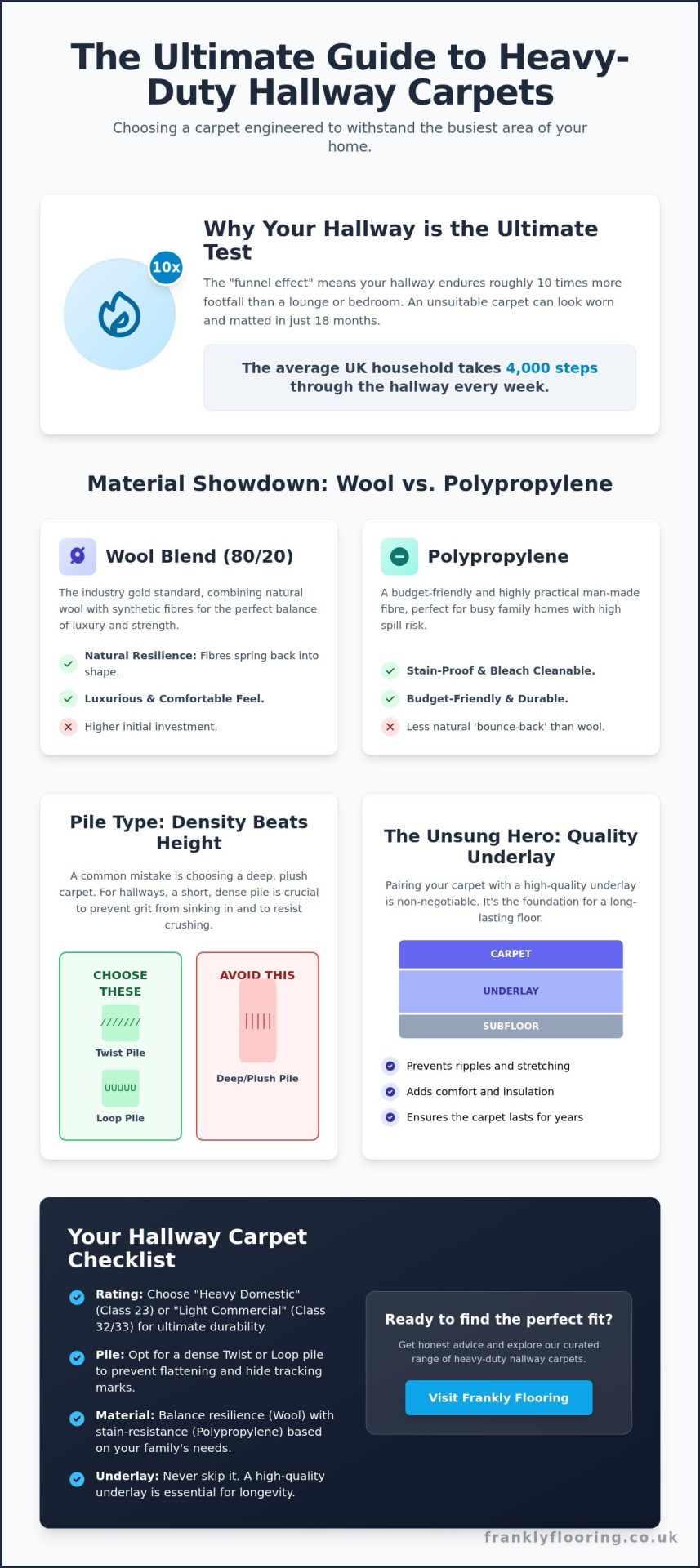
The hallway is the hardest working square footage in any British home. While a bedroom might see a few dozen steps a day, usually in soft socks or bare feet, the hallway experiences what we call the “funnel effect.” Every family member, guest, and pet is forced through this narrow corridor multiple times daily. This concentrated traffic means your hallway floor endures roughly 10 times the wear of a lounge or bedroom. If you choose the wrong material, the floor will look aged and exhausted within 18 months.
When we talk about a heavy duty hallway carpet, we aren’t just using a marketing buzzword. In a domestic setting, this label refers to a specific combination of high tuft density and resilient fibre composition. It’s about a product’s ability to bounce back after being compressed. A common mistake is opting for a “soft and deep” pile because it feels luxurious in the showroom. In a high-traffic zone, those long, loose fibres flatten almost immediately. This creates a matted, dull appearance that no amount of vacuuming can fix. Your hallway provides the first impression of your home. A crisp, well-maintained carpet suggests a house that is cared for, while a flattened one makes the entire space feel neglected.
The Science of the “Hallway Dip”
Walking in a narrow, predictable path causes significant fibre fatigue. This isn’t just about surface dirt; it’s the physical breakdown of the Carpet structure. Tracking occurs when the pile is pushed in different directions, creating visible “paths” that catch the light differently. Pile crushing is the permanent flattening of carpet fibres. To combat this, you need a dense construction where the fibres support one another, preventing them from splaying and losing their original silhouette. It’s a straightforward matter of physics.
The Reality of British Weather and Footfall
Our climate presents a unique challenge for flooring. Between the months of October and March, the average UK household brings in a substantial volume of mud, moisture, and grit. The hallway serves as the primary barrier for the rest of the house. It’s the frontline. It catches abrasive particles that can act like sandpaper on carpet fibres if they aren’t managed correctly. Because of this, cleanability is just as vital as physical toughness. A truly durable carpet must allow for the easy release of soil. It shouldn’t hold onto dampness, which can eventually compromise the primary backing and lead to delamination. We recommend looking for materials that balance aesthetic warmth with the practical ability to withstand a wet Tuesday in January.
Decoding “Heavy Duty”: The Best Materials and Pile Types
The term “heavy duty” is often thrown around by retailers to justify a higher price tag, but it has a specific technical meaning. When you are hunting for the best heavy duty hallway carpet, you should look for the “Heavy Domestic” rating. This is usually marked as Class 23 for residential use. If your home has constant traffic from kids, pets, or outdoor boots, looking for a Class 32 or 33 rating, which is technically for light commercial use, provides an extra layer of security. These ratings are based on rigorous tests for abrasion resistance and tuft withdrawal.
Many homeowners assume a thick, plush carpet is more durable. This is a common misconception. In a high-traffic zone, density is far more important than height. A short, tightly packed pile prevents grit and soil from sinking deep into the base where it can grind away at the fibres. Understanding the science of carpet fiber selection and care explains why construction matters just as much as the material itself. A dense pile also resists “crushing,” the permanent flattening that creates those unsightly traffic lanes in the middle of your hall.
Wool Blends: The Natural Choice for Resilience
Wool is the gold standard for hallways because of its natural “crimp.” This structure allows the fibres to act like tiny springs, bouncing back after being stepped on. We recommend the 80/20 rule: a blend of 80% wool and 20% synthetic fibres like nylon or polypropylene. This combination offers the luxury and fire resistance of wool with the added tensile strength of man-made materials. It is the industry standard for a reason. For more detail on how these materials compare across the home, read our guide on choosing the right carpet.
Man-Made Fibres: Bleach Cleanable and Budget Friendly
Polypropylene is a fantastic, honest alternative for busy families. Its primary advantage is that it is “solution-dyed.” This means the colour is added to the polymer while it is still liquid, so the pigment goes all the way through the fibre. You can clean most polypropylene carpets with a diluted bleach solution without worrying about white spots or fading. Modern manufacturing has improved significantly; the best man-made options no longer have that shiny, plastic look that was common 15 years ago. They are practical, cost-effective, and stand up to the rigours of a messy household.
The pile type you choose will also dictate how long the carpet lasts. “Twist” piles are excellent for halls because the yarn is tightly twisted to create a textured, hard-wearing surface. “Loop” piles, often called Berbers, are also incredibly tough and hide dirt well, though they aren’t ideal if you have cats that might snag the loops with their claws. Avoid “Saxony” or deep velvet piles in the hallway. They look beautiful in a master bedroom, but they will show every footprint and flatten within months in a high-traffic area. If you want to see these textures for yourself, you can always chat with us at our showroom to find the right fit for your home.
The Hidden Essentials: Underlay and Fitting for Longevity
Buying a high-quality heavy duty hallway carpet is only half the battle. If you pair a premium wool blend with a cheap, thin underlay, you’re essentially throwing your money away. We’ve seen carpets costing £50 per square metre look worn and flattened within 24 months because the underlay underneath failed to provide the necessary rebound. Frankly, the underlay acts as a shock absorber. In a high-traffic zone like a hallway, that absorber needs to be robust enough to handle thousands of footsteps every month without collapsing into a pancake.
One question we get asked constantly is whether you can reuse your existing underlay to save a few pounds. The answer is a firm no. Even if it looks acceptable to the naked eye, the internal structure of old underlay is usually fatigued and brittle. Reusing it can reduce the lifespan of your new carpet by as much as 35% to 40%. It’s a false economy that leads to premature wear patterns and a distinct lack of comfort underfoot. You wouldn’t put old, worn-out tyres on a brand-new car; your flooring deserves the same logic.
Choosing the Right Underlay for High Traffic
For hallways, we recommend high-density materials that won’t “bottom out” under constant pressure. While high-density PU foam is a popular modern choice for its thermal properties, rubber crumb underlay remains the gold standard for heavy-duty areas. Rubber crumb is often made from recycled tyres and is incredibly dense, providing a firm foundation that prevents the carpet from stretching or “creeping” in narrow corridors. This stability is vital for maintaining the tension provided by your carpet grippers, ensuring the fabric stays taut and flat for years.
- Rubber Crumb: Best for maximum durability and preventing stretch in long, narrow hallways.
- High-Density PU Foam (100kg/m³ or higher): Offers a slightly softer feel while still providing significant support.
- Felt and Rubber Combinations: Provides excellent sound insulation, which is helpful in echoing hallway spaces.
The Importance of a Seamless Fit
Hallways are rarely simple rectangles. They involve multiple doorways, cupboards, and often transitions to stairs, which require complex joins. A poor join is more than just an eyesore; it’s a trip hazard and a weak point where the heavy duty hallway carpet will start to fray. Professional fitting is the final 20% of the durability equation. Without the correct tensioning, a carpet will eventually “bag” or ripple as the backing relaxes over the first 12 months of use.
Our fitters use power stretchers to ensure the carpet is anchored firmly to the grippers. This prevents the unsightly waves that often appear in hallways after a year of heavy use. A well-fitted carpet should feel like a solid, integrated part of the house, not a loose covering. We take pride in hiding joins in low-light areas or under door bars to ensure the finish is as seamless as it is durable. When the fitting is done right, your flooring stays flat, safe, and looking new for much longer.
Practical Maintenance: Keeping Your Hallway Looking New
Buying a high-quality heavy duty hallway carpet is a significant investment in your home. However, even the toughest wool blends or man-made fibres will fail prematurely if they are neglected. The hallway is the primary artery of the house; it handles the highest volume of footfall and carries the most grit. To keep it looking fresh, you need a maintenance routine that focuses on prevention rather than just reaction.
The golden rule for hallways is frequency. While you might vacuum your bedrooms once a week, your hallway requires attention at least three times a week. This isn’t just about aesthetics. Walking on a carpet that contains hidden grit is like rubbing sandpaper against the fibres. Every step grinds that dirt deeper, cutting into the yarn and causing the carpet to look dull and “faded” when it is actually just damaged.
Vacuuming for Fibre Recovery
Regular vacuuming does more than remove dust; it helps with fibre recovery. For most heavy duty hallway carpet options, particularly wool twists, you should use a vacuum with a rotating beater bar. This brush agitates the pile, lifting it back up and extracting the heavy soil trapped at the base. If you have opted for a loop pile or a delicate natural weave, switch to suction only to avoid “fuzzing” the surface. A quick pass is rarely enough; three slow passes over high-traffic zones ensure you are actually pulling dirt out rather than just skating over the top.
The Power of the Entrance Mat
Prevention starts at the threshold. Statistics from the cleaning industry suggest that a well-placed entrance mat can capture up to 85% of the dirt, moisture, and salt brought in from outside. Frankly, skipping a mat is the fastest way to ruin a new floor. Consider a two-step approach: an external coir mat for scraping off heavy mud and an internal synthetic “walk-off” mat to absorb moisture. This simple addition can double the lifespan of your carpet by keeping the most abrasive materials away from the primary pile.
- Coir Mats: Best for scraping; these should be fitted into a mat well or placed just inside the door.
- Synthetic Mats: Excellent for moisture retention; look for rubber-backed options that won’t slip on your new carpet.
- Spot Cleaning: Keep a clean, white cloth and a professional carpet cleaner handy. Always blot, never rub. Rubbing spreads the stain and destroys the carpet’s texture permanently.
Finally, schedule a professional hot water extraction clean every 12 to 18 months. Even with diligent vacuuming, oils from skin and pets will eventually bond to the fibres. A professional deep clean removes these oily residues and refreshes the pile. It is a small maintenance cost that protects a floor that could otherwise cost upwards of £1,000 to replace.
If you want honest advice on which fibres handle heavy footfall with the least amount of fuss, speak to our expert fitting team today.
Finding Your Perfect Hallway Carpet at Frankly Flooring
Choosing a heavy duty hallway carpet shouldn’t feel like a gamble. At Frankly Flooring, we draw on 20 years of family-run expertise to ensure you get a product that actually survives your front door. We’ve spent two decades seeing which piles flatten and which ones stand up to the daily school run. Our curated “Heavy Domestic” range isn’t just a label; it’s a standard we verify ourselves. You can browse the full collection online, but we always suggest ordering samples first. Hallways are often narrow and lack natural light, so seeing how a swatch looks against your specific skirting boards at 4 PM is vital before you commit.
- Expert advice based on two decades in the UK flooring trade.
- Curated selections that meet genuine heavy-traffic requirements.
- Free samples delivered to your door to test under your own lighting.
- A family-run approach that treats your home with respect.
Why Buy Carpet Online with Us?
Buying carpet online often feels risky because of hidden costs. We’ve stripped those away. You won’t find “fitting surcharges” or “cutting fees” added at the final step of your basket. Our pricing is transparent from the start. We coordinate direct delivery across the UK through our network of trusted partners, ensuring your order arrives in perfect condition. The Frank guarantee is simple: if we describe a carpet as durable, it’s durable. We value our reputation more than a quick sale, which is why we only stock products we’d be happy to fit in our own homes.
Ready to Transform Your Entrance?
Measuring your hallway accurately is the first step to a successful project. Always measure to the furthest point of any doorways and add 10cm to both the length and width for cutting room. This small buffer prevents expensive mistakes during the fitting process. Many of our customers choose to pair their heavy duty hallway carpet with LVT flooring in adjacent kitchens or utility rooms for a seamless transition between soft and hard surfaces. This combination provides the warmth of carpet where you want it and the waterproof resilience of vinyl where you need it most.
If you’re unsure about quantities or which pile type suits your household’s level of activity, get in touch. We’re here to provide the honest guidance you need to make a lasting choice. Browse the collection today or contact us for a frank chat about your flooring needs.
Invest in a Hallway That Works as Hard as You Do
Your hallway is the most demanding area of your home, seeing thousands of footsteps every year. Choosing a heavy duty hallway carpet requires a balance of the right material, such as a resilient wool blend, and a high-quality underlay to absorb impact. We’ve shown that skipping on the density of the pile or the quality of the fitting only leads to premature wear and flattened fibres.
At Frankly Flooring, we don’t believe in hidden costs or complex jargon. We rely on over 20 years of industry experience to help you find a straightforward solution that lasts. As a family-run business, we take pride in providing honest advice and direct UK-wide delivery to your doorstep. You can trust our team to treat your home with the same care we’d give our own. It’s time to stop worrying about wear and tear and start enjoying a floor that stays looking fresh for years to come.
Browse our Heavy Duty Hallway Carpet Collection
Frequently Asked Questions
What is the most durable carpet for a hallway?
The most durable option for a heavy duty hallway carpet is a high-twist wool blend, typically consisting of 80 percent wool and 20 percent nylon. This combination provides the natural resilience of wool with the added tensile strength of synthetic fibres. For an even tougher surface, natural sisal is a popular choice because its coarse fibres resist wear better than almost any other material on the market.
Is wool or polypropylene better for high-traffic areas?
Wool is generally better for high-traffic areas because the fibres have a natural “crimp” that allows them to bounce back after being stepped on. While polypropylene is highly stain-resistant and budget-friendly, it’s a plastic-based material that tends to flatten permanently under heavy footfall. If you want your flooring to look good five years from now, wool’s ability to maintain its structure makes it the superior choice.
Should I use a thick or thin carpet for my hallway?
You should always choose a thin, dense pile rather than a thick, deep one for a hallway. Thick carpets might feel luxurious, but they trap significantly more grit and flatten quickly in the narrow “track” where people walk. A low-profile loop or a tight twist pile provides a stable surface that doesn’t show footprints and is much easier to vacuum on a daily basis.
How much does it cost to carpet a standard UK hallway?
For a quality heavy duty hallway carpet, you should expect to pay between £20 and £50 per square metre for the material alone. According to current UK market averages, once you add high-quality underlay at £10 per square metre and professional fitting fees, the total cost for a typical 5-square-metre hallway usually sits between £250 and £450. These figures vary based on your specific choice of wool content and the complexity of the floor layout.
Can I install heavy-duty hallway carpet myself?
You can attempt a DIY fit, but we don’t recommend it for hallways because the space often involves tricky cuts around multiple doorways and stairs. Achieving the correct tension is vital to prevent ripples, which are both unsightly and dangerous trip hazards. Professional fitters use specialized power stretchers to ensure the carpet remains taut for its entire 10 to 15-year lifespan.
What is the “Heavy Domestic” carpet rating?
The “Heavy Domestic” rating, technically known as Class 23, is an industry standard that confirms a carpet is suitable for the busiest areas of a home. To achieve this rating, the carpet must pass rigorous tests for pile weight, density, and abrasion resistance. If a carpet is only rated for “Medium Domestic” use, it’ll likely show signs of baldness or severe matting within just 12 to 24 months of hallway use.
How do I stop my hallway carpet from flattening?
The best way to stop flattening is to vacuum your carpet at least 3 times a week using a vacuum cleaner with a rotating beater bar. This mechanical action lifts the fibres before they have a chance to become permanently crushed by dirt. You can also place a high-quality coir mat at the entrance to catch 80 percent of the grit that acts like sandpaper on your carpet fibres.
Do I really need new underlay for a hallway carpet?
Yes, you definitely need new underlay because the existing material will have lost its ability to rebound after years of compression. Reusing old underlay can reduce the lifespan of your new carpet by up to 50 percent as it no longer provides a consistent foundation. A fresh, high-density 9mm or 11mm foam underlay acts as a shock absorber, protecting the carpet backing from the hard subfloor beneath.