
The most expensive, plush living room carpet in the world will still feel like a mistake if it looks flattened and worn within six months. It’s a common frustration; you want the softest texture for your feet, but you’re worried about shading, tracking marks, or that one accidental wine spill that never quite comes out. We know that choosing between the classic resilience of wool and the easy-clean nature of modern synthetics can feel overwhelming, especially when you’re trying to measure up for an online order without a showroom assistant hovering over your shoulder.
We believe in giving you the frank facts so you can find the perfect balance between underfoot luxury and the durability your household needs. This 2026 guide will walk you through the technical nuances of pile types and material benefits, helping you avoid the pitfalls of “fast flooring” that loses its bounce. You’ll learn how to select a carpet that stays beautiful through years of foot traffic and exactly how to measure your space for a stress-free delivery. It’s time to create a lounge that feels as good as it looks, without the hidden headaches.
Key Takeaways
- Learn how to select a pile height that survives heavy furniture and high footfall without losing its original texture.
- Understand the frank truth about wool versus polypropylene to find the ideal balance between natural insulation and bleach-cleanable convenience.
- Discover why a twist pile is often the smartest choice for a busy household compared to the high-maintenance luxury of a Saxony.
- Master the process of measuring and ordering your living room carpet online to ensure a perfect fit for tricky alcoves and bay windows.
- Find out why a high-quality underlay is essential for maintaining room warmth and protecting your investment from premature wear.
The Living Room Carpet Challenge: Balancing Luxury and Longevity
Choosing a living room carpet isn’t just about picking a colour you like. It’s about understanding that this floor takes more punishment than any other area of your home. While a bedroom is for sleeping, the lounge is for living. It’s where the kids play, the dog sleeps, and the family gathers for film nights. This constant activity means the material you choose has to work significantly harder than a standard Carpet in a low-traffic area.
We often talk about the ‘Sofa Test’. Because we also sell high-quality furniture, we know exactly how a heavy corner group or a solid oak sideboard can crush a delicate pile. If you choose a carpet with poor resilience, those furniture indents become permanent scars on your floor. You also need to consider ‘tracking’. This is the ‘messy’ look that occurs when footprints and hoover lines stay visible. If you’re the type of person who wants their room to look pristine at all times, a deep, velvety pile will likely drive you mad. The ‘Frank’ balance means knowing when to trade that cloud-like softness for a tighter, more resilient fibre that won’t give up on you.
Assessing Your Lounge Traffic Levels
Before you buy, be honest about your lifestyle. A ‘formal’ lounge used only for guests can handle a delicate, luxury Saxony. A standard adult household with evening use needs a medium-duty option. However, if your lounge is a high-traffic family hub with kids and pets, durability must be your primary focus. In these spaces, a dense twist or loop is the only frank choice to ensure your investment lasts more than a couple of years.
Why Lounge Carpets Differ from Bedroom Carpets
Bedroom carpets are designed for bare feet and minimal movement. Lounge carpets require superior ‘pile memory’. This is the technical ability of the fibre to spring back into shape after being compressed. Without it, your walking paths will look flattened and ‘dead’ within months. You also need to think about acoustics. A dense living room carpet dampens the sound of your TV or soundbar, stopping noise from bouncing off the walls. It also provides essential thermal insulation, keeping the largest room in your home warm during the winter months.
Decoding Carpet Piles: Saxony, Twist, and Loop for the Lounge
The way a carpet is constructed determines how it handles your daily life. A living room carpet needs to do more than look good on the day it’s fitted. It needs to keep its shape after years of movie nights, Sunday roasts, and family gatherings. Understanding the mechanics of Carpet Fibers: Selection and Care is the first step in making a choice you won’t regret. The pile you choose dictates how much time you’ll spend cleaning and how soon you’ll see signs of wear.
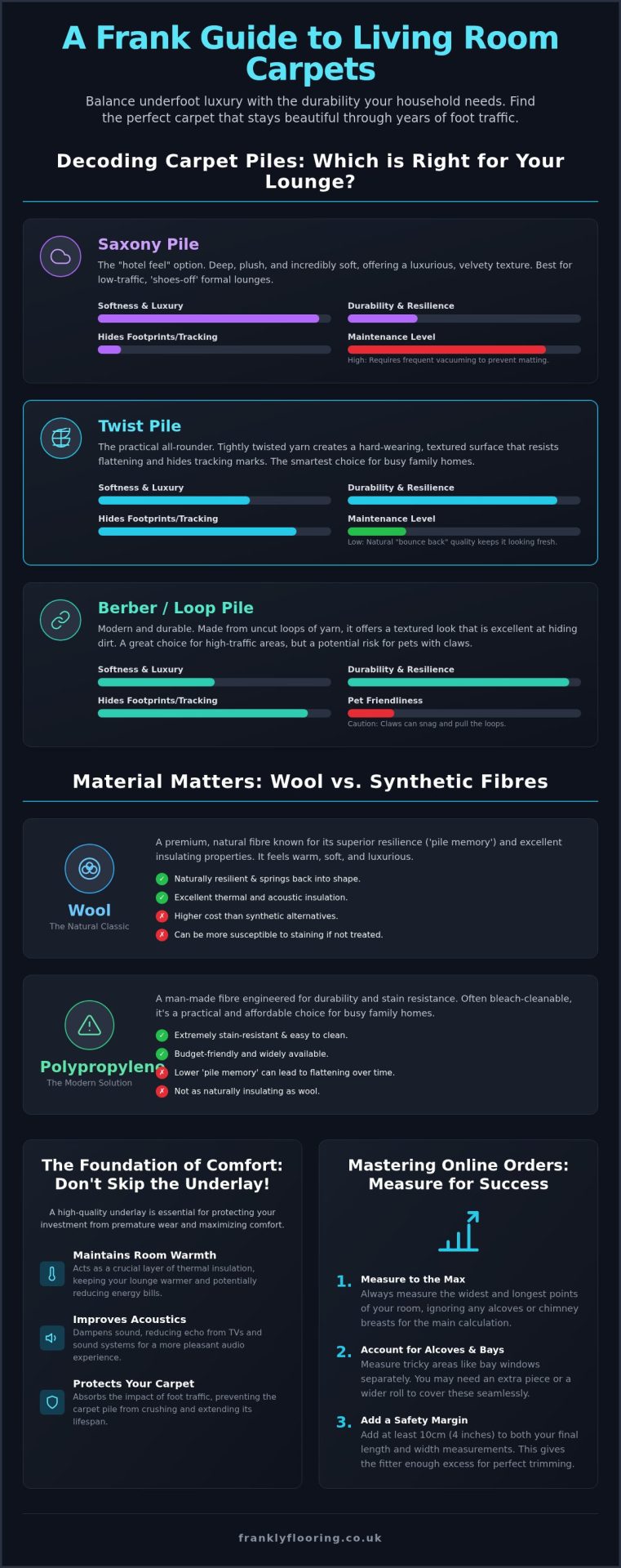
Twist piles are the all-rounders of the flooring world. The yarn is twisted tightly during manufacturing, which gives it a slightly roughened surface. This texture is brilliant for hiding footprints and hoover marks. It’s the frank choice for anyone who doesn’t want to spend their life smoothing out pile shadows or worrying about a “messy” looking floor after guests leave.
Saxony is the “hotel feel” option. It features long, upright fibres that offer incredible softness underfoot. However, there’s a catch. Because the fibres stand straight, they show every bit of movement. If you walk across it, you’ll see a trail. If you slide a coffee table, you’ll see a mark. In a busy lounge, this can look cluttered very quickly, even if the room is actually clean.
Berber or loop carpets are made from uncut loops of yarn. They are remarkably durable and offer a modern, textured look that many homeowners love. They are excellent at hiding dirt and crumbs, but they have a specific weakness: pets. If you have a cat or dog with sharp claws, they can snag the loops and pull the yarn right out of the backing, leading to permanent damage.
Saxony and Shag: Is the Deep Pile Worth It?
There’s no denying the sensory appeal of sinking your toes into a deep Saxony or shag pile. It feels like pure luxury and creates a cozy sanctuary for relaxation. If your lounge is a “shoes-off” space with low footfall, it’s a wonderful choice. But be honest about the maintenance. These carpets require more frequent, careful vacuuming to prevent the fibres from matting together. Once a deep pile is crushed by heavy traffic, it’s almost impossible to revive its original bounce.
Twist and Berber: The Practical Family Choice
For a household with kids and constant movement, a twist pile is usually the smartest investment. The tightly twisted fibres have a natural “bounce back” quality that resists flattening over time. Berber loops are similarly resilient and are great for masking pet hair or small crumbs between deep cleans. If you’re looking for a balance of style and sanity, it’s worth seeing how these textures look alongside your lounge furniture to ensure the whole room works together. Just remember that if you have pets, a twist is safer than a loop to avoid those frustrating snags.
Material Matters: Wool vs. Synthetic Fibres
Choosing the right material for your living room carpet is a decision that affects both your wallet and your weekend cleaning routine. While aesthetics matter, the chemical or natural makeup of the fibre determines how it handles a dropped mug of tea or a heavy armchair. According to Carpet Flooring Basics, the fibre type is the single most important factor in determining how your floor will age and perform over time. You aren’t just buying a colour; you’re buying a performance profile that needs to match your lifestyle.
Wool remains the gold standard for many homeowners. It’s naturally flame retardant and offers superior thermal insulation, which is vital for the main family space. If you’re concerned about the ‘Sofa Test’ mentioned earlier, wool is your best ally. For those wanting a compromise, an 80/20 wool blend mixes this natural resilience with the added durability of synthetic fibres like nylon or polypropylene. This hybrid approach is often the smartest way to get the prestige of wool with a bit more ‘give’ for high-traffic paths.
The Resilience of 100% Wool
Natural elasticity is the hallmark of premium wool. These fibres have a natural ‘crimp’ that allows them to bounce back even after long periods of compression. This prevents permanent indentations from heavy lounge furniture or sideboards. In 2026, the demand for sustainable, plastic-free homes has made wool even more relevant as a renewable and biodegradable resource.
Wool is the ultimate investment for those who want a lounge that stays plump, warm, and prestigious for a decade rather than a few years.
Stain-Resistant Polypropylene: The Family Hero
Polypropylene and polyester offer a different set of benefits. Polyester is a budget-friendly alternative that provides a silkier, softer feel, though it lacks the long-term bounce-back of natural fibres. Polypropylene, however, is the true workhorse for busy households. It’s essentially plastic-based, which makes it incredibly resistant to moisture and stains.
Most modern polypropylene carpets are solution-dyed. This means the colour is baked into the fibre during manufacturing, making it part of the material itself. This process allows for bleach-cleanability, which is a lifesaver for homes with toddlers, pets, or accidental spills. To identify a high-quality synthetic, look at the density of the tufts rather than just the thickness. A heavy, dense pile will always outlast a tall, sparse one, regardless of how soft it feels on the first day.
The Foundation of Comfort: Choosing the Right Underlay
Too many people treat underlay as a hidden extra to be skimped on at the checkout. That is a mistake. Your underlay is the shock absorber for your living room carpet, taking the brunt of the weight every time someone walks across the room. If you leave your old, ‘tired’ underlay in place, you’re essentially fitting a new floor on top of flattened, dusty sponges. A fresh, high-quality layer can effectively double the lifespan of your carpet by preventing the pile from being crushed directly against the hard subfloor. It protects the carpet backing from premature wear and keeps the fibres looking plump for years longer than they otherwise would.
For a lounge, we recommend a thickness between 10mm and 12mm. This range provides that deep, luxurious feel underfoot without making the floor feel unstable or causing issues with door clearances. It’s the sweet spot for balancing comfort with technical durability. Choosing anything thinner in a high-traffic room usually leads to a floor that feels ‘thin’ and cold within just a few months of use. Investing in the right foundation is the only frank way to ensure your new carpet delivers on its promise of luxury.
Sound Insulation and Thermal Retention
A good underlay acts as a thermal barrier, trapping heat in your main living space and potentially lowering your energy bills. It also significantly reduces ‘impact noise’, which is essential if you have an open-plan layout or a busy household where footsteps tend to echo. For a deeper dive into preparing your floor and understanding how different materials interact, check out our carpet guide. It covers everything you need to know before the rolls arrive at your door.
PU Foam vs. Rubber: Which is Best for a Lounge?
PU Foam is the modern standard for lounges because it offers a ‘squishy’ comfort and is often made from recycled materials. It’s lightweight and easy to handle for DIY projects. Rubber is the heavy-duty alternative, offering maximum durability for rooms with exceptionally heavy furniture that might otherwise bottom out a foam layer. If you’re part of the 2026 trend of installing underfloor heating during a renovation, you’ll need a specialised low-tog underlay. This allows the heat to pass through the floor efficiently rather than being trapped underneath it.
You can browse our full range of high-performance underlays to find the perfect match for your new living room floor.
Buying Living Room Carpet Online: A Frank Guide to Success
Buying your living room carpet online shouldn’t feel like a gamble. Without the overheads of a physical showroom, we focus on providing direct-to-consumer pricing and honest, technical advice. The process is straightforward if you follow a few practical steps to ensure your material choice and measurements are spot on. It’s about taking control of your renovation project and making decisions based on how the product actually looks in your own home.
You should never buy based on a screen image alone. Digital colours vary significantly between devices, so ordering physical samples is essential. This allows you to see the true shade against your existing furniture and wall paints. It’s the only way to be certain that the texture and tone meet your standards before the full roll arrives.
Light-Testing Your Samples
Lighting is the most influential factor in how a carpet looks. A grey twist might appear warm and inviting in 10 AM natural light but turn cold and blue under 8 PM LED bulbs. We recommend leaving your samples in the centre of the lounge for at least 24 hours. This gives you a chance to see the colour shift as the sun moves across the sky. It also lets you test the texture with bare feet and socks to ensure the underfoot feel matches your expectations for a relaxation space.
Measuring Like a Pro
Measuring is where most people feel anxious, but it’s simpler than you think. For rectangular or L-shaped lounges, use the ‘longest point’ rule. Measure the maximum length and width of the room, including the depth of any alcoves or bay windows. If your room is 4.8m at its widest but 4.2m elsewhere, you must order for the 4.8m width. Always measure twice to be certain. You also need to plan for transitions to other rooms, especially if you’re joining the living room carpet to LVT flooring in a hallway or kitchen. Account for the thickness of door bars in your final figures.
We always suggest adding a 5-10% safety net for wastage. This isn’t a sales tactic; it’s a practical necessity for cutting into corners and ensuring there’s enough material to work with. Once your order is placed, our national delivery service brings the rolls directly to your property. While we don’t provide installation, we ensure the supply process is transparent and reliable, giving you the foundation for a successful 2026 home upgrade.
Transforming Your Lounge with Confidence
Creating a space that balances underfoot luxury with long-term resilience doesn’t have to be a guessing game. By focusing on pile memory, choosing the right material for your lifestyle, and never skimping on a high-quality underlay, you’ve already done the hard work. Remember that the best living room carpet is one that stands up to the “Sofa Test” while staying easy to maintain through the realities of daily family life.
We’ve spent over 20 years as a family-run business providing the UK with transparent advice and direct-to-door national delivery. We don’t believe in high-pressure sales; we believe in helping you make a choice you’ll still be happy with in a decade. It’s time to take your samples, test them in your own light, and measure up for a floor that truly lasts. You can browse our range of high-quality living room carpets today to find the perfect foundation for your 2026 home renovation. Your ideal lounge is closer than you think.
Frequently Asked Questions
What is the most durable carpet for a high-traffic living room?
A dense wool-blend twist pile is the most durable choice for a high-traffic lounge. The 80/20 mix provides the natural resilience of wool with the added strength of synthetic fibres. Tightly twisted yarns are less likely to flatten under footfall compared to longer piles. This construction ensures your living room carpet maintains its shape and appearance even in the busiest households. Look for a high tuft density to ensure long-term performance.
Is wool or polypropylene better for a lounge with pets?
Polypropylene is usually the better choice for pet owners because it’s bleach-cleanable and incredibly stain-resistant. Accidental messes or muddy paw prints are much easier to handle on synthetic fibres that don’t absorb moisture. While wool is naturally resilient, it can be harder to deep clean without professional help. If your pets have sharp claws, stay away from loop piles and stick to a durable twist that won’t snag or pull.
Should I use the same carpet for my living room and stairs?
Using the same carpet creates a seamless flow through your home, but the material must be rated for heavy domestic use. Stairs take a specific kind of punishment on the nose of each step, which can cause cheaper piles to bald quickly. If you choose a high-quality twist for your lounge, it’ll likely perform well on the stairs too. Just ensure your underlay is equally robust to handle the concentrated pressure of climbing feet.
Can I lay new living room carpet over my existing underlay?
You shouldn’t reuse old underlay when fitting a new floor. Underlay is a shock absorber that flattens over time, losing its ability to protect the carpet backing from wear. By the time you replace your carpet, the foundation is usually tired and dusty. Installing a fresh 10mm or 12mm layer ensures your living room carpet feels luxurious and lasts twice as long. It’s a small upfront cost that prevents premature flattening and protects your investment.
How do I remove heavy furniture dents from my lounge carpet?
You can often revive furniture dents using an ice cube or a damp cloth and a cool iron. Place the ice cube in the indent and let it melt; the moisture helps the fibres swell back to their original shape. Once dry, gently brush the pile with a coin or a soft brush. For stubborn marks, a quick blast of steam from a distance can help. High-quality wool carpets usually recover more quickly than budget synthetics.
What colour carpet is best for making a small living room look bigger?
Light neutrals like oatmeal, soft grey, or beige are best for making a small room feel more spacious. These shades reflect more natural light, which opens up the floor area and makes the boundaries of the room feel less restrictive. Avoid busy patterns or very dark colours that can shrink the space visually. If you’re worried about stains on lighter floors, choose a solution-dyed synthetic that you can clean easily without worrying about fading the colour.
Are loop carpets a bad idea if I have cats or dogs?
Loop carpets are generally a bad idea for households with cats or dogs. Sharp claws can easily catch on the individual loops, pulling the yarn away from the backing and creating unsightly snags. Once a loop is pulled, it can’t be easily repaired and can lead to a run in the texture. For a pet-friendly home, a cut-pile twist offers the same modern look without the risk of permanent damage from your four-legged friends.
How long should a good quality living room carpet last?
A high-quality living room carpet should last between 10 and 15 years if it’s maintained correctly. Longevity depends on the fibre type, the density of the pile, and the quality of the underlay used during installation. Regular vacuuming and immediate stain treatment are essential for extending its life. If you choose a premium wool blend and protect it from heavy tracking paths, you’ll find the floor remains comfortable and attractive well into its second decade.