
A dependable family floor doesn’t have to be the same material throughout the house. A peace of mind flooring choice for family life matches the surface to each room: carpet can bring warmth and softness to bedrooms and stairs, while vinyl or LVT is practical in areas exposed to spills and moisture. Engineered wood offers a real timber surface, but needs more care than vinyl-based flooring.
Choosing between SPC and bamboo also depends on how a room is used and maintained. SPC can feel firm underfoot without suitable underlay, while bamboo flooring needs spills cleaned promptly. Neither is automatically the better option for every busy home.
This guide compares carpet, vinyl and LVT, laminate, and engineered wood, focusing on practical trade-offs for homes with children, pets and everyday mess. Find out where each option makes sense, what to consider for stairs and busy rooms, and how to balance comfort, upkeep and appearance.
Key Takeaways
- Consider carpet for bedrooms, stairs and landings when warmth, softness and reduced household noise matter.
- Match flooring to each room’s demands: moisture-prone spaces need different practical qualities from quieter, comfort-focused rooms.
- Laminate can suit busy living areas, but its moisture resistance varies and standing water can damage seams and edges.
- Engineered wood brings a real timber surface and greater stability than solid wood, but needs more care than vinyl-based flooring.
What does child-friendly flooring mean?
Child-friendly flooring balances grip, comfort, durability and straightforward upkeep. Carpet provides a softer surface for everyday play, and its fibres can help insulate against heat and sound. In bedrooms, on landings and on stairs, it can make floors feel warmer and quieter.
Pile describes carpet fibre length, density and construction. Twist pile combines comfort with durability in busy family areas; loop pile is generally tougher but feels firmer. Short pile is less likely to trap crumbs than deeper styles. Wool fibres are naturally resilient, while polypropylene resists stains and fading. A 10 mm felt or rubber-crumb underlay adds spring and helps reduce sound.
Mid-tone colours and textured, matte finishes can make everyday marks less noticeable. Darker carpet may hide dirt better than pale carpet, but also consider the room’s light and furnishings. On stairs, make sure carpet or a runner sits securely, with no snags or lifting edges that could catch a foot. Carpet is less convenient in areas where spills are frequent.
What flooring is best for families with pets? Low-pile carpet is less likely to hold pet hair than deep pile, while hard flooring is easier to keep clear of dust and hair. Choose based on whether softness or quick cleaning matters more in that room.
What flooring is easiest to clean and maintain? Hard flooring is generally simpler to sweep and wipe than carpet. Regular vacuuming and prompt attention to spills help keep crumbs and marks under control on carpet.
What UK slip-resistance ratings should I look for in family flooring? There isn’t one rating that applies to every family room. Compare the product’s stated slip performance for its intended use, especially on stairs and in areas where shoes may bring in moisture.
How do I check flooring warranties, fitting standards and installer credentials in the UK? Read the product warranty to understand its coverage and exclusions, and keep the flooring and fitting documents together. Check the stated fitting requirements and keep written evidence of any installer credentials.
| Option | Comfort | Upkeep | Useful fit |
|---|---|---|---|
| Short-pile carpet | Softer, warmer | Vacuum crumbs | Bedrooms, stairs |
| Loop-pile carpet | Firmer underfoot | Built for busy use | High-traffic rooms |
| Hard flooring | Less cushioned | Sweep and wipe | Spill-prone spaces |
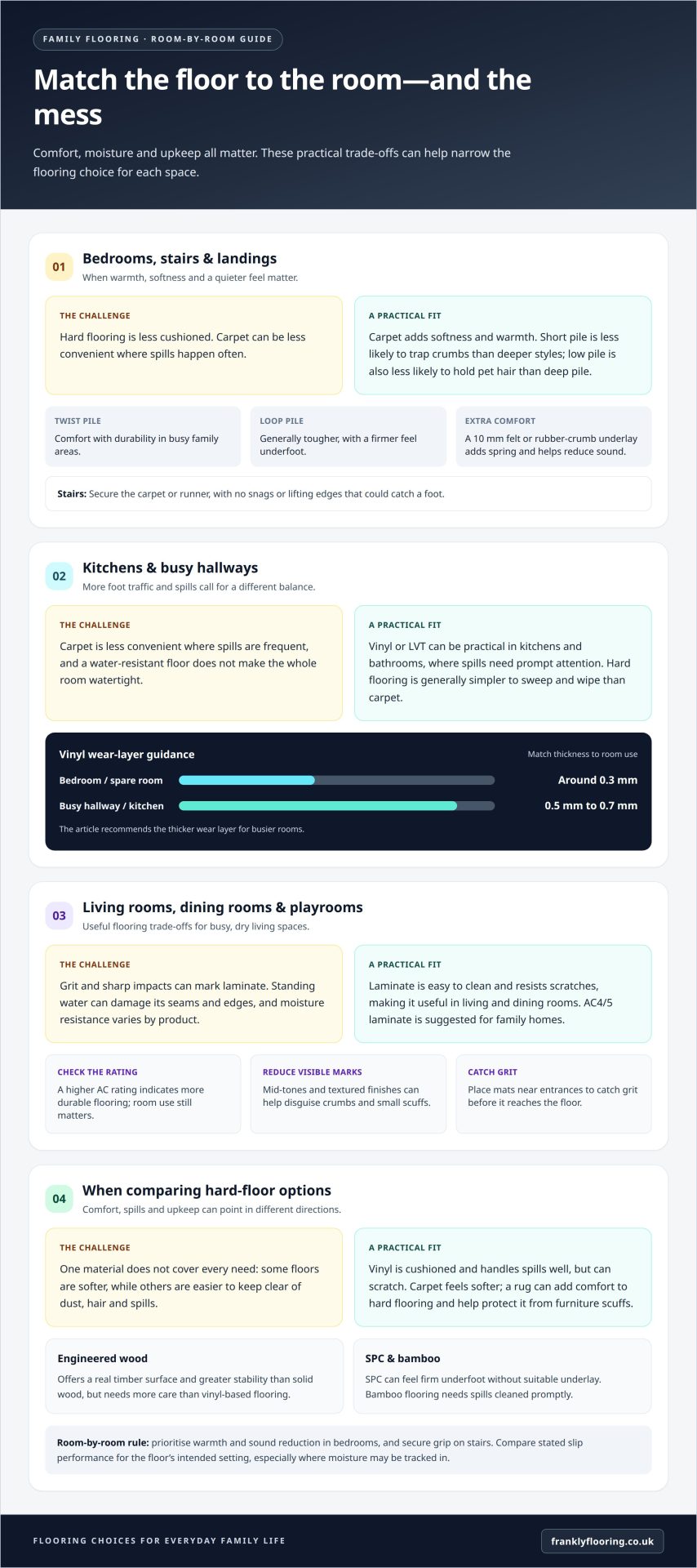
Choose flooring by room: prioritise warmth and sound reduction in bedrooms, and secure grip on stairs.
Check the stated slip performance for the floor’s intended setting, particularly on stairs and in areas where moisture may be tracked in. One rating does not suit every family room.
Best flooring options for busy families: SPC or bamboo?
SPC and bamboo suit different household needs. Room use, moisture and the warmth you want underfoot can help narrow the choice. A peace of mind flooring choice for family life starts with matching the floor to everyday routines.
Choosing Flooring Room by Room
Start with what each room faces: bedrooms need comfort, while kitchens and hallways see more spills and foot traffic. A vinyl wear layer around 0.3 mm suits a bedroom or spare room; 0.5 mm to 0.7 mm is recommended for a busy hallway or kitchen. Vinyl suits moisture-prone rooms, but a water-resistant floor doesn’t make the whole room watertight.
Flooring Materials by Room Use
Carpet brings softness and warmth to bedrooms, while vinyl or LVT can be practical in kitchens and bathrooms where spills need prompt attention. In a living room, consider how the household uses the space: carpet feels softer, while a rug can add comfort to hard flooring. A durable rug can also help protect the floor from furniture scuffs.
Family Flooring Material Comparisons
How do laminate, vinyl, carpet and engineered wood compare for family homes? Vinyl is cushioned and handles spills well, but can scratch; laminate is easy to clean, though standing water can damage its seams. Carpet adds warmth and softness, while engineered wood offers a real timber surface but needs more care than vinyl-based flooring. This comparison can guide a peace of mind flooring choice for family needs, balancing moisture, upkeep and comfort.
Low-Emission Flooring Choices
Can new flooring release VOCs, and how can I choose a low-emission option? Some products can release VOCs, so households concerned about emissions can choose flooring certified for low emissions. Compare certification information alongside room needs and cleaning requirements, rather than relying on material type alone. For a practical look at vinyl options for spill-prone rooms, compare vinyl flooring options.
Laminate resistance to impact, stains and wear
Laminate pairs a wood-look surface with a practical finish for family homes. It is easy to clean and resists scratches, making it useful in living and dining rooms where children play, meals are shared and chairs move regularly. It isn’t scratch-proof, so grit and sharp impacts can still leave marks.
Look at the AC rating when comparing products. This rating assesses resistance to abrasion, impact and stains; a higher AC rating indicates more durable flooring. AC4/5 laminate is suggested for family homes, while the right choice still depends on room use. A busy hallway takes more daily wear than a rarely used spare room.
Laminate can suit dry living areas, bedrooms, playrooms and some hallways. It offers a wood-look alternative where carpet feels less practical. Colour and surface finish affect how crumbs and scuffs show: mid-tones and textured finishes can help disguise small marks. Place mats near entrances to catch grit before it reaches the floor.
Laminate needs more care around water. Its moisture resistance varies by product, and standing water can damage seams and edges, making it less suitable for bathrooms or rooms with frequent spills. Vinyl, including luxury vinyl, handles moisture better. It feels softer and more cushioned underfoot, but is more prone to scratches.
What are typical UK flooring prices per square metre, including installation? The total depends on the material, product specification, room size, subfloor preparation, underlay, trims and fitting complexity. Compare the full scope rather than the floor covering alone, since preparation and finishing details affect the installed project.
For a family home, weigh durability against moisture exposure and cleaning needs. Laminate is practical for busy, mostly dry rooms; choose another material where frequent spills make water resistance a priority.
Engineered wood flooring for family homes
Engineered wood gives a family home a genuine timber surface without being made entirely from solid wood. It combines multiple timber layers with a solid wood veneer, creating a structure that can be more stable than solid wood when humidity changes. Consider it for a living room where natural wood character matters.
The veneer thickness affects how much refinishing the floor may allow. Engineered wood typically has a timber veneer between 2mm and 6mm thick, and some floors can be sanded and refinished two or three times over their life. That offers a way to refresh surface wear, but it doesn’t make the floor maintenance-free. Furniture can scratch or dent wood, so use protective pads and clean spills promptly.
For a busy family, the key trade-off is appearance versus upkeep. Engineered wood is less susceptible to water damage than solid wood, but still needs more care than vinyl-based flooring. Kitchens and other spill-prone spaces need particular attention: standing moisture can affect wood, so wipe spills promptly. A dining or living room may be more suitable if you want a real wood finish.
Engineered wood can be used with underfloor heating, but suitability depends on the product and its installation requirements. Before choosing, consider the room’s moisture conditions, floor levels, door clearances and how your household uses the space. These details matter as much as the wood’s colour or appearance. If you want easy-to-clean flooring with fewer concerns about spills, vinyl may be a better fit; engineered wood suits households prepared to care for timber.
For a considered family flooring choice, compare wood flooring with alternatives according to each room’s demands. Explore wood flooring options when a real timber surface is central to your plans.
Frankly Flooring
Frankly Flooring offers flooring and furniture options to consider once you’ve matched each room’s needs with a suitable material. The range includes carpet for softer, warmer spaces, along with furniture to help complete a room. Comparing options by room use helps you weigh comfort, upkeep and appearance across a busy family home.
If you’re choosing between a softer floor for bedrooms and a practical surface for shared spaces, explore Frankly Flooring’s range at your own pace. Consider where spills, foot traffic and furniture are most common to help guide your choice.
Contact Frankly Flooring to discuss your family flooring choices.
Make your next flooring decision with confidence
A peace of mind flooring choice for a family starts with deciding what matters most in each room. Before choosing a finish, write down your priorities: comfort, easy upkeep, appearance and how the floor will cope with daily activity. This simple comparison can help you focus on suitable options rather than looks alone.
Frankly Flooring offers LVT, wood and carpet, giving you different materials to consider for a consistent, practical home. The right choice may vary from room to room, so there’s no need to use one surface throughout the property. Choose according to how your family uses each space and the level of care you’re comfortable with.
If you’re ready to narrow down your options, contact Frankly Flooring for help choosing. A clear conversation about your household’s priorities is a sensible next step, and you can take your time deciding what feels right for your home.
Frequently Asked Questions
Which Styles and Colours Are Family Friendly?
Mid-tone colours and textured surfaces can make small marks less noticeable in busy rooms. To judge a shade, view a flooring sample beside your walls and furniture in both natural and evening light. A colour that looks warm under shop lighting may appear different beside a north-facing window or pale furnishings.
Which flooring materials are safest for families with children?
Carpet can soften falls in bedrooms and play areas, while stairs and routes children use often need a secure, grippy surface. Safety also depends on details beyond the main material: keep transitions level, and watch for loose edges or curled rugs that could catch feet. In a play space, consider how the floor feels during crawling, sitting and active games.
Which flooring is most durable for a busy family home?
No single flooring material is the most durable in every room. For laminate, compare the AC rating, which assesses abrasion, impact and stain resistance. Higher ratings indicate greater durability. In living areas with heavy furniture, use protective pads and avoid dragging chairs. Where grit is tracked indoors, an entrance mat can help reduce surface wear on any floor.
Which flooring options are water-resistant and suitable for kitchens or bathrooms?
Vinyl and LVT are practical options for kitchens and bathrooms because they handle moisture and everyday spills better than carpet or wood. Suitability still depends on the product and room conditions, so distinguish water-resistant flooring from a fully watertight room. Wipe spills promptly, and use cleaning products and methods recommended for the floor to protect its finish.
What UK slip-resistance ratings should I look for in family flooring?
Compare each product’s stated slip performance for its intended setting, especially on stairs and in areas where moisture may be tracked in. One rating will not suit every family room.