
More flooring samples won’t necessarily make the decision easier. If you’re feeling overwhelmed by flooring choices, start by ruling out options that don’t suit the room’s use, subfloor or available floor height. Then compare a shortlist for colour, grain and grade. Wood grade describes natural character, not durability, so treat it as an appearance choice. This gives you a practical starting point before focusing on looks.
It can still be difficult to picture a sample at home, especially when showroom lighting differs from the light in your room. That hesitation is understandable: a board that looks right in one setting may appear different beside your furniture or at another time of day.
This guide shows you how to assess samples in your home’s lighting, use room needs and maintenance to narrow the field, and get useful advice in a flooring showroom without feeling pushed into a decision. You’ll also learn which questions about the subfloor and floor thickness can help you rule out unsuitable wood options early.
Key Takeaways
- Start by ruling out wood options that don’t suit the room’s use, subfloor or available floor height.
- View samples in the room at different times of day, alongside the lighting and furniture they’ll sit with.
- Separate appearance from performance: wood grade describes natural variation, while maintenance needs help you judge everyday suitability.
- Go into a flooring showroom with a short list and a few specific questions, so advice can help you decide without adding more options.
1. Checking samples, lighting and maintenance
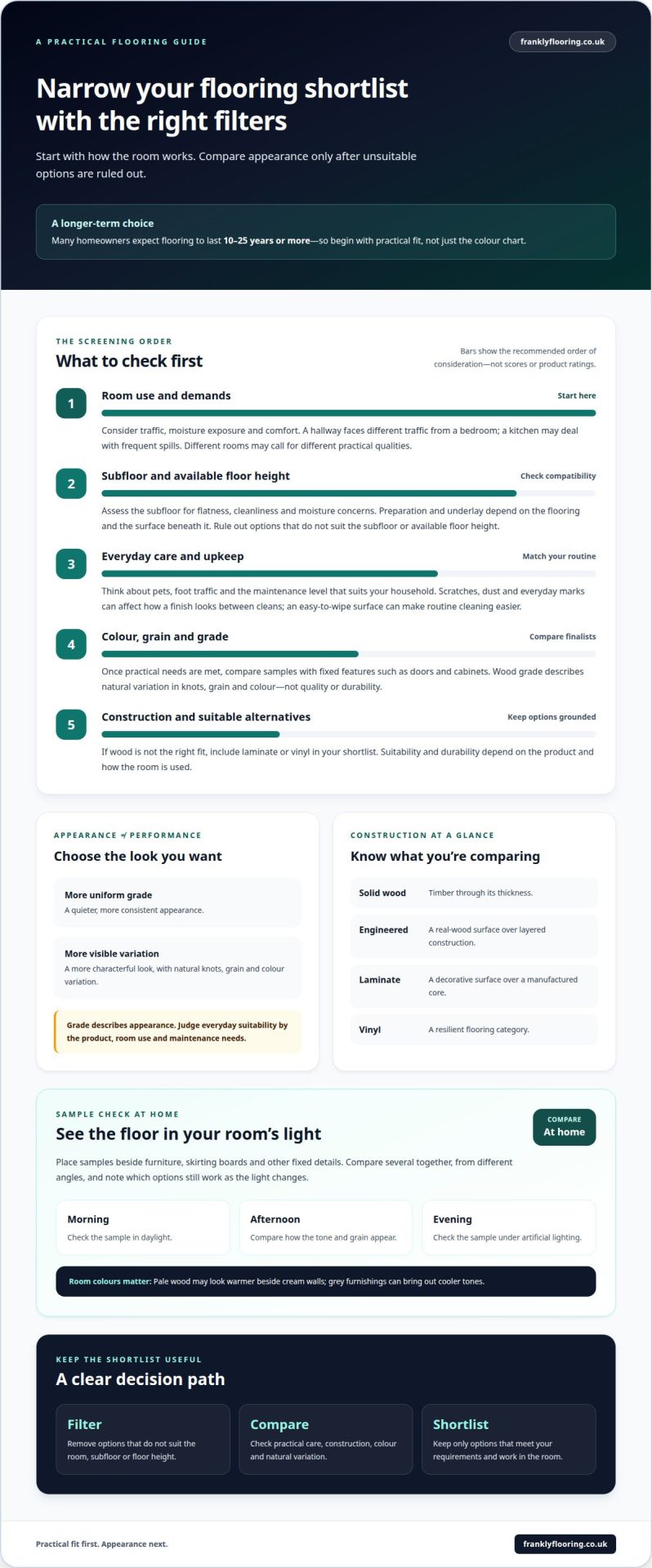
Take a flooring sample home before settling on a colour or finish. Place it beside furniture, skirting boards and other fixed details. Check it in the morning, afternoon and evening, because daylight and artificial lighting can change its appearance. If possible, view several samples together. Comparing them in the actual room makes differences in tone and grain easier to judge than looking at each one separately.
View the sample from different angles and against the room’s existing colours. Pale wood may look warmer beside cream walls, while grey furnishings can bring out cooler tones. Note which options still work as the light changes. Then consider upkeep: scratches, dust and everyday marks can affect how a finish looks between cleans. Think about foot traffic, pets and the level of maintenance that suits your household.
For UK building work, requirements can depend on the building, room and project. Consider fire performance, sound transfer and level access as practical constraints, rather than assuming every floor finish suits every setting. For a conversion or other substantial work, establish which requirements apply before choosing a sample.
There’s no single fitted cost per square metre for every UK room. The total depends on the material, subfloor condition, room layout and fitting complexity. Uneven surfaces or awkward edges can affect preparation and fitting, so compare options in the context of the room, not just the sample.
Underlay and preparation depend on the flooring and the surface beneath it. Carpet, laminate and wood, for example, can have different underlay requirements. Assess the subfloor for flatness, cleanliness and moisture concerns. The right preparation depends on its condition and the flooring you choose, so treat these as important selection criteria.
Fitting time depends on room size, layout, preparation and flooring type. DIY may suit someone with the right tools and experience, but careful cutting and a suitable subfloor matter. Before deciding, weigh the work involved against the finish you want and the time available.
2. What’s the fastest way to narrow down wood flooring options?
Start with how the room works, rather than the colour chart. Flooring can be harder to change than paint or décor, and many homeowners expect it to last 10-25 years or more. Note the room’s traffic, moisture exposure and comfort needs. Rule out wood options that don’t suit those conditions or the subfloor. If you’re feeling overwhelmed by flooring choices, this practical filter gives you somewhere to begin.
Next, consider whether every room needs the same surface. A hallway faces different traffic from a bedroom, while a kitchen may deal with frequent spills. Different flooring types can be mixed strategically to match each room’s needs while keeping the home cohesive. A living room and a busy kitchen, for example, may call for different practical qualities.
Wood grade describes natural character, not quality or durability. It reflects knots, grain and colour variation. Choose a more uniform grade for a quieter appearance, or visible variation for a more characterful look. Compare colours with fixed features such as doors and cabinets to check that your shortlist works with the room.
Construction helps distinguish flooring types. Solid wood is timber through its thickness; engineered wood has a real-wood surface over layered construction. Laminate has a decorative surface over a manufactured core, while vinyl is a resilient flooring category. For families and pets, a surface that’s straightforward to wipe can make routine cleaning easier. Suitability and durability depend on the product and how the room is used.
Keep only options that suit the room, work with the subfloor and appeal in appearance. For anyone feeling overwhelmed by flooring choices, comparing a few finalists is easier than reopening every possibility. If wood isn’t the right fit, include laminate and vinyl flooring in your shortlist.
A quick comparison keeps the decision grounded in how the room is used. Traffic, moisture exposure and comfort needs all help determine which options are suitable. Remember, grade signals natural character, not performance.
3. Getting advice from a flooring supplier
A useful product discussion starts with a clear room brief. Note the room’s dimensions, shape, door positions and fixed features, such as kitchen units. Describe how the room is used, including foot traffic, spills and furniture movement. Bring photographs if they show details that measurements miss, such as a step or unusual doorway. This gives the supplier a practical basis for discussing suitable flooring, rather than starting with colour alone.
Before getting flooring quotes from UK installers, prepare the room measurements, flooring type and details of the existing floor. Explain whether old flooring needs removing, and mention uneven areas, thresholds or awkward corners. Ask for the quote to separate the flooring, preparation and fitting work, so you can see what each figure covers. The final cost can depend on the material, subfloor condition, room layout and installation complexity.
Use product advice to compare specific trade-offs. Ask how the options differ in construction, appearance and care. If you’re choosing between a wood look and another surface, for example, ask how everyday cleaning or natural variation differs. Useful advice connects the product to your room and priorities, rather than adding more styles to consider.
Keep a short record of your decisions: preferred colour, acceptable grain variation, maintenance expectations and practical limits. If two samples look similar, ask what distinguishes their construction or intended use. Then remove options that don’t meet your requirements. This turns a broad discussion into a manageable shortlist.
Keep product advice separate from fitting scope. A flooring supplier can help you compare products, while an installation quote concerns the work and room preparation. You may settle on a product while preparation remains a separate part of the fitting scope. Clear room details and a defined shortlist make both discussions more focused and comparable.
Feeling intimidated in flooring showrooms
A showroom can make a simple decision feel bigger. Rows of displays, technical labels and sales language compete for attention. Set a clear purpose before browsing: find an option for one room, rather than choosing every floor in your home. Focus on the hallway first, for example, and consider other rooms separately.
Keep a short note on your phone with your priorities. Write down the room, how it’s used, your preferred look and any practical limits. If you’re unsure, say so plainly: “I’m comparing options today and want to understand the differences.” That sets a useful pace. You can browse without feeling obliged to decide immediately.
Ask the supplier to explain unfamiliar terms in everyday language. If two finishes look similar, ask how their construction, upkeep or suitability for your room differs. Follow up with a specific example: “Which would you choose for a busy entrance, and why?” A clear answer should connect the product’s features to your needs.
Pause when the choices start to blur. Step away from the displays, review your notes and remove options that fail your essential requirements. If a recommendation doesn’t feel right, explain your concern. The adviser can’t know your preferences unless you share them, so treat the discussion as a partnership, not a test.
Before leaving, write down the names or details of the few options worth considering. Avoid making a final choice just because a display is striking; judge each option against your room and priorities. That simple boundary helps turn showroom browsing into a focused decision. To continue narrowing your shortlist, explore suitable flooring options at your own pace.
Frankly Flooring
Once you’ve defined what matters in your room, Frankly Flooring can help you compare flooring products. The range includes wood, carpet, LVT and vinyl, with furniture available to help you consider how floor colour and texture will sit within the wider space. Start with your shortlist and compare products against your practical needs and preferred look, rather than reopening every possibility.
If you’re still weighing up alternatives, focus on what’s holding up your decision: room use, appearance or upkeep. That keeps your next step specific and helps you explore relevant options without pressure to choose immediately.
Contact Frankly Flooring to discuss your flooring options.
Make your next choice at your own pace
A flooring decision doesn’t need to settle every detail of your home at once. Choose the room you’re ready to tackle, decide what matters most there, and move forward when an option meets those needs. If feeling overwhelmed by flooring choices has stalled your plans, keep the decision focused instead of trying to solve everything at once.
Frankly Flooring offers LVT, wood and carpet, giving you different flooring categories to consider as you refine your shortlist. Your next step might be comparing a particular material or clarifying which features matter in your room. You don’t have to arrive with a final decision already made.
Contact Frankly Flooring for advice if you’d like to discuss your flooring options. Take the decision one room and one considered choice at a time.
Frequently Asked Questions
What’s the fastest way to narrow down wood flooring options?
Use a simple pass-or-rule-out test before comparing finishes. First, eliminate options that conflict with practical limits, such as door clearance or a threshold that cannot be raised. Then decide whether you prefer timber with a consistent appearance or visible variation. This leaves you with fewer options to compare, rather than asking one sample to satisfy every preference at once.
How do I choose flooring for each room in a UK home?
Match the floor to what happens in each room. A hallway needs to cope with regular arrivals and outdoor dirt, while a bedroom may put more emphasis on warmth underfoot. In a kitchen, consider cleaning up spills and crumbs. You can use different flooring across rooms; repeating a compatible colour or finish helps the overall scheme feel connected.
Which flooring is best for kitchens, bathrooms and other damp areas?
Choose flooring suited to the room’s moisture exposure, and distinguish water-resistant from waterproof. Vinyl or LVT may be practical options for kitchens and some damp settings, but suitability depends on the product and installation details. Bathrooms face more persistent moisture than kitchens, so consider joints, edges and standing water, not just the surface material. Check the product’s stated use before deciding.
What underlay and subfloor preparation do different flooring types need?
Underlay requirements vary: carpet, laminate and wood can need different types. Assess the subfloor for flatness, cleanliness and moisture concerns. Preparation depends on its condition and the flooring you choose.