The floor that looks most like tile may not be the one that works best in your bathroom. If you’re looking for an alternative to tiles in bathroom flooring, start with how much water the room actually gets, not just the finish you want.
Moisture matters, but so do comfort, cleaning and the floor beneath the surface. A product described as water-resistant isn’t automatically suitable for a room with a shower or bath. Joints and installation requirements can affect how it performs too.
This guide compares five options, including LVT and vinyl, as well as materials with important limits in wetter bathrooms. Consider what each may suit, the care it needs and where it could fall short. That helps you choose for your room and routine, not appearance alone.
Before ordering online, check the manufacturer’s instructions for bathroom use, water exposure, slip resistance and installation. Requirements vary by product, so confirm that the specific flooring suits your space rather than relying on its material name.
Key Takeaways
- Compare LVT, sheet vinyl, laminate, engineered wood and resin or polished concrete by the trade-offs that matter in your bathroom.
- Choose an alternative to tiles in bathroom flooring based on water exposure and your priorities for comfort, appearance and cleaning.
- Check how the product’s surface, joints and installation method may affect its performance in a bathroom.
- Before ordering, measure the room and note fixtures, thresholds and the condition of the existing floor.
- Use the product instructions to confirm suitability. A broad material description isn’t a substitute for product-level guidance.
What makes a good alternative to tiles in a bathroom?
This guide compares floor coverings, not wall finishes. A bathroom floor may face splashes, damp feet, cleaning products and repeated temperature changes. The right choice depends on the room and the product, not simply on whether a material looks like tile.
Bathroom-suitable flooring is a product whose manufacturer permits its use in your bathroom conditions, with the specified preparation, fitting and care. That’s the practical test for any alternative to tiles in bathroom flooring. Consider water exposure, cleaning routine, underfoot comfort and appearance, then check the product’s installation requirements. For a broad overview of flooring materials, including resilient options such as vinyl, see Wikipedia’s flooring guide.
Pay particular attention to water exposure near a shower, bath or basin, where splashes are more likely. A room that holds moisture because of limited ventilation also calls for careful selection. Material choice matters, but so do a sound, suitable subfloor, correct preparation and fitting, and following the care instructions. A surface can disappoint if the product is used outside its stated conditions.
Water-resistant or waterproof: what is the difference?
Water-resistant means a product can tolerate specified exposure. It doesn’t mean standing water can be left on it. Protection varies, so don’t assume every product in a flooring category performs alike. Check the manufacturer’s bathroom-use instructions, including guidance on joints, edges and warranty conditions. Find out what happens if water reaches a seam or the floor’s perimeter, not just how the surface handles a splash.
What should you assess before replacing bathroom tiles?
Start with the room’s routine. Does the floor get occasional splashes, or does water regularly pool around fixtures? Consider ventilation, who uses the room, how often you clean and how much underfoot warmth or softness you prefer. Then assess the existing floor and subfloor, including whether the surface is sound and suitable for the new product’s preparation requirements.
Keep appearance and technical suitability as separate decisions. A wood-effect finish may appeal, for example, but that doesn’t establish that a particular product is suitable for a bathroom. Before ordering, measure the floor area, note fixtures and thresholds, and read the product’s installation and maintenance guidance. If you arrange fitting separately, make sure the person fitting it can follow those instructions.
Five alternatives to tiles in bathroom floors, compared
The best alternative to tiles in bathroom floors depends on the product’s specifications and the room’s conditions. Use this comparison to shortlist options, then confirm bathroom suitability, cleaning guidance and fitting requirements with the manufacturer. The table outlines general considerations, not performance guarantees.
| Flooring | Appearance and comfort | Cleaning and moisture considerations | Installation considerations |
|---|---|---|---|
| LVT | Can offer tile- or stone-effect designs. Underfoot feel varies by product. | Follow the specified cleaning method and check that the product is approved for bathroom use, including around joints and edges. | Check subfloor preparation, fitting method and bathroom-specific instructions. |
| Sheet vinyl | Available in varied patterns and finishes. Comfort depends on the product and what lies beneath it. | Check the manufacturer’s guidance for water exposure and cleaning, including how to finish the edges. | Room shape, fixtures and thresholds can affect measuring and fitting. Follow the product instructions. |
| Laminate | Often chosen for wood- or stone-effect looks. Feel depends on the construction. | Don’t assume ordinary laminate is suitable for a bathroom. Look for explicit approval and guidance on moisture and warranty conditions. | Confirm installation requirements, including how to handle exposed edges and transitions. |
| Engineered wood | Offers a natural wood appearance and feel, with variation between products. | Moisture can be a concern. Choose it for a bathroom only if the manufacturer expressly allows it for those conditions. | Check preparation, fitting, sealing and care requirements before committing. |
| Resin or polished concrete | Can create a continuous-looking finish. The result and underfoot feel depend on the chosen system. | Ask the specialist or manufacturer about cleaning, water exposure and surface requirements. | These are broader-market, specialist options. Preparation and application are project-specific, and they aren’t Frankly Flooring categories. |
LVT and sheet vinyl: practical alternatives to bathroom tiles
LVT and sheet vinyl can create a tile-like look, but appearance alone doesn’t establish performance. Frankly Flooring sells both categories, and bathroom suitability needs checking product by product. Read the installation and care instructions before ordering. For more background, look for the existing guide, “What Is LVT Flooring? A Frank Guide for UK Homes”. Bob Vila also outlines popular bathroom flooring choices, including vinyl and concrete.
Laminate, engineered wood, and seamless finishes
Take particular care with laminate and engineered wood. Don’t treat “water-resistant” as blanket approval for bathroom use. Check the manufacturer’s documentation for permitted moisture exposure, fitting method, edge sealing and warranty conditions. Resin and polished concrete may suit readers seeking a seamless finish, but require project-specific preparation. You can browse LVT and vinyl flooring at Frankly Flooring; installation is arranged separately.
Are bathroom floor alternatives as waterproof as tiles?
Some alternatives can be suitable, but there’s no category-wide answer. Assess a specific product, fit it according to its instructions and match it to the room’s water exposure. The same caution applies to tile: the surface is only one part of how the finished floor manages water.
A water-resistant product tolerates limited exposure under stated conditions; a waterproof system is designed to manage water across the complete floor assembly, including its joints and edges. A flooring surface alone doesn’t prevent leaks or replace sound bathroom waterproofing and plumbing. Check what the manufacturer means by its water-resistance claims and which conditions the product is approved for.
How do moisture, spills, and standing water affect flooring?
An occasional splash that’s wiped up is different from repeated wetting or water left standing around a bath, shower or basin. Moisture can get through vulnerable joints, cut edges and transitions between the floor and other surfaces. Consider those details during fitting and keep them in good condition. Follow the product’s care instructions rather than assuming every finish can be treated alike.
Look beyond the visible surface. Ask how the product should be finished at doorways, around fixtures and at the room’s perimeter, and whether the instructions set limits on standing water or damp conditions. If water regularly escapes the shower or pools on the floor, factor that exposure into your choice. You may also need to change how the room is used or protected.
Which trade-offs matter most in everyday use?
Comfort and upkeep vary. Some people prefer a floor that feels less hard underfoot; others prioritise a surface that’s straightforward to clean. Visible seams may matter if you want a more continuous appearance, but fewer visible joins don’t prove that a floor is waterproof. Repair options also vary by product and fitting method, so check whether damage can be addressed locally or may require a larger section to be replaced.
Slip performance varies by product and finish, especially when a surface is wet. Check documented slip-resistance information for the exact flooring and consider who uses the bathroom and how water reaches the floor. Don’t rely on appearance or a broad material label as a safety measure.
Tiles remain a familiar choice, with a hard surface and grout lines that can need attention during cleaning. Alternatives may offer different looks or underfoot experiences, but each has its own care requirements and moisture limits. Compare those everyday trade-offs, then use the manufacturer’s guidance for the product you’re considering.
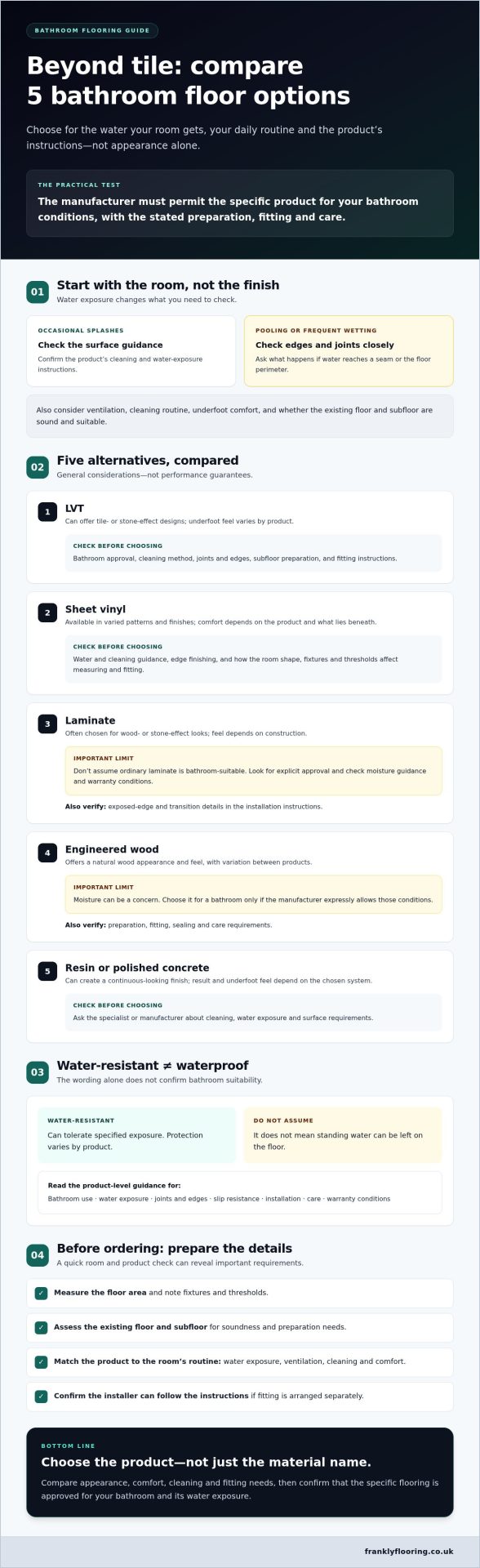
How to choose and prepare for a bathroom flooring alternative
Choosing an alternative to tiles in bathroom flooring is only part of the job. A room-specific check before ordering can help you avoid a product that doesn’t suit the moisture, existing floor or fitting requirements. Work through this checklist before deciding.
- Assess the room. Note where water lands, whether it pools near the bath, shower or basin, and how well the room ventilates. Consider who uses the bathroom and how often you clean it.
- Measure and map the floor. Measure carefully, including alcoves, and note fixtures, doorways, thresholds and changes in floor level. These details affect the amount needed, cuts and transitions.
- Check the existing floor. Look for unevenness, damage, dampness or loose material. Don’t assume the new flooring can go over the old surface. Preparation depends on the product and site conditions, so address concerns before fitting begins.
- Confirm bathroom suitability. Read the manufacturer’s instructions for the exact product. Check permitted water exposure, cleaning and maintenance, fitting method, edge details and warranty conditions. Don’t assume standard laminate is suitable. Consult the manufacturer and the Laminate Flooring UK: The Frank 2026 Buying & Installation Guide for more buying context.
- Check what the order and fitting require. Confirm the quantity, compatible accessories, delivery arrangements and any product-specific acclimatisation instructions. Share the product guidance with the person fitting the floor so preparation and installation follow the stated requirements.
Who handles fitting and subfloor preparation?
Frankly Flooring sells flooring online but doesn’t provide installation services. Arrange a suitable installer if fitting requires specialist expertise, and discuss the product instructions before work starts. Subfloor preparation depends on the product and site conditions. Unevenness, moisture or concerns about the existing floor should be assessed and addressed before installation, using methods suitable for the chosen product and room.
For a bathroom, don’t order based on appearance alone. Make sure the material, preparation and fitting requirements work together, and clarify anything that isn’t clear in the product information. You can browse Frankly Flooring’s LVT and vinyl flooring online, then check the specific product instructions and arrange fitting separately.
Choose your bathroom tile alternative with confidence
There isn’t one best alternative to tiles in bathroom flooring for every home. Let the room’s water exposure and your priorities narrow the options, then use the exact product instructions to make the final decision. A surface that suits a lightly used washroom may not be right for a busy family bathroom with regular splashes.
Match the flooring category to your bathroom and priorities
If you’re comparing retailer categories, start with LVT and vinyl and consider appearance, cleaning and comfort. Check bathroom approval for each product rather than relying on the category name. Wood and laminate may appeal if you want a natural look, but proceed only where the manufacturer explicitly allows bathroom use under your room’s conditions.
Resin and polished concrete are broader-market options, not Frankly Flooring categories. They may suit someone seeking a continuous finish, but can involve specialist advice, preparation or fitting. Compare those practical requirements as well as appearance. Your shortlist should fit your space and routine, not just resemble tile.
What happens after you choose a material?
Before ordering, review the product information and manufacturer’s installation instructions. Recheck measurements, including cuts around fixtures and doorways, and consider thresholds and transitions. Confirm the quantity, delivery details and any instructions about acclimatisation or compatible accessories. If anything is unclear, resolve it before purchase rather than assuming all products in a category have the same requirements.
Fitting is a separate part of the project. Frankly Flooring sells flooring online and doesn’t provide installation services, so arrange a suitable installer if you need fitting expertise. Share the chosen product’s instructions and discuss concerns about the existing floor before work begins.
Frankly Flooring is a family-run business with more than 20 years of flooring-industry experience. Its categories include LVT, vinyl, laminate and wood. That experience doesn’t replace checking product specifications, but it can help you explore the available categories and what to verify. Compare the details and choose once the product guidance fits your bathroom.
Browse flooring options at Frankly Flooring and review the product information before ordering.
Take the next step towards a bathroom floor that fits
Choosing an alternative to tiles in bathroom flooring takes more than finding a finish you like. Match the material to how wet the room gets, then check that the specific product is approved for those conditions. Its fitting and care instructions matter as much as its broad category.
LVT and vinyl are options to explore, while wood and laminate need clear manufacturer approval for bathroom use. For any option, confirm the product details and prepare the existing floor before fitting. There’s no universal winner, only the option that suits your bathroom and routine.
Frankly Flooring is a family-run online retailer with over 20 years of flooring-industry experience, delivering flooring across the UK. Browse its flooring categories, check the product information carefully and arrange installation separately.
Browse flooring options at Frankly Flooring and compare product details for your bathroom.
Frequently Asked Questions
What is the best alternative to tiles in a bathroom?
There’s no single best alternative to tiles in bathroom flooring. The right choice depends on water exposure, comfort, cleaning preferences and the product’s instructions. LVT and sheet vinyl may suit people looking for a different look from tile, while wood or laminate need explicit manufacturer approval for bathroom use. Compare specific products, not just material categories, and check fitting requirements before deciding.
Can you use LVT flooring in a bathroom?
Some LVT products may be suitable for bathrooms, but don’t assume every product is approved for this use. Check the manufacturer’s instructions for permitted water exposure, installation method, cleaning and care, and warranty conditions. Pay attention to joints, edges and transitions as well as the surface. If the bathroom gets frequent splashes or water pools on the floor, confirm that the product suits those conditions.
Is vinyl flooring waterproof in a bathroom?
Don’t assume every vinyl product is waterproof. Claims and permitted water exposure vary, and seams, edges and fitting details can affect how the finished floor handles moisture. Read the instructions for the exact vinyl you’re considering, including care guidance and any limits on standing water. Flooring alone doesn’t prevent leaks or replace sound bathroom waterproofing and plumbing.
Can you put laminate flooring in a bathroom?
Consider laminate for a bathroom only if the manufacturer explicitly approves the specific product for that room and its expected moisture exposure. Don’t assume ordinary laminate is suitable just because it’s described as water-resistant. Check installation requirements, edge or joint protection, cleaning instructions and warranty conditions before buying. If the guidance doesn’t clearly cover bathroom use, choose a product that does or investigate another flooring option.
What is cheaper than tiles for a bathroom floor?
There isn’t a reliable answer based on material alone. Overall cost can depend on the product, the condition of the existing floor, preparation, accessories, removal of old flooring and fitting. Compare like-for-like estimates for the full project rather than judging by the floor covering’s price alone. Before choosing a lower-cost option, confirm that its manufacturer approves it for your bathroom conditions.
Can you replace bathroom tiles without removing them?
New flooring may sometimes be fitted over an existing surface, but this depends on the chosen product and the tiles’ condition. The floor must meet the product’s preparation and installation requirements. Loose, damaged, uneven or damp areas may need attention first. Check whether covering the tiles affects floor height at doorways, thresholds and fixtures. Follow the manufacturer’s instructions and ask a suitable installer to assess site-specific concerns.
What should I check before ordering bathroom flooring online?
Measure the room and note fixtures, doorways, thresholds and areas that need cuts. Confirm that the exact product is approved for bathroom use, then read its installation, cleaning and water-exposure guidance, including warranty conditions. Check the quantity, compatible accessories, delivery details and any acclimatisation instructions. Frankly Flooring is an online retailer delivering across the UK; customers arrange fitting separately, so share the product instructions with the installer.