
The obvious choice may not be the best fit. In a Cormar carpets vs Abingdon Flooring comparison, neither brand is automatically best. The right choice depends on the carpet’s construction and the room it’s for. Fibre, pile and feel underfoot can matter more than the name on the sample.
It’s reasonable to want a carpet that looks right and stands up to everyday use, but those priorities can point to different options. Loop pile tends to feel firmer, while cut pile offers a deeper, softer feel. This guide compares style, suitability for stairs and busy areas, stain resistance, cleaning and fibre, so you can focus on what matters in your home. Use the practical decision points to weigh comfort against durability and care, without assuming one brand suits every room.
Key Takeaways
- Compare carpet construction and feel, not just brand names, to find a style that suits each room.
- For stairs and busy areas, consider how pile type and fibre affect firmness and everyday wear.
- Think about how spills and regular cleaning fit into your household before choosing a carpet.
- Weigh wool, polypropylene and other fibres against the look and care routine you prefer.
- Use the decision guide to narrow your options by room, comfort, durability and maintenance.
What carpet ranges and styles do Cormar and Abingdon offer?
Cormar and Abingdon are established names in UK carpet shopping, but a brand alone doesn’t tell you how a carpet will feel. Compare samples by fibre, pile construction, texture and intended room. These details can help you distinguish a soft bedroom carpet from a firmer hallway option. In a Cormar carpets versus Abingdon Flooring comparison, the useful question is which construction suits your home, not which name sounds better.
Start with pile construction. Cut-pile carpets can feel soft and cushioned, which may make them worth considering where underfoot comfort matters. Loop-pile carpets feel tighter and firmer, offering a more structured surface. Compare samples from either brand without assuming every range shares the same qualities.
Fibre is another practical point of comparison. Wool is a natural carpet material, while polypropylene is synthetic and less prone to fading than wool. Check the fibre label, then consider the room’s light and use as well as the carpet’s appearance. For example, compare two similarly coloured samples near a window and assess whether their texture and fibre suit the room. The label tells you more than the colour name alone.
Companies House records Greenwood and Coope Limited as registered in England under company registration number 00200956. For a shopper, that company detail is separate from choosing a carpet style. Focus on the sample specification and the qualities you can feel. Press the pile, inspect the backing and view the colour in your room’s lighting. A warm neutral may look different beside pale walls than against darker flooring or furniture.
Use a simple checklist when comparing Cormar and Abingdon samples:
- Construction: Decide whether a deeper cut pile or firmer loop pile suits the room.
- Fibre: Compare wool, polypropylene or another stated material against your priorities.
- Texture: Feel how the surface responds underfoot, rather than judging by appearance alone.
- Colour: Check the sample beside the room’s paint, furnishings and natural light.
Compare the exact sample labels rather than relying on broad brand reputations. A cut-pile sample from one brand and a loop-pile sample from the other aren’t a like-for-like comparison. Match construction and fibre first, then weigh colour and comfort. This gives you a clearer view of the options from both Cormar and Abingdon, with the decision tied to the room you’re furnishing.
This section describes cut-pile carpets, with deeper fibres and a softer, more cushioned feel, and loop-pile carpets, which feel tighter and firmer. It also highlights wool and polypropylene as fibre options, and recommends comparing specific samples rather than assuming every range has the same qualities.
Which Cormar and Abingdon carpet ranges are best for stairs and high-traffic areas?
For stairs, hallways and busy landings, compare carpet construction before choosing a brand. Assess Cormar and Abingdon carpets sample by sample: the brand name alone doesn’t show how a specific carpet will perform. Check the pile, fibre and stated suitability, then match those details to the room’s everyday demands.
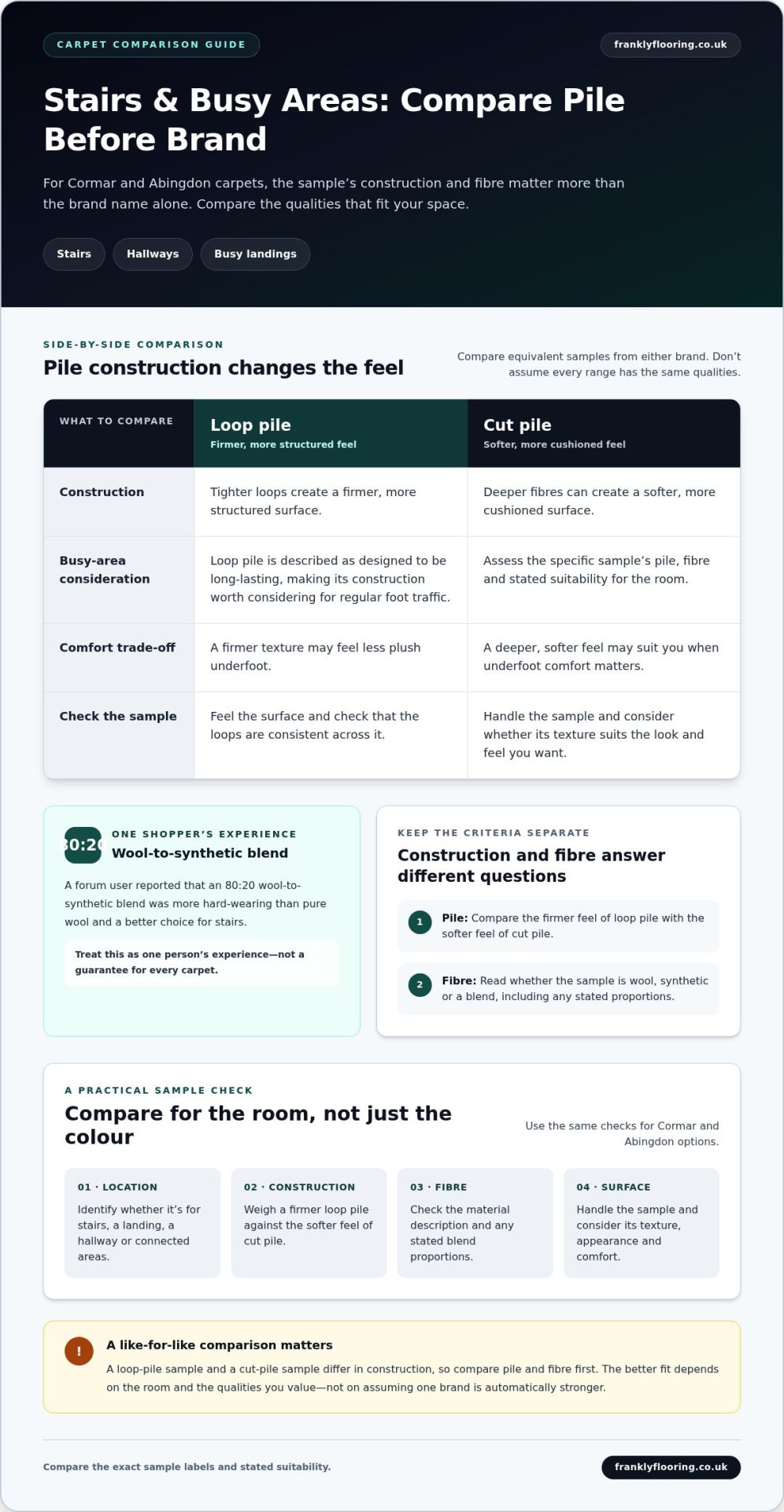
Loop pile feels tighter and firmer than cut pile and is designed to be long-lasting. That makes it a sensible feature to consider in areas with regular foot traffic. Inspect the sample closely: the loops should feel consistent across the surface, and the carpet should suit the look you want on the stairs. A firmer texture may feel less plush than deep cut pile, so balance practicality with comfort.
Fibre is another useful point of comparison. A forum user reported that an 80:20 wool-to-synthetic blend was more hard-wearing than pure wool and a better choice for stairs. Treat that as one shopper’s experience, not a guarantee for every carpet. It does, however, show why checking the fibre composition can add useful context when comparing similar-looking samples from Cormar and Abingdon.
Use these steps to compare options for a busy staircase:
- Start with the location. Identify whether the carpet is for stairs, a landing, a hallway or several connected areas.
- Compare construction. Consider the firmer feel of loop pile against the softer feel of cut pile.
- Read the fibre description. Note whether the sample is wool, synthetic or a blend, including any stated proportions.
- Assess the surface. Handle the sample and consider how its texture fits the look and feel you want.
For example, compare a loop-pile sample with an 80:20 wool-to-synthetic option rather than relying on colour alone. The loop pile offers a firmer construction designed for longevity; the blend reflects a reported preference for stairs over pure wool. These are different criteria, so the better fit depends on which qualities matter most in your home.
Apply the same comparison to a hallway or landing. Consider how often the space is used, whether you prefer a firm or softer surface, and how the carpet will look alongside adjoining rooms. Then compare equivalent samples from each brand. This keeps the decision focused on construction and composition, rather than assuming Cormar or Abingdon is automatically the stronger choice for every high-traffic area.
How do Cormar and Abingdon carpets compare for stain resistance and easy cleaning?
There isn’t one stain-resistance verdict that applies to every Cormar or Abingdon carpet. Compare the fibre and care guidance for each specific sample. A brand name alone won’t tell you how a particular spill will behave or how to clean the carpet. Start with the product details, then consider the likely mess in that room, such as drinks in a lounge or muddy marks near an entrance.
Wool has one useful characteristic: liquid spills sit on wool carpet fibres for a while, allowing time to clean them up. That can help if you respond promptly, but it doesn’t make wool stain-proof. The result still depends on the substance, the carpet’s construction and how the spill is handled. Compare the care instructions for a wool sample with those for a synthetic option before deciding.
Consider stain resistance and ease of cleaning separately. A carpet may give you time to respond to a spill, while its texture or care requirements affect how much effort it takes to remove marks. A pale carpet in a dining area, for example, has different practical demands from a darker carpet in a quieter bedroom. Consider colour, pile and typical room use alongside the stated fibre content.
Use the same comparison steps for both brands:
- Read the fibre description. Note whether each sample contains wool, polypropylene or another fibre.
- Review its care guidance. Follow the cleaning method stated for that specific carpet.
- Consider likely spills. Think about food, drinks, pets or outdoor dirt in the room.
- Compare the texture and colour. A patterned or darker sample may make everyday marks less conspicuous, though it doesn’t prevent staining.
For a practical comparison, look at two samples intended for a family dining room. If one is wool, remember that spilled liquid can sit on its fibres for a while. Read the care guidance for both samples and assess their colours against the room. This gives you a grounded comparison without assuming either brand is automatically easier to clean.
Act promptly when a spill happens and follow the carpet’s stated care method rather than improvising with a cleaner. Different fibres and finishes can need different approaches, so don’t assume one method suits every Cormar or Abingdon carpet. Before choosing, weigh the room’s everyday risks against the care routine you’re comfortable following. The best fit is the sample whose fibre, appearance and cleaning requirements suit the space.
How do Cormar and Abingdon compare for wool, polypropylene and other carpet fibres
Compare the fibre listed on each Cormar and Abingdon sample, not just the brand. Wool is a natural carpet material, while polypropylene is synthetic. Fibre can affect appearance, feel and how the surface responds to light. Polypropylene is less prone to fading than wool, which may matter in a bright room. Neither fibre is automatically the right choice for every household.
Wool may suit shoppers who value a natural fibre and its distinct feel underfoot. Check the carpet’s texture and colour in the room where it will be used. Comparing a wool sample by a sunny window with a polypropylene sample can help you assess both against the room’s furnishings and daylight.
Polypropylene is a synthetic alternative to wool. Its lower tendency to fade may be useful where daylight is a consideration. Compare samples in the same light and at different times of day, rather than relying on a small swatch under artificial lighting. Check each sample’s fibre label, too. This shows whether you’re comparing like with like or also comparing different constructions.
Other carpet fibres may also appear in Cormar or Abingdon selections. If you’re considering a synthetic option beyond polypropylene, check the stated material and compare its surface with wool and polypropylene samples. Fibre alone doesn’t determine a carpet’s overall performance. Pile construction, density, colour and room use also influence how it looks and feels. Compare the full sample description rather than deciding from one word on the label.
Use this simple comparison when viewing samples:
- Wool: Consider its natural composition, texture and how the colour suits the room’s light.
- Polypropylene: Factor in its lower tendency to fade compared with wool.
- Other synthetics: Read the material description and compare the actual sample’s feel and appearance.
- Blends: Check which fibres are combined and compare the stated proportions.
For example, place a wool sample and a polypropylene sample beside the same window, then view them against the room’s flooring and furnishings. Note differences in colour, texture and feel. If you’re considering a blend, read its fibre proportions rather than treating it as pure wool or pure synthetic. This makes for a fairer comparison between Cormar and Abingdon options.
Choose by matching the fibre to your priorities. If daylight is a concern, polypropylene’s lower tendency to fade than wool is relevant. If natural material matters most, assess wool samples directly. For either brand, consider the fibre label, pile and appearance together. This makes the decision specific to the carpet you’re considering, rather than relying on a general claim about a brand.
Some owners’ experiences offer context, though they are not a guarantee for every carpet: a forum user reported that a polypropylene twist carpet had been down for 3 years and still looked like new. A forum user said their existing polypropylene carpet had lasted well despite being at least 12 years old when they bought the house. These are individual experiences, so compare samples and product details.
Which carpet retailers and fitters stock Cormar or Abingdon in the UK
In the UK, carpet retailers sell Cormar and Abingdon carpets, with stock varying between businesses and product ranges. Some retailers list both brands; others focus on one manufacturer or carry selected samples. Availability may also differ between a retailer’s website and physical branches. Treat the brand name as a starting point, then compare the specific carpets shown by each retailer.
Search a retailer’s catalogue for “Cormar” and “Abingdon Flooring” separately. Check product descriptions for fibre, pile construction and intended use. If you want loop pile for a hallway, for example, compare samples with the same construction rather than choosing by colour alone. A product listing can narrow your options, while a physical sample helps you judge texture and shade.
Retailers and fitters don’t always have the same role. A retailer may sell the carpet, while a fitter handles measuring and installation. Some businesses offer both; others focus on one. Keep those responsibilities distinct as you compare options. The carpet’s brand identifies its manufacturer, but doesn’t by itself tell you who sells it or fits it.
Use this practical sequence to organise your search:
- Search both names. Look for Cormar and Abingdon Flooring in retailer catalogues.
- Compare like with like. Match fibre and pile type before judging colour or appearance.
- Note the seller’s role. Separate carpet retail from measuring and fitting arrangements.
- Compare the exact sample. Use the product description and sample label, not the brand alone.
For a bedroom, for example, shortlist a Cormar sample and an Abingdon sample with similar fibres and pile. Compare their colours in the bedroom’s lighting and assess how each feels underfoot. If one listing describes a different construction, note the difference instead of treating the samples as direct equivalents. This makes the retailer’s selection easier to assess.
Online listings can help you identify carpet names and narrow your options, while samples give you a closer sense of surface and colour. A retailer’s range may change, so focus on the specific carpet shown rather than assuming every branch carries every option. For a fair Cormar-versus-Abingdon comparison, keep a short list of the retailer, carpet name, fibre and pile construction. This makes it easier to compare matching choices across UK retailers and distinguish product selection from fitting arrangements.
UK carpet retailers sell Cormar and Abingdon carpets. Some list both brands, while others carry one manufacturer or selected samples. Fitters may handle measuring and installation, and some businesses offer both retail and fitting services. Compare each seller’s range and fitting arrangements separately.
Frankly Flooring’s showroom stocks carpets from Cormar Carpets and Abingdon Flooring. Use the shared range to compare product descriptions and samples side by side, while confirming which items are currently available. Ask separately whether measuring and fitting are provided, since stock and installation arrangements are distinct.
Frankly Flooring: LVT
Frankly Flooring offers carpet and furniture for readers considering how flooring will work with a room’s furnishings. If your Cormar or Abingdon comparison has clarified what matters in a carpet, consider how the finished space will look and feel alongside its furniture. A coordinated choice can help a room feel considered, while keeping the carpet’s fibre, construction and practical needs central to your decision.
When you’re ready to explore carpet options or furniture for your home update, browse Frankly Flooring online. Compare what suits the room rather than choosing by brand name alone. Frankly Flooring also offers friendly flooring advice, so you can discuss your choices and what matters most in your space.
Make your next flooring choice with confidence
Before choosing, picture how you want the room to work once the carpet is down. Consider the furniture that will stay, the adjoining rooms and whether you want the flooring to feel consistent throughout your home. A Cormar carpets versus Abingdon Flooring comparison can help narrow the choice, but your priorities should guide the final decision.
If you’re also considering a different surface elsewhere, Frankly Flooring offers carpet, LVT and wood. Looking at these options together can help you plan a home that feels cohesive without making every room identical. The right next step is simply to discuss what you’re considering and what matters most in your space.
Contact Frankly Flooring for advice and explore the flooring options that suit your plans. Take your time, make the choice that feels right for your home, and move forward with confidence.