
Could two floors both labelled vinyl feel quite different underfoot? If you’re asking “what is cushion flooring”, the answer starts with its construction, not a catchy product label. Cushion flooring commonly means sheet vinyl with a cushioned backing. That layer can make it feel softer than standard vinyl, but thickness, wear surface and intended use still matter. Flooring names can blur together, making it harder to compare like with like. A soft feel alone won’t tell you how a floor may handle furniture, spills or busy foot traffic. Those details depend on the individual product and how well the subfloor meets its requirements.
This guide explains what cushion flooring is, where it may suit a UK home and what to check before choosing it. We’ll compare it with standard sheet vinyl, luxury vinyl tile (LVT) and laminate, then look at comfort, durability, cleaning and fitting considerations. You’ll also see why the condition of the surface beneath a flexible sheet matters. Use these details to compare specifications and decide whether cushion flooring suits your room and routine, rather than relying on the label alone.
Key Takeaways
- Wondering what is cushion flooring? It commonly means sheet vinyl with a cushioned backing, though construction and feel vary by product.
- A softer feel doesn’t automatically mean better sound insulation or warmth. Check the product specifications for the performance you need.
- Compare floors by format and construction: cushion flooring is generally supplied in sheets, while LVT comes as tiles or planks.
- Before choosing for a kitchen, bathroom or utility room, consider moisture exposure, traffic, the subfloor and the product’s care and fitting instructions.
- Start with your room’s needs, then compare specifications and measurements. If samples are available, view them in your home’s lighting.
What is cushion flooring? Understand the material behind the name
Cushion flooring commonly means cushioned sheet vinyl made for domestic floors. If you’re asking “what is cushion flooring”, the key difference is usually a soft backing beneath the vinyl surface, rather than a rigid tile or plank format. That backing can give the floor more give underfoot, but the degree of cushioning varies between products.
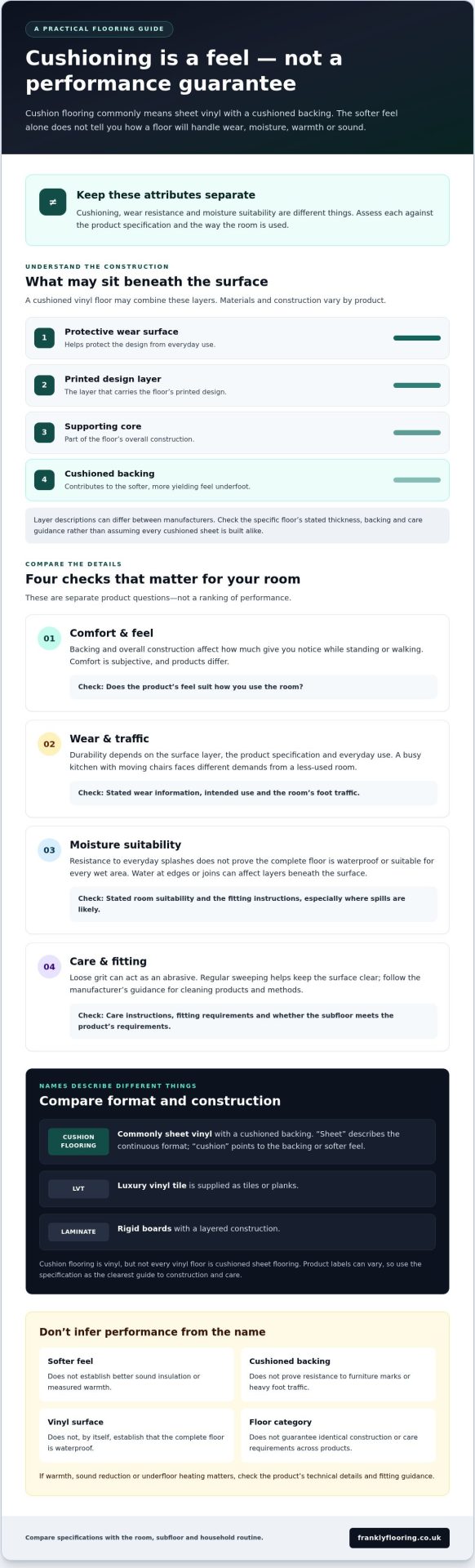
Think of “cushion” as a clue to construction or feel, not a performance guarantee. The surface, backing, overall thickness and softness can differ. The name alone doesn’t prove that a floor is waterproof or soundproof. A cushioned layer may change how the floor feels to stand on, but it doesn’t establish its acoustic or thermal performance. For those details, check the product’s technical specifications and care instructions.
What layers make up cushion flooring?
A cushioned vinyl floor may combine a protective wear surface, a printed design layer, a supporting core and a cushioned backing. The wear surface helps protect the design from everyday use, while the backing contributes to the softer feel. Manufacturers may describe these layers differently, and construction varies by product. Check the specification for the stated thickness, backing and cleaning guidance instead of assuming all cushion flooring is built alike.
The term cushioned vinyl sheet is also used to describe sheet vinyl with a lower layer that gives it more spring. This broad description helps explain the idea, but the exact materials and layer arrangement depend on the individual floor.
Is cushion flooring another name for vinyl?
In the UK, cushion flooring commonly refers to a type of sheet vinyl. The terms describe different things: sheet vinyl identifies the format, supplied as a continuous sheet, while cushion points to its backing or softer feel. Cushion flooring is vinyl, but not every vinyl floor is cushioned sheet flooring.
Product labels aren’t always used consistently, so compare the details rather than relying on a category name. A rigid vinyl tile or plank, for example, has a different format and construction from a flexible sheet. The specification is the clearest guide to what a particular floor is made of and how it should be cared for.
How cushion flooring feels and performs in everyday use
The word “cushion” suggests a softer floor, but it doesn’t tell you exactly how it will feel in your home. The backing and overall construction affect how much give you notice when standing or walking, and products differ. A cushioned surface may feel more forgiving than a rigid floor, but comfort is subjective and isn’t a fixed performance standard.
Does cushion flooring feel softer or warmer?
Softness underfoot and insulation are different things. A floor can feel less hard without providing a measured improvement in warmth or reducing noise between rooms. If warmth, sound reduction or use with underfloor heating matters, check the product’s technical details and fitting guidance rather than relying on the word “cushion”. The Contract Flooring Association (CFA) is a UK flooring industry resource, but the performance of a particular floor depends on its own specification and the full floor build-up.
Cushioning, wear resistance and moisture suitability are separate attributes, so assess each one independently. A comfortable feel doesn’t prove that a floor will resist furniture marks, stand up to heavy foot traffic or suit a room exposed to water. Compare the product information with how the room is used.
How durable and easy to clean is it?
Durability depends on the product’s surface layer and specification, as well as everyday use. A busy kitchen with frequent foot traffic and moving chairs puts different demands on a floor than a less-used room. Check the stated wear information and intended-use guidance, and consider how much grit or dirt is likely to be brought in. Small particles underfoot can act as an abrasive, so regular sweeping helps keep the surface clear.
For routine care, follow the manufacturer’s cleaning instructions. Sweeping or vacuuming with a suitable setting removes loose dirt. Use only cleaning methods and products permitted by the guidance. Avoid abrasive pads, scouring tools and strong chemicals unless the manufacturer specifically allows them. Even floors in the same broad category may have different care requirements.
Check moisture suitability for the specific product, too. A surface may resist everyday splashes, but that alone doesn’t establish that the complete floor is waterproof or suitable for every wet area. Water entering at edges or joins can affect the layers beneath the surface. Check the stated room suitability and fitting instructions, particularly where spills are likely.
To compare options, explore vinyl flooring options and weigh each product’s specification against your household’s needs for comfort, wear and care.
Cushion flooring, sheet vinyl, LVT, and laminate: what is the difference?
These names describe different things: some refer to a floor’s format, others to its construction. Cushion flooring commonly comes as a sheet, while luxury vinyl tile (LVT) is supplied in tiles or planks. Laminate is made as rigid boards with a layered construction. The right comparison depends on the individual product and the room, not simply on which category sounds most suitable.
| Flooring type | Format and construction | Underfoot feel | What to check |
|---|---|---|---|
| Cushion flooring | Usually sheet vinyl with a cushioned backing | May feel softer, depending on its construction | Backing, thickness, wear information and care guidance |
| Sheet vinyl | Flexible vinyl supplied in a sheet; backing varies | Depends on the particular product | Whether it has a cushioned backing, plus suitability and fitting instructions |
| LVT | Vinyl tiles or planks | Depends on the product and subfloor beneath it | Product construction, fitting method and subfloor requirements |
| Laminate | Rigid boards with a layered construction | Generally firmer than cushioned sheet flooring | Room suitability, fitting method, care and subfloor requirements |
Cushion flooring versus sheet vinyl: are they different?
In UK retail language, “cushion flooring” often means cushioned sheet vinyl. The terms overlap, but they aren’t exact synonyms: sheet vinyl describes the format, while “cushion” points to the backing or feel. Not every sheet-vinyl floor has a cushioned backing, and labels can vary between product descriptions. Compare the stated construction and specification rather than assuming the category name tells you everything.
Cushion flooring versus LVT and laminate
The format is the clearest distinction. Cushion flooring and other sheet vinyl are supplied in broad sheets; LVT comes as tiles or planks; laminate is supplied as rigid boards. Vinyl is a polymer-based flooring material, while the broader category of polymeric floors includes products made in different ways. That term alone doesn’t identify a floor’s format or fitting method.
There’s no universal winner. Flexible sheets, individual LVT pieces and rigid laminate boards have different construction, feel and preparation needs. Fitting methods and subfloor requirements are product-specific, so use the technical instructions when comparing options. For more detail, read the guide to what LVT flooring is and the UK laminate flooring guide. These distinctions help answer “what is cushion flooring?” without treating every vinyl floor as the same product.
Where can cushion flooring work, and what should you check first?
Whether cushion flooring suits a room depends on more than its feel. Consider how much foot traffic the floor will get, the likelihood of spills, the condition of the subfloor and the product’s stated room-use guidance. A floor that suits a lightly used room may not be the right choice for a busy kitchen or utility room.
Is cushion flooring suitable for kitchens and bathrooms?
Some products may be suitable for kitchens, bathrooms or utility rooms, but the category name alone doesn’t establish this. A vinyl surface can resist everyday splashes, yet that doesn’t guarantee water can’t pass through joins or around edges and affect the layers below. Check the exact product’s wet-area guidance and follow its instructions for care and use. Cleaning recommendations can also differ between products.
What should you check before choosing a product?
Compare the specification with the conditions in your room. Thickness and backing affect the floor’s construction and feel; the wear surface and stated use guidance help you assess whether it fits your household’s traffic. Check roll dimensions against your measurements, too. Product instructions should explain the subfloor requirements. A smooth, clean, dry and level base may be required, but follow the specific guidance rather than assuming every floor has identical requirements.
If you have underfloor heating, confirm that the product is compatible and check any temperature limits in its specification. Don’t infer suitability from the fact that the floor is vinyl or cushioned.
Use this four-step check before deciding:
- Identify room conditions: Consider traffic, spills and how the space is used.
- Assess the subfloor: Review its condition and compare it with the product’s requirements.
- Check specifications: Compare thickness, wear surface, backing, roll dimensions, room suitability and heating guidance.
- Plan care: Read the manufacturer’s cleaning instructions and consider whether they suit your routine.
Once you know what the room requires, explore vinyl flooring options and compare the product details against your checklist.
How to choose cushion flooring confidently
A good choice starts with the room, not the pattern or the label. Once you know how the space is used, compare the product’s construction and specifications with your practical needs. Knowing “what is cushion flooring” helps explain the format, but the individual product details should guide your decision.
A simple cushion flooring decision checklist
- Start with the room. Consider household traffic, likely moisture exposure and the underfoot feel you prefer.
- Match the construction. Compare the backing, wear surface and other technical details with the room’s needs. Check stated suitability rather than assuming every cushioned vinyl product performs alike.
- Measure and plan. Roll requirements depend on room dimensions, product width, layout and pattern direction. Consider how the design will sit in the space, and use the product’s measurement guidance.
- Review the practical details. Check subfloor requirements and care instructions before ordering, so you know what preparation and routine maintenance the product calls for.
If samples are available, view them in your home’s lighting and beside the colours and finishes already in the room. A shade or pattern can look different on a screen or under shop lighting. Seeing it in place gives you a more useful sense of how it will work with your space.
When should you compare another flooring type?
If you prefer a plank or tile format, compare LVT and check its construction and product-specific requirements. Laminate may suit you if you favour a rigid board format, but its suitability and care requirements still need to match the room. Neither alternative is automatically better. Base your choice on the space, household routine, product specifications and your own preference.
Frankly Flooring is a family-run online retailer with over 20 years of experience in the flooring industry. Its flooring range includes vinyl, LVT and laminate. Use the checklist as you explore the online flooring range, comparing each product’s stated details rather than relying on a category name alone.
Choose your next floor with confidence
Understanding what is cushion flooring makes product descriptions easier to compare. The term commonly refers to cushioned sheet vinyl, but the feel and performance depend on the individual floor. Remember to distinguish format from construction. Sheet vinyl, LVT and laminate are made differently, and none is automatically right for every room.
Start with how you use the space, then check the product’s backing, wear information, room suitability, subfloor requirements and care guidance. Measurements matter, too, especially for sheet flooring, where roll width and pattern layout can affect how much you need. Use the specification, not the label alone, to guide your choice.
Frankly Flooring is a family-run online retailer serving customers across the UK, with over 20 years of flooring industry experience. When you’re ready to compare options, explore flooring options online with Frankly Flooring. Browse the range and use the product details to find a floor that fits your home and routine.
Frequently Asked Questions
What is cushion flooring?
Cushion flooring commonly refers to cushioned sheet vinyl used in homes. If you’re asking “what is cushion flooring”, it’s vinyl flooring that may have a backing designed to create a softer feel underfoot. Construction varies, so the name doesn’t guarantee a particular thickness, comfort level or performance. Check the specific product’s backing, wear surface, intended rooms, care instructions and compatibility requirements before choosing it.
Is cushion flooring the same as sheet vinyl?
Not always, although UK flooring descriptions often use the terms together. Sheet vinyl describes the format: flooring supplied in a sheet. Cushion flooring usually refers to a cushioned construction or feel. Not every sheet-vinyl product has the same backing, and some may not be cushioned. To compare like with like, look at each product’s construction and specification rather than relying on the category label alone.
Is cushion flooring waterproof?
Don’t assume every cushion-flooring product is fully waterproof just because its surface is vinyl. A product may be suitable for a room where moisture is present, but its stated use, joins and edges all matter. Water that reaches beneath the surface may affect the backing or subfloor. Check the product specification and care guidance before using it in a bathroom or other wet area, and follow the stated instructions.
Do you need underlay under cushion flooring?
Underlay requirements depend on the product’s construction and fitting instructions. Some cushion flooring has a backing of its own, while other products may specify particular preparation or additional materials. Don’t add underlay automatically, as it could affect the finished floor or its suitability. Check the manufacturer’s guidance for the exact product and make sure the subfloor meets its stated requirements before planning the flooring.
Can cushion flooring be laid over existing tiles?
Whether cushion flooring can go over existing tiles depends on the product instructions and the condition of the tiled floor. Uneven tile edges, damaged areas, movement or deep grout lines may show through or affect the finished appearance. Check the product’s subfloor requirements before making plans. A cushioned backing doesn’t mean the floor can hide an unsuitable surface, so assess the base against the manufacturer’s guidance.
How do you clean cushion flooring?
Remove loose dirt regularly, then clean the surface using methods approved for the specific product. Follow its care instructions for suitable cleaners, water use and stain treatment. Don’t assume every vinyl surface tolerates the same chemicals or abrasive tools. The manufacturer’s guidance helps protect the finish and keeps your routine appropriate for that floor. If a cleaning method isn’t covered, avoid using it until you have product-specific advice.