
The most expensive solid timber in the showroom might actually be the worst fit for your modern living room. You want the genuine character of real oak, yet you’re likely caught between the fear of buying a glorified laminate and the worry that a single deep scratch will leave your floor un-repairable. It’s a common frustration. You need to know if you’re paying for lasting quality or just a clever marketing label, especially when you’re uncertain if your underfloor heating will cause the whole surface to buckle.
We’re here to give you the frank truth about engineered wood flooring pros and cons so you can stop second-guessing your budget. This 2026 guide provides a transparent look at the material to help you decide if it’s the right investment for your specific property. We’ll move past the industry jargon to explain why these boards are a technical evolution designed for stability rather than a cheap compromise. You’ll gain a clear framework for choosing the right board for every room and the confidence to know exactly how your floor will perform for decades to come.
Key Takeaways
- Understand why the multi-layered core provides better stability than solid timber in modern British homes.
- Weigh the engineered wood flooring pros and cons to determine if the compatibility with underfloor heating makes it the right choice for your project.
- Learn how to check the wear layer thickness so you don’t overpay for a floor that can’t be sanded down in the future.
- Compare the maintenance requirements of oil and lacquer finishes to find a surface that matches your daily routine.
- Discover how to interpret technical spec sheets to ensure you’re investing in a product built for long-term durability.
What Is Engineered Wood Flooring? The Frank Truth Behind the Layers
Before you dive into the engineered wood flooring pros and cons, you need to clear up a common misconception. Engineered wood isn’t a synthetic imitation or a picture of wood printed on plastic. It’s 100% real timber. The difference lies in how those timber pieces are put together. While a solid wood plank is one single piece of wood from top to bottom, an engineered plank is a sophisticated sandwich of layers designed to stay flat and stable.
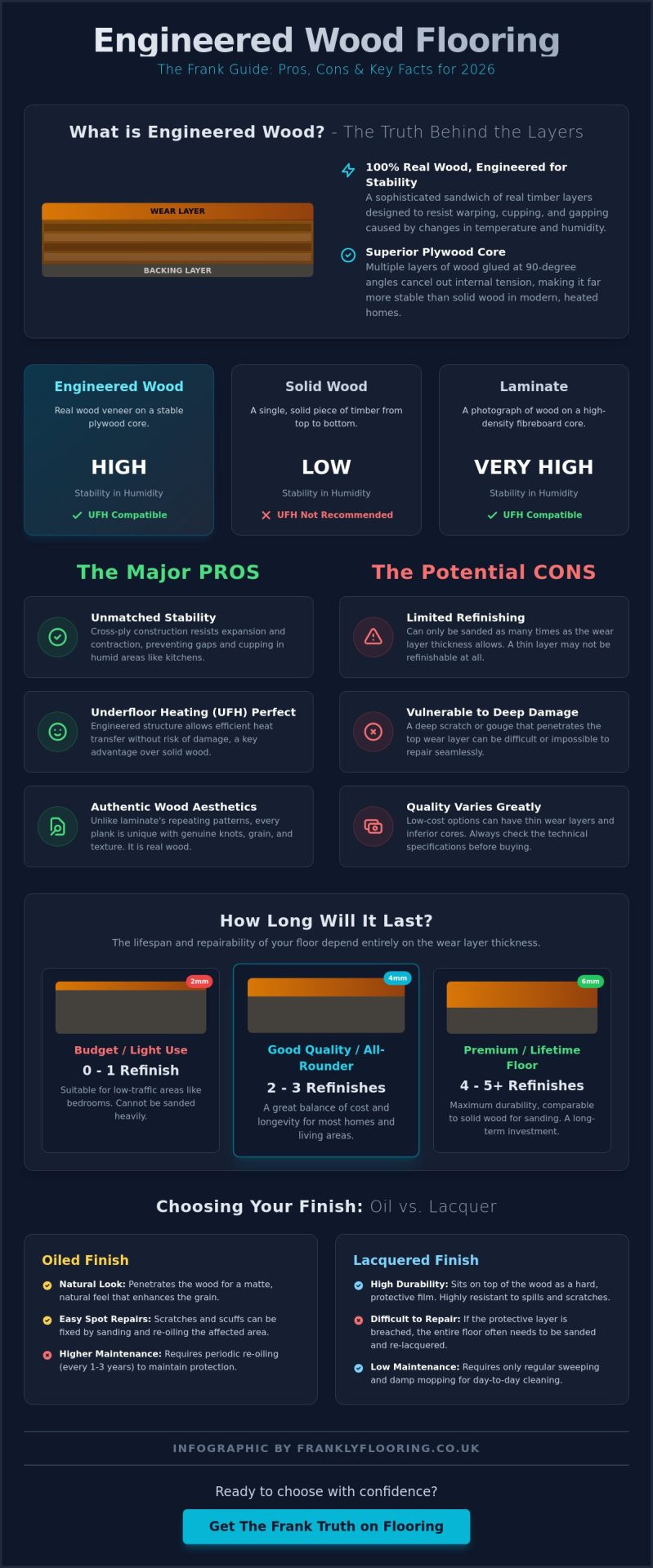
The anatomy of a plank is where the magic happens. On top, you have the wear layer, which is a solid veneer of your chosen species, like Oak or Walnut. Beneath that, you’ll find the core and the backing layer. This specific Engineered wood composition allows the floor to resist the natural urge of timber to warp, cup, or gap when the temperature shifts. It was originally invented to solve the “movement” issues that plague solid wood in climates where humidity fluctuates wildly throughout the year.
Don’t confuse this with laminate. Laminate uses a high-definition photograph of wood glued onto a fibreboard base. When you walk on engineered wood, you’re walking on genuine hardwood. You get the knots, the grain variations, and the texture of the forest, but with a structural backbone that can handle the demands of a modern household.
The Construction: Plywood vs. Multi-layer Cores
Not all cores are created equal. In the UK, plywood cores are generally considered the superior choice for structural integrity. Plywood is made by gluing thin sheets of wood together with the grain running in opposite directions. The role of the backing layer is equally vital; it acts as a counter-balance to the top wear layer to prevent the plank from cupping. This cross-layered construction is the secret to its 2026 popularity because it cancels out the internal tension of the wood.
Engineered vs. Solid Wood: A Necessary Evolution
Solid wood often fails in modern homes because our properties are now better insulated and more aggressively heated than they were fifty years ago. Central heating acts like a giant hairdryer, sucking moisture out of solid planks and causing them to shrink. Engineered wood is the necessary evolution for the 21st-century home. Visually, the two are identical once they’re laid on the floor. The difference is entirely structural, giving you the look you want without the maintenance headaches of traditional timber. For a more detailed breakdown of these technical specifications, you can read our Engineered Wood Flooring: The Frank 2026 Guide to Quality & Value.
The Major Pros: Why Engineered Wood Dominates Modern British Homes
Understanding the engineered wood flooring pros and cons starts with recognizing why this material has become the default choice for UK renovations. It isn’t just about the look. It’s about how the floor behaves when the British weather does its worst. While solid timber was the gold standard for centuries, modern living requires a more stable solution that doesn’t react violently to every change in humidity.
Stability in the Face of UK Humidity
Traditional solid wood acts like a sponge. It expands in the humid summer and shrinks in the dry winter, leading to unsightly gaps or “cupping.” Engineered planks use a cross-ply construction to counter this natural movement. Each layer is glued at a 90-degree angle to the one above it, creating a structural tug-of-war that keeps the plank flat. In rooms like kitchens or open-plan dining areas where steam and spills are common, this stability is vital. The Frank benefit is simple: you’ll experience fewer gaps and less creaking as the seasons change.
The Underfloor Heating Advantage
Compatibility with underfloor heating (UFH) is likely the primary reason for this material’s market dominance. Solid wood is a poor conductor and prone to heat damage, but engineered wood allows heat to transfer efficiently through its layers without compromising the structure. This is a must-have feature for 2026 new-builds, where UFH is becoming the standard. To get the most out of your system, you’ll need the right underlay for wood flooring to ensure the heat reaches the surface quickly and evenly.
Beyond the technical specs, there’s the undeniable aesthetic authenticity. Unlike laminate or LVT, which often use repeating printed patterns, every single plank of engineered wood is unique. You get the genuine knots and grain of real timber. It’s also a more sustainable way to use slow-growing hardwoods like Oak and Walnut. Instead of using the whole tree for a few thick planks, a single log provides the wear layers for multiple engineered floors. When looking for quality, Good Housekeeping’s tested flooring picks often highlight veneer thickness as a key indicator of long-term durability.
You also gain installation versatility. You can glue these planks down for a solid, permanent feel or “float” them over an underlay, making it a viable option for almost any subfloor. If you’re ready to see how these benefits look in a real home, you can browse our full range of engineered wood options to find your perfect match.
The Cons: Where Engineered Wood Might Fall Short
Transparency is at the heart of what we do. While we’ve discussed the stability and aesthetic benefits, a complete look at engineered wood flooring pros and cons requires a look at the downsides. This isn’t a “set and forget” product like some synthetic options. It carries a higher entry price than laminate or standard LVT, and it demands a specific level of respect to maintain its appearance over the decades.
Maintenance is a key consideration for any homeowner. Because the top surface is genuine timber, it’s susceptible to scratching from pet claws, grit, or dragging heavy furniture. Unlike vinyl, it can’t be mopped with a bucket of soapy water; it requires pH-neutral cleaners and a damp, rather than soaking, mop. Neglecting this care can lead to the surface dulling prematurely, which brings us to the most significant technical limitation: the sanding limit.
The Wear Layer Dilemma
Frankly speaking, a 2mm wear layer is a budget choice with limited longevity. Many people buy engineered wood thinking they can sand it down whenever it gets scuffed, but the thickness of that top veneer dictates how many lives the floor actually has. A 2mm layer can usually only be buffed or lightly sanded once, maybe twice if the professional is exceptionally skilled. Once you sand through that veneer to the plywood core, the floor is ruined.
The correlation is simple: the thicker the veneer, the more sand-and-seal cycles it can withstand. A 3mm layer offers a bit more breathing room, but we always advise readers to look for 4mm+ wear layers if they want a true lifetime floor. A 6mm wear layer, for instance, can often be sanded as many times as a solid wood plank, giving you the stability of engineered construction with the longevity of traditional timber.
Engineered Wood vs. LVT: The Moisture Reality
While engineered wood is far more stable than solid oak, it’s not 100% waterproof. Standing water remains the primary enemy of natural timber. If a pipe leaks or a bath overflows, the wood fibres will eventually absorb that moisture, leading to swelling or discolouration that cannot always be fixed. This makes it a risky choice for high-moisture environments like bathrooms or wet rooms where humidity is constantly high.
When comparing wood to LVT flooring, the moisture reality becomes clear. Luxury vinyl is entirely synthetic and impervious to water, making it the practical choice for areas where splashes are guaranteed. Our Frank advice is straightforward: keep the engineered wood for your living areas, hallways, and bedrooms where it can shine, and opt for luxury vinyl in the bathroom to avoid future headaches.
Making the Choice: Wear Layers, Finishes, and Grades
Choosing the right board involves more than just picking a colour you like. You need to consider the physical build of the plank to ensure it matches the demands of your home. Most residential projects use a 14mm thick board, which typically includes a 3mm wear layer. This is the industry standard for a reason; it provides plenty of stability for a floating installation without being unnecessarily bulky. However, if you’re looking for a premium feel or need to structuraly span across floor joists, a 20mm board is the superior choice. These thicker planks often carry a 6mm wear layer, giving you the maximum possible lifespan for your investment.
The grade of the wood is another area where people often get confused. Wood grading isn’t about quality or durability; it’s entirely about aesthetics. A “Select” grade board is cut from the centre of the tree, resulting in a clean, uniform look with very few knots. If you prefer a floor that looks sleek and modern, this is your best bet. On the other end of the spectrum, “Rustic” grades embrace the natural character of the timber, featuring knots, sapwood, and wider colour variations. Understanding these engineered wood flooring pros and cons helps you decide whether you want a floor that looks like a consistent surface or one that tells the story of the tree it came from.
Oil vs. Lacquer: Which Finish Suits Your Lifestyle?
The finish you choose dictates how much work you’ll have to do in three years’ time. Lacquered floors have a protective film on the surface, making them incredibly hard-wearing and easy to wipe clean. The downside is that once a lacquer is scratched, you can’t easily fix it; you usually have to sand and refinish the whole room. Oiled finishes, by contrast, soak into the wood fibres to provide a natural, matte look. While they require periodic re-oiling to keep them protected, they are much easier to spot-repair. If you have pets or children, an oiled floor allows you to buff out a single scratch without moving all the furniture out of the room.
The Subfloor Factor
Your subfloor condition dictates how you install the product. If your subfloor is perfectly flat, you can “float” the floor over an underlay. If it’s uneven, you might need to glue the planks down to prevent movement. Never skip the damp-proof membrane (DPM) if you’re laying over concrete, as moisture from the slab is the quickest way to ruin a new installation. You’ll also need the right accessories to finish the job. Whether you’re transitioning to a carpeted room and need carpet grippers or matching door bars, these small details prevent the floor from looking like an afterthought. If you want to see how different grades and finishes look in person, you can explore our full wood flooring collection to find the right balance for your home.
Investing in Quality: How to Spot a Floor That Lasts
Learning to read a technical specification sheet is the best way to cut through marketing fluff. You aren’t just looking for a pretty finish. You’re looking for three specific numbers: the total thickness, the wear layer thickness, and the core material. At Frankly Flooring, we prioritize integrity in our sourcing because we’ve seen how “bargain” boards fail after just a few seasons of UK humidity changes. We believe in providing products that act as a foundational element of your home’s character, not a temporary fix. When you weigh up engineered wood flooring pros and cons, the biggest “con” is almost always the result of choosing a poor-quality product that wasn’t built for longevity.
The “Cheap Wood” Trap
Suspect anything with a veneer under 2mm or a core made of unidentified softwoods. These boards are prone to delamination, where the layers literally peel apart over time. While the initial price is lower, the long-term cost is significantly higher when you factor in the upheaval of a total replacement in five years. As a family-run business with 20 years of experience, we know that quality is cheaper in the long run. A slightly higher investment today ensures you have a floor that can be refreshed and maintained for decades.
Before you commit to a purchase, run through this final checklist to ensure the product meets your needs:
- What is the exact wear layer thickness? Aim for 4mm if you want the option to sand it multiple times.
- Is the core high-quality plywood? This offers the best stability for the UK climate.
- Does the finish match my lifestyle? Choose lacquer for low maintenance or oil for easy spot repairs.
- Is it compatible with my specific heating system? Ensure it’s rated for underfloor heating if required.
- Is the sourcing transparent? Look for clear technical data rather than vague marketing claims.
Next Steps for Your Home
Ordering samples is an essential step in the process. Wood is a natural material, and its grain and colour will look different in your own hallway than they do on a backlit computer screen. Seeing the material in your own light helps you feel the texture and confirm the grade matches your vision. When you’re ready to order, remember the “Frank” rule of thumb for wastage: add 10% to your room’s square footage. This covers your cuts, staggering, and leaves you with a few spare planks for any future repairs. If you’re ready to find a floor built on integrity and craftsmanship, you can browse our range of Engineered Wood Flooring to start your project with confidence.
Choosing a Floor That Grows With Your Home
Deciding on the right material for your property shouldn’t feel like a gamble. You now have the technical knowledge to look past the surface and identify a board built for the long term. Remember that the stability of a plywood core and the thickness of the wear layer are the two most critical factors in your decision. By matching the right finish to your daily routine and ensuring your subfloor is properly prepared, you can enjoy the genuine character of real timber without the structural headaches of the past.
Understanding the engineered wood flooring pros and cons empowers you to invest with confidence. At Frankly Flooring, we leverage our 20 years of expertise to bring you direct-to-consumer prices by cutting out the unnecessary costs of physical showrooms. We’re a family-run business dedicated to integrity, offering national UK delivery on all our wood products and accessories. If you’re ready to find a floor that combines technical precision with natural beauty, you can explore our Frank collection of Engineered Wood Flooring. We look forward to helping you build a beautiful foundation for your home.
Frequently Asked Questions
Can you sand engineered wood flooring?
Yes, you can sand engineered wood flooring as long as the wear layer is at least 3mm thick. A 3mm veneer typically allows for one or two full sands over its lifetime, while a 6mm layer can handle significantly more. You must avoid sanding budget boards with a 2mm veneer, as you risk exposing the plywood core and ruining the floor entirely.
How long does engineered wood flooring last?
A high-quality engineered floor can last between 20 and 50 years depending on the thickness of the wear layer and how well it’s maintained. Boards with thicker veneers and durable finishes like lacquer tend to survive longer in high-traffic areas. Regular maintenance and avoiding excessive moisture are key to ensuring your investment reaches its maximum lifespan.
Is engineered wood flooring better than laminate?
Engineered wood is superior if you value the authenticity and feel of real timber, whereas laminate is a synthetic alternative. While laminate is often more scratch-resistant and budget-friendly, it cannot be sanded or repaired once damaged. When weighing engineered wood flooring pros and cons, remember that engineered wood offers a unique grain and a higher resale value that laminate simply can’t match.
Can I use engineered wood flooring in a kitchen?
Yes, engineered wood is well-suited for kitchens because its multi-layered construction resists the humidity and temperature changes common in cooking areas. However, you must wipe up spills immediately to prevent water from seeping into the joints. For a busy family kitchen, choosing a lacquered finish provides an extra layer of protection against the occasional splash or dropped utensil.
Does engineered wood flooring increase house value?
Most property experts agree that real wood flooring, including engineered options, adds more value to a home than carpet or laminate. It’s viewed as a premium, long-term feature that appeals to prospective buyers who want the look of solid oak without the maintenance issues. Investing in quality boards suggests a level of care and craftsmanship that can differentiate your property in a competitive market.
What is the best thickness for engineered wood flooring?
For most residential renovations, a total thickness of 14mm with a 3mm wear layer is the ideal balance of cost and durability. If you’re laying the floor directly over joists or want a floor that will last for generations, a 20mm thickness with a 6mm wear layer is the gold standard. Thicker boards provide a more solid feel underfoot and better acoustic properties.
How do I clean engineered wood floors without damaging them?
Use a microfibre mop and a dedicated pH-neutral wood floor cleaner to keep the surface looking its best. You should avoid using steam cleaners or soaking-wet mops, as excessive heat and moisture can cause the wood fibres to swell or the layers to delaminate. Sweeping or vacuuming daily with a soft brush attachment prevents grit from scratching the finish.
Is engineered wood flooring suitable for pets?
Engineered wood is a pet-friendly option, but an oiled finish is often better than lacquer for homes with dogs. Oiled surfaces allow you to spot-repair individual scratches caused by claws without refinishing the entire room. Keeping your pet’s nails trimmed and placing rugs in high-speed traffic zones will help preserve the wood’s appearance over time.