
Did you know that the price per square metre on a carpet sample usually accounts for only half of your final bill? It’s a common frustration for homeowners across the country. You find a beautiful pile at a great price, only to watch the quote double once you add the essentials. If you’re trying to figure out how much does new carpet cost uk in 2026, you deserve a straight answer that includes the underlay, grippers, and fitting fees from the very start.
When you start researching how much does new carpet cost uk, the figures you see in advertisements can be quite deceptive. Many retailers hook customers with “starting from” prices as low as £6 or £8 per square metre. Frankly, these budget options are usually thin, scratchy, and won’t last more than a year in a busy household. For a durable, mid-range carpet that feels comfortable underfoot, you should expect to pay between £20 and £35 per square metre in 2026. This price point typically secures a decent twist or saxony pile that can handle the daily foot traffic of a family home.
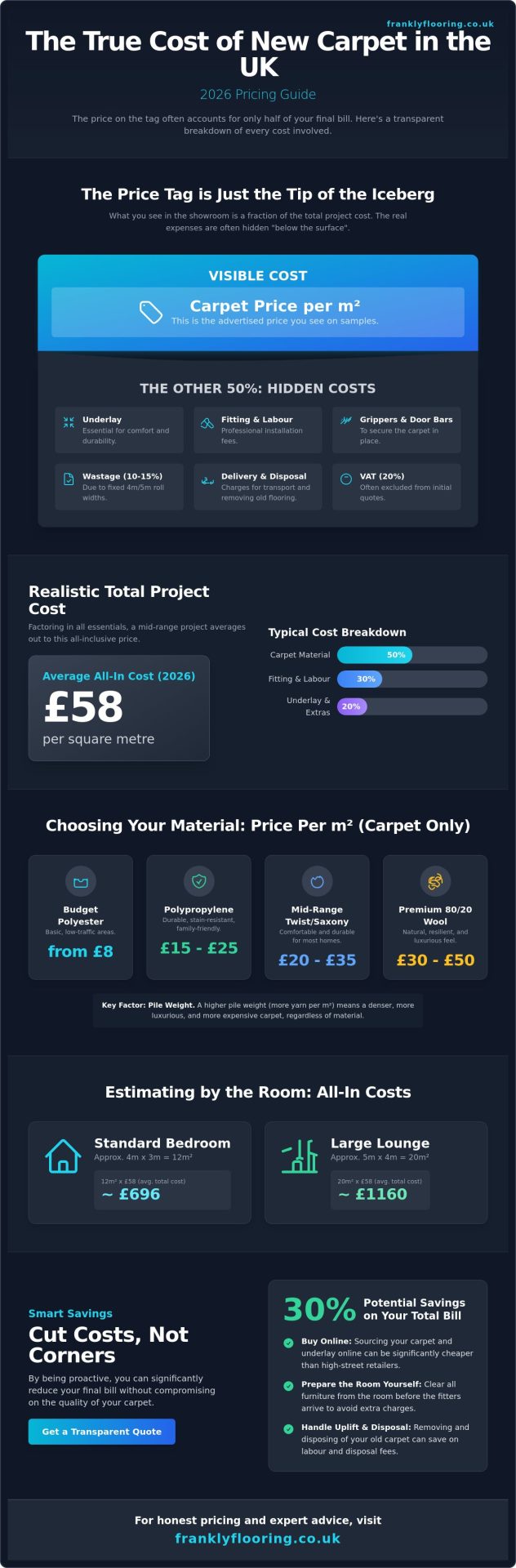
We understand that decoding jargon like subfloor preparation or density feels like a headache. Frankly, we believe in transparency over high-pressure sales tactics. This guide provides a fluff-free breakdown of every cost involved in recarpeting your home, from budget polyester at £8 to premium wool at £50 per square metre. You’ll learn why the average total project cost currently sits around £58 per m² and how to spot hidden extras before they hit your wallet. We’re covering regional fitting rates, material value, and the invisible costs like door bars and disposal fees to help you budget with total confidence.
If you’re comparing prices for your next project, explore our full range of carpets to see the latest styles, colours and options available from Frankly Flooring.
Key Takeaways
- Learn why the ticket price is rarely the final bill and what a realistic mid-range budget looks like in the 2026 market.
- Understand how material choice and pile weight impact both your initial investment and the long-term durability of your floor.
- Discover exactly how much does new carpet cost uk when you factor in the essential extras like underlay, grippers, and fitting fees.
- Get clear, room-by-room estimates for standard bedrooms and large lounges to help you plan your project with total confidence.
- Find out how to save up to 30% on your total bill by buying online and handling the simple room preparation yourself.
The Reality of Carpet Pricing in the UK (2026)
When you start researching how much does new carpet cost uk, the figures you see in advertisements can be quite deceptive. Many retailers hook customers with “starting from” prices as low as £6 or £8 per square metre. Frankly, these budget options are usually thin, scratchy, and won’t last more than a year in a busy household. For a durable, mid-range carpet that feels comfortable underfoot, you should expect to pay between £20 and £35 per square metre in 2026. This price point typically secures a decent twist or saxony pile that can handle the daily foot traffic of a family home.
To understand the true price, you must look at the three pillars of carpet cost: the pile itself, the accessories, and the fitting. The carpet materials and construction, such as whether it is a tufted synthetic or a woven wool blend, dictate the initial price per metre. However, the pile is only one part of the equation. Total Project Cost is the combined sum of your chosen carpet material, the underlay and grippers, and the professional labour required for fitting.
The m² Trap: Why Room Shape Matters
Carpet is manufactured in fixed widths, most commonly 4 metres or 5 metres wide. This means you aren’t just paying for the floor space you cover; you’re paying for the width of the roll. If your room is 3.2 metres wide, you still have to buy the 4-metre width, leaving you with a significant offcut. This wastage typically adds between 10% and 15% to your total material cost. We always recommend rounding your measurements up to the nearest roll width to ensure a seamless finish without awkward joins or gaps.
VAT and Delivery: The Often-Forgotten Extras
Always check if your quote includes VAT. At Frankly Flooring, we believe in being upfront, so our prices always include the 20% tax. Some retailers hide this until the final checkout, which can lead to a nasty surprise. You should also account for delivery charges. Standard UK delivery for bulky rolls usually ranges from £30 to £50 depending on your location. If you live in a flat with difficult access or require a delivery to an upper floor, be prepared for additional surcharges. Moving these heavy rolls is a two-person job that requires careful handling to avoid damage to your walls or the carpet itself.
Choosing Your Material: How Carpet Type Dictates Price
When you’re weighing up how much does new carpet cost uk, the fibre you select is the most significant factor in your final quote. It isn’t just about the aesthetic; it’s about how the material is engineered to perform under your feet. One of the most important metrics to look for is pile weight. Simply put, a higher pile weight means there is more yarn packed into every square centimetre. This results in a denser, more luxurious feel, but it also naturally drives up the price because more raw material is used during manufacturing. A carpet with a weight of 1,200g per m² will always cost more than a 600g alternative, even if they look identical from a distance.
The style of the weave also influences your budget. A loop pile, often called a Berber, is typically more cost-effective and durable for high-traffic areas like hallways. In contrast, a deep cut pile like a Saxony offers that sought-after sink-in feeling for bedrooms but usually carries a higher price tag. This is due to the extra processing required to shear the loops and create that soft, upright finish. When calculating how much does new carpet cost uk for a full house, mixing these styles based on room usage is a smart way to manage your spend.
If you’re deciding which material and style suits your budget, browse our carpet collection to compare colours, constructions and prices from leading carpet brands.
Wool and Wool-Blends: The Premium Benchmark
For many homeowners, wool remains the gold standard for flooring. In 2026, a high-quality 80/20 wool blend typically starts at £30 per m² and can reach £50 per m² for luxury options. Using fibres sourced through British Wool ensures you’re getting a product with natural bounce back properties. Unlike some synthetic fibres that can flatten permanently under the weight of furniture, wool is resilient and naturally fire-retardant. While the entry price is higher, the longevity of wool often means you won’t be replacing it as soon as a cheaper alternative.
Polypropylene and Polyester: Budget-Friendly Durability
Modern synthetics have come a long way and they are no longer the flimsy options of the past. For family homes with pets or young children, polypropylene is often the smartest choice. You’ll find the price sweet spot for family-grade synthetics between £15 and £25 per m². The real saving here is hidden in the maintenance. Most modern polypropylene carpets are bleach-cleanable and come with stain-free warranties. This means you won’t be paying for professional deep cleans every time a drink is spilled. If you’re still unsure which material fits your lifestyle, choosing the right carpet involves balancing this durability with your specific room requirements.
The Invisible Costs: Underlay, Grippers, and Door Bars
Many people focus so much on the pile that they forget the infrastructure underneath. If you’re asking how much does new carpet cost uk, you have to account for the bits and bobs that hold everything together. These aren’t optional extras; they’re the foundation of a quality finish. Skipping these to save a few pounds is a false economy that usually leads to premature wear. For a standard room, these essential items often add between £100 and £200 to your total bill, so it’s vital to include them in your initial budget rather than treating them as an afterthought.
According to the NICF Guide to Domestic Flooring, using the correct accessories is vital for both safety and the longevity of the floor covering. These components ensure the carpet stays taut, provides the necessary thermal insulation, and transitions smoothly between different rooms. When you see a quote that looks too good to be true, it’s often because these items have been left out of the headline price.
Underlay: Why You Should Spend More Here
Think of underlay as the suspension for your floor. It absorbs the impact of footsteps, which protects the carpet fibres from being crushed against the hard subfloor. In 2026, quality underlay typically costs between £6 and £14 per square metre. You’ll generally choose between 8mm, 10mm, or 12mm thickness. While 12mm feels like walking on a cloud, it isn’t always the best choice for stairs where stability is more important. Specialist options like acoustic underlay for noise reduction or thermal underlay for cold ground floors carry a premium but can save you money on energy bills. One frank piece of advice: never reuse old underlay. It will have lost its bounce, and most manufacturers will void your new carpet’s wear warranty if it isn’t laid over new materials.
Grippers and Door Bars: The Essential Framework
You’ll also need to budget for carpet grippers around the perimeter of your room. These thin strips keep the carpet stretched and secure. They currently cost between £1.50 and £3 per linear metre. If you have concrete floors, the fitter will need to use specialized masonry nails or adhesive, which can slightly increase the labour time. Finally, don’t forget the door bars. Standard aluminium bars cost between £8 and £20 each, while luxury brass or wood-effect finishes can cost double that. Count your doorways before you shop; for a hallway project with four or five doors, this small item alone can add £100 to your total when you’re calculating how much does new carpet cost uk for your home.
Estimating by the Room: Average Costs for UK Homes
Calculating how much does new carpet cost uk becomes much easier when you look at typical room sizes rather than abstract square metres. While every home is unique, most UK properties follow similar patterns for bedrooms, lounges, and hallways. Seeing the total project cost for a specific space helps you move past the “per metre” confusion and build a realistic budget for your renovation. It allows you to see exactly where your money is going, from the pile you walk on to the labour that ensures it stays in place.
The Bedroom: Comfort on a Budget
A standard UK double bedroom is approximately 12m². If you select a mid-range twist carpet at £25 per m², your material cost sits at £300. However, the total bill will be higher once you factor in the essentials. You will need roughly 12m² of underlay, which averages £10 per m², and at least one door bar. Adding a labour charge of roughly £60 to £120 for the room, your total investment for a single bedroom usually lands between £500 and £650. For a slightly larger 12×12 foot room, which is roughly 13.4m², the total cost including underlay and fitting averages around £716.90 according to December 2024 price data.
A large lounge of 20m² follows a similar logic but often requires more grippers and potentially a 5-metre wide roll to avoid unsightly seams in the middle of the floor. Using mid-range materials, a 20m² lounge typically costs between £850 and £1,100 including fitting. These estimates assume your subfloor is in good condition and doesn’t require extra preparation like plywood sheeting or levelling compound.
Stairs and Landing: The Complexity Charge
The stairs and landing area is often the most expensive part of a project relative to its size. Fitters rarely charge a simple square metre rate here. Instead, they typically apply a “per step” charge, which can range from £5 to £10 per tread. This accounts for the intricate cutting and bolting required to ensure the carpet is safe and secure. If you want a bespoke look, such as a carpet runner, you must also budget for “whipping” or binding the edges to prevent fraying. We always insist on high-density underlay for stairs. It provides the necessary stability to prevent the carpet from shifting under the heavy, focused pressure of climbing feet.
For those looking at a larger scale, a typical 2-bedroom house often costs between £2,500 and £3,500 for a full refresh. If you’re carpeting a 3-bedroom home, estimates published in April 2026 suggest a range from £2,000 for basic materials to over £10,000 for premium wool. On average, most homeowners spend around £4,708 for a 3-bed property, rising to £5,588 if you require the removal and disposal of your old flooring. If you’re ready to see how these figures apply to your own home, you can book a professional measurement to get a fixed, transparent quote.
How to Save on New Carpet Without Cutting Corners
When you’re researching how much does new carpet cost uk, it’s easy to feel like the only way to save money is to buy a cheaper, lower-quality pile. That’s a mistake that will cost you more in the long run when the carpet flattens within eighteen months. Instead, you should look at where the “bloat” exists in a typical retail quote. High-street retailers often have massive overheads from expensive showrooms and commission-based staff. By avoiding these “sale” gimmicks, where prices are often inflated before being “slashed” by 50%, you can find genuine value through direct-to-consumer models. Frankly, we prefer a transparent price from day one over a manufactured discount.
For small rooms like an ensuite or a home office, you can save significantly by looking for remnants. These are offcuts from larger rolls that are sold at a steep discount because they are too small for a standard lounge but perfect for a compact space. Using a remnant for a 4m² room can often cut your material cost in half compared to ordering from a main roll.
The Online Advantage
The most straightforward way to reduce your bill is to buy online. Without the cost of a physical showroom, online retailers can pass on savings of 20% to 30% on the exact same materials. You aren’t sacrificing quality; you’re just not paying for the shop’s rent and electricity. To ensure you’re happy with the feel and colour, always order free samples first. This allows you to see the pile in your own home’s lighting, which is far more accurate than a showroom’s fluorescent bulbs. If you’re ready to start your project, follow our checklist for buying carpet online in the UK to ensure you get the right measurements and specifications.
DIY Prep to Reduce Fitter Fees
Labour is a fixed cost, but you can reduce the time a fitter spends on your job. Most tradespeople apply a “furniture surcharge” if they have to clear the room themselves. By moving the sofa, bed, and side tables before they arrive, you save them time and yourself money. Similarly, the uplift and disposal of old carpet is a major cost. Verified 2026 data shows that fitters charge between £2 and £4 per m², or a flat fee of £30 to £80 per room, just to take the old material away. If you have a vehicle and can visit a local council tip, doing this yourself keeps that cash in your pocket.
One final tip regarding how much does new carpet cost uk: check your doors. If you’re upgrading to a thicker pile or a better underlay, your doors might not clear the new floor. A fitter might charge extra to trim the door, or you might need a separate carpenter. Checking this early prevents a surprise bill on fitting day and ensures your project stays within your original budget.
Planning Your Next Project with Confidence
Recarpeting your home is a significant investment, but it doesn’t have to be a confusing one. You now know that the sticker price on a sample is only half the story. By accounting for the 10% to 15% wastage and the essential invisible costs like underlay and grippers, you can avoid the common trap of a quote that doubles at the checkout. Whether you choose a durable synthetic for a busy lounge or a premium wool blend for a master bedroom, the goal is always long-term value rather than the lowest entry price.
When you’re finally ready to calculate how much does new carpet cost uk for your specific home, we’re here to help. At Frankly Flooring, we’ve spent over 20 years as a family-run business providing honest advice without high-pressure sales tactics. We offer direct-to-consumer pricing by removing expensive showroom markups, and we provide nationwide UK delivery on all our flooring and accessories. You can browse our range of honest-priced carpets at Frankly Flooring to find a style that fits your budget and your lifestyle. We look forward to helping you build a beautiful, lasting foundation for your home.
Frequently Asked Questions
How much does it cost to fit carpet per square metre in the UK?
Carpet fitting costs between £5 and £12 per square metre in the UK. This price varies by region, with London and the South East often charging between £6 and £11, while Northern England and Scotland typically range from £4.50 to £7.50. This fee covers the basic labour of laying the pile but doesn’t include extras like subfloor preparation or moving heavy furniture.
Is it cheaper to buy carpet and underlay separately?
Buying your carpet and underlay separately from a specialist online retailer is often cheaper than accepting a high-street showroom’s package deal. Showrooms often hide their margins in “free fitting” offers while inflating the price of accessories. Purchasing high-quality underlay independently allows you to choose the exact density you need, often at a 20% to 30% discount compared to retail store prices.
How much should I budget for a 3-bedroom house to be carpeted?
You should budget between £2,000 and £10,000 to carpet a typical 3-bedroom house in 2026. For mid-range materials, the average cost currently sits at £4,708 for the entire property. If you require the removal and disposal of old flooring, this figure usually rises to approximately £5,588. This range accounts for varying room sizes and the higher complexity of stairs and landings.
Do carpet prices include fitting and underlay?
Retail carpet prices rarely include fitting and underlay in the headline price per square metre. When asking how much does new carpet cost uk, it’s vital to remember that the advertised price is typically for the material only. You must factor in an additional £6 to £14 per m² for underlay and £5 to £12 per m² for professional fitting to get an accurate total project cost.
What is the most expensive part of getting a new carpet?
The carpet material itself is usually the most expensive part of the project, often accounting for 50% of your total budget. However, subfloor preparation can become a major expense if your floors are uneven. Plywood or levelling compounds can cost between £15 and £45 per m², which can sometimes exceed the cost of the actual carpet in older properties that require extensive work.
Can I save money by fitting the carpet myself?
You can save between £60 and £120 per room in labour fees by fitting the carpet yourself, but it’s rarely recommended for beginners. Professional fitters ensure the carpet is stretched correctly to prevent ripples and premature wear. Fitting it yourself may also void your manufacturer’s warranty, as most brands require professional installation to guarantee the product’s lifespan and performance over time.
How much extra are stairs compared to a flat room?
Stairs are significantly more expensive than flat rooms because fitters charge a per-step rate of £5 to £10 rather than a flat square metre fee. This accounts for the extra time needed for precise cutting and securing the material around treads and risers. You also need to use a higher-density underlay on stairs to ensure safety and durability under the focused pressure of heavy foot traffic.
What is a “good” price for underlay in 2026?
A good price for a quality 10mm or 12mm underlay in 2026 is between £6 and £14 per square metre. This price range ensures you’re getting a product that provides adequate “bounce back” and thermal insulation. While you can find cheaper options, they often flatten quickly, which reduces the lifespan of your new carpet and can negatively impact how much does new carpet cost uk over the long term.