
During a home consultation in Surrey last month, a client pointed to a tiny snag and asked if her entire hallway was about to unzip like a cheap jumper. It is a valid concern, as roughly 1 in 3 homeowners we speak with in our showroom worry that loop pile carpet problems will eventually outweigh the aesthetic benefits of a textured weave. You likely chose a loop pile for its modern look and natural durability, but seeing a pulled thread or a strange watermark in the light can lead to immediate buyer’s remorse.
We believe in being straight with you. This guide provides the honest truth about these issues, from pet-induced pulls to the science behind shading. You will learn how to fix a snag using simple household tools and discover the maintenance secrets that keep your flooring looking fresh for years. We will also help you determine if your specific household is actually a good match for this style, ensuring you don’t spend money on a product that doesn’t fit your lifestyle.
Key Takeaways
- Learn why seeing high loops isn’t always a sign of a faulty carpet and how to tell the difference between sprouting and genuine damage.
- Get a frank assessment of common loop pile carpet problems like snagging and shading to understand if this style truly fits your lifestyle.
- Discover why loop pile and pet claws are often a disastrous combination and how to protect your hallway runners from ‘unzipping’.
- Master the ‘Tuck and Glue’ method and the golden rule of trimming to handle minor repairs with professional confidence.
What is Loop Pile Carpet and Why Does it Have Unique Problems?
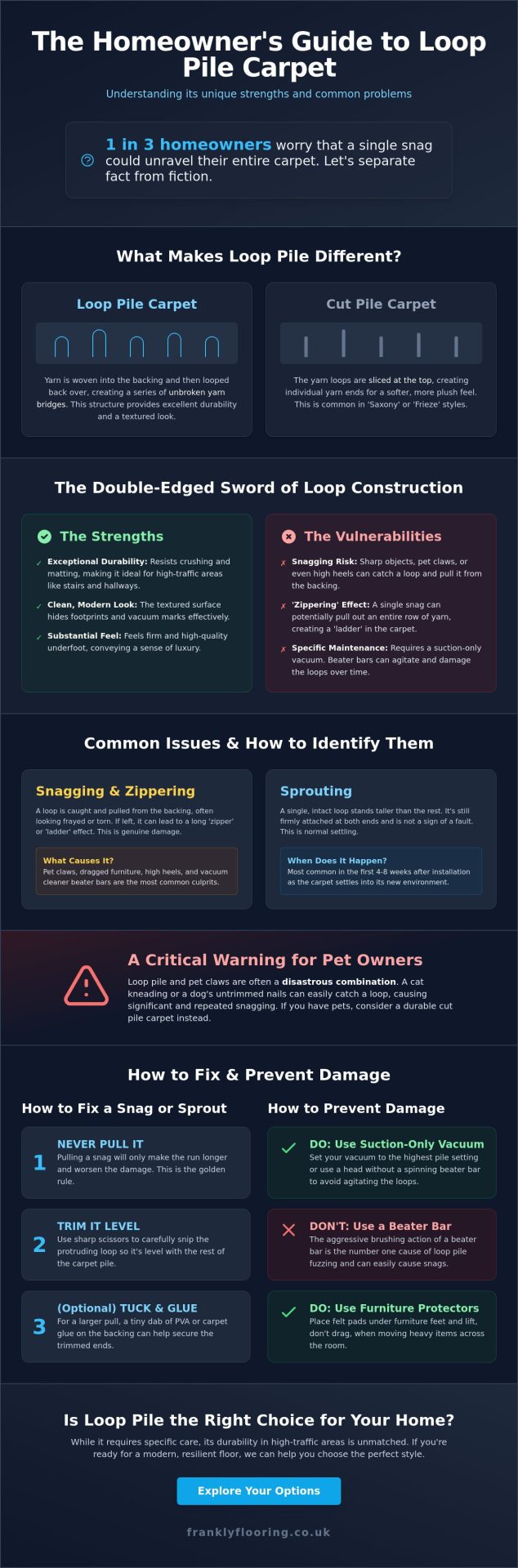
Loop pile is a series of unbroken yarn bridges that distribute weight efficiently. Unlike a cut pile carpet where the yarn ends are sliced to create a fuzzy surface, loop pile keeps the strands intact. The yarn is woven through the backing and then looped back over, creating a pebbled or ribbed texture. Understanding carpet construction and pile types is essential for any homeowner because this specific geometry dictates how the floor will wear over time. While beautiful, loop pile carpet problems often stem from this unique structural design.
In the UK, we frequently refer to these styles as ‘Berber’ carpets. This name originates from the traditional hand-woven rugs of the Berber people in North Africa, though modern versions are now a staple in British showrooms. They’ve gained massive popularity because they offer a contemporary, clean look that doesn’t show footprints or vacuum tracks as easily as a plush saxony might. They feel firm and substantial underfoot, providing a sense of quality that many homeowners prefer.
The structural design is a double-edged sword. Because the yarn is looped, it possesses a natural spring and resists crushing better than almost any other style. However, this same loop creates a vulnerability. If a single strand is caught by a sharp object, it doesn’t just break away. Instead, it can pull, leading to specific loop pile carpet problems such as snagging or the dreaded ‘zippering’ effect where an entire row of yarn is unraveled from the backing.
Continuous Filament vs. Staple Fibres
The type of yarn used significantly impacts how your carpet reacts to damage. Continuous filament (CF) yarn is made from one long, unbroken strand of fibre. It’s incredibly strong and produces very little lint, but it’s prone to ‘laddering’. If a pet’s claw or a piece of furniture snags a CF loop, it can pull a long run out of the carpet, much like a ladder in a pair of tights. You can identify CF by its smooth, consistent appearance across the loop.
Staple fibres consist of shorter lengths of yarn twisted together to form a strand. These might shed more during the first 6 months after fitting, which can be a surprise if you aren’t expecting it. However, they’re less likely to suffer from long zippering runs because the yarn will often break at the twist rather than pulling the whole row. If you look closely at the loops and see tiny ‘hairs’ or a slightly fuzzier texture, you’re likely looking at a staple fibre carpet.
The ‘Frank’ Reality of Loop Durability
Let’s be direct about where these carpets belong in your home. Loop pile is often the best choice for stairs and hallways because of its exceptional crush resistance. It won’t look ‘walked out’ or flattened after 24 months of heavy use. However, it’s a mistake to view it as a low-maintenance option. It isn’t low maintenance; it’s specific maintenance. You can’t use a standard upright vacuum with a spinning beater bar on these floors, as the brushes can agitate the loops and cause them to fuzz or snag. It’s about using the right tools to protect an investment that should realistically last you 10 to 15 years.
Common Loop Pile Problems: Snags, Sprouting, and Shading
Every carpet style has its quirks. Loop pile is no different. While it’s incredibly resilient and perfect for high-traffic areas like stairs or hallways, certain loop pile carpet problems can catch homeowners off guard. Understanding these issues helps you manage expectations and maintain your floor properly over its lifespan.
Snags and the ‘Laddering’ Effect
Snagging is the primary concern for most loop pile owners. It usually happens when a sharp object, such as a pet’s claw, a high heel, or a piece of furniture being dragged, catches a single loop. Because of the way the yarn is woven, a single pull can sometimes lead to a ‘zipper’ or laddering effect across the room. This occurs when the loop isn’t gripped tightly enough by the secondary backing during the manufacturing process.
The golden rule is simple: never pull a loose thread. Pulling it will only make the run longer and the damage more obvious. If you spot a snag, use a pair of sharp scissors to carefully snip the protruding loop level with the rest of the pile. This won’t cause the carpet to unravel, it just tidies the surface.
Sprouting vs. Shedding
It’s common to see a few odd loops standing taller than the rest shortly after your carpet is fitted. This is called sprouting. It isn’t a sign of a faulty carpet; it’s just the yarn settling into the grippers or the backing. You’ll often see this more clearly in the first 4 to 8 weeks of use.
- Identifying a sprout: A sprout is a single long loop that is still firmly attached at both ends.
- Identifying a snag: A snag is a loop that has been torn or pulled away from the backing, often looking frayed.
Unlike wool twist carpets, which might shed loose fibres for the first 3 months of their life, loop piles rarely shed. If you see “fuzz” on the surface, it’s likely just dust or external fibres rather than the carpet itself breaking down.
Shading (Permanent Pile Reversal)
Shading, often called ‘pooling’ or the ‘watermark’ effect, is perhaps the most misunderstood of all loop pile carpet problems. It occurs when the loops lean in different directions, causing light to reflect off them unevenly. This creates patches that look darker or lighter than the surrounding area, similar to how a lawn looks after it’s been mown in different directions.
The frank truth is that shading is a natural characteristic of the material, not a manufacturing defect. It doesn’t affect the durability of the yarn, but it does change the aesthetics. There is no permanent fix for shading. It’s simply a result of how the light interacts with the pile in your specific room. If you’re worried about how a particular texture might look in your home, it’s always best to chat with an expert at a local showroom to see samples in person.
Many people mistake shading for flattening. In high-quality wool loops, the yarn is springy enough to bounce back. If a patch looks flat, try vacuuming it in the opposite direction. If the colour changes but the texture remains, you’re looking at shading rather than actual wear. True flattening usually only occurs in cheaper synthetic loops after 5 to 7 years of heavy footfall.
The Pet Problem: Is Loop Pile a Mistake for Cat and Dog Owners?
If your household includes a cat or a dog, loop pile carpet problems often start the moment the fitting is finished. While the textured aesthetic looks sophisticated, the physical construction of these loops is essentially a playground for claws. We believe in being direct with our customers: loop pile and pets are a volatile combination. It is often a case of when, not if, a snag will occur. If you value a pristine finish, you need to understand the “Velcro effect” before committing to this style.
Why Cats Love (and Kill) Loop Pile
Cats are the primary offenders because the texture of a Berber or loop pile mimics the coarse surface of a sisal scratching post. To a cat, your new flooring looks like a room-sized toy. A single kneading session, where they flex their claws into the yarn, can create 50 or more micro-snags in minutes. You might think you can train a cat to avoid the carpet, but that’s a gamble most homeowners lose. When a cat is left alone, those loops become an irresistible target for their natural instincts. Once the surface is fuzzy from pulled fibres, the carpet’s structural integrity is compromised.
Managing Dogs with Berber Carpets
Dogs present a different challenge, primarily through the “unzipping” effect. If a dog’s nail catches a single loose loop in a hallway runner, their momentum can pull that thread for several metres before you even notice. It’s vital to keep dog nails trimmed, but even short nails can snag during a sudden sprint. Larger breeds, such as Labradors or Golden Retrievers that often weigh over 30kg, also exert significant pressure. This leads to “shading” and flattened loops in high-traffic areas much faster than in pet-free homes. If you must have loops, placing heavy-duty rugs in “zoomie” zones is a necessary precaution to protect your investment.
Frankly, if your pet is high-energy or prone to scratching, you should steer clear of loop pile entirely. It’s better to be honest now than to see you disappointed six months down the line. A high-quality twist pile is a much safer carpet choice because the cut ends don’t snag. For total peace of mind and long-term durability, many UK homeowners are switching to LVT flooring. It offers the look of wood or stone with a robust wear layer that handles claws without a single mark, making it the most sensible option for a busy home with animals.
How to Fix and Prevent Loop Pile Damage
Most loop pile carpet problems start with a single loose thread. If you pull it, you’ll likely end up with a long, unsightly ladder that ruins the look of the entire room. The golden rule of loop maintenance is simple: always trim, never pull. Keep a pair of napping shears or sharp embroidery scissors in your utility drawer for this exact purpose. By cutting a snag flush with the surrounding loops as soon as you spot it, you stop the damage from spreading through the rest of the weave.
The 3-Step Snag Repair
You can fix minor pulls yourself using the ‘Tuck and Glue’ method. It is a straightforward DIY task that prevents small snags from becoming permanent eyesores. Honestly, taking five minutes to do this now will save you the cost of a professional repair later.
- Step 1: Trim the excess thread so it sits perfectly level with the surrounding loops.
- Step 2: Apply a tiny bead of carpet adhesive spray or clear, solvent-based glue to the base of the backing.
- Step 3: Press the loop back into the backing and let it set for at least 24 hours before walking over it.
Choosing the Right Vacuum Cleaner
Your choice of hoover is the biggest factor in the lifespan of your flooring. Many upright vacuums use a rotating beater bar designed to agitate cut pile fibres. On a loop pile, these stiff brushes often catch the top of the loops, causing them to ‘fuzz’ and lose their definition. For the best results, use a suction-only cylinder vacuum. If you prefer an upright model, ensure you can switch the brush bar off entirely. We recommend hoovering twice a week. This frequency prevents sharp grit from settling at the base of the pile, where it can act like a saw against the yarn loops.
Using the Right Accessories
Prevention starts under the carpet. A firm, high-quality underlay acts as a shock absorber for the loop’s ‘bridge’, protecting the delicate structure from heavy footfall. Without this support, the yarn takes the full force of every step, leading to flattened loops and premature wear. Proper tension is also vital. Using a high-quality carpet gripper prevents the fabric from shifting or puckering, which is a common cause of sprouts. Finally, fit felt glides to all furniture legs. This simple fix prevents deep indentations and stops heavy chairs from snagging the pile when they are moved.
If you’re struggling with persistent carpet issues, we can help you choose a more durable option. Contact Frankly Flooring for expert advice on the best fitting for your home.
Choosing the Right Carpet: When is Loop Pile the Correct Choice?
Picking the right floor requires a bit of honesty about how you actually live. Loop pile isn’t a universal solution, but for the right home, it’s an investment that pays off in longevity. While we have explored various loop pile carpet problems such as snagging or specific cleaning requirements, these floors offer a structural integrity that cut piles often lack. By 2026, the trend for textured, organic interiors has made the loop pile a staple for modern British renovations.
You should consider a loop pile for these specific areas:
- Home Offices: The dense loops withstand the constant movement of chair castors better than plush piles.
- Stairs and Landings: The tight construction provides excellent grip underfoot and doesn’t flatten in high-traffic zones.
- Modern Living Areas: If you prefer a minimalist aesthetic, the clean lines of a Berber carpet are ideal.
If your household includes high-energy pets or young children with sharp toys, you might find a twist pile carpet is a more practical alternative. It avoids the risk of pulled threads that can lead to permanent damage. Making a frank assessment of your daily routine now prevents a costly mistake later.
The Case for Loop Pile
Loop pile carpets excel at maintaining their “new” look. Cheap twist piles often lose their bounce and look matted within 18 months in a busy hallway. In contrast, a quality loop pile retains its height because the yarn is already coiled and compressed. For eco-conscious homeowners, wool Berbers are the top choice. They are often made from 80% British wool, offering natural flame resistance and insulation. Another practical win is the lack of tracking. You won’t see footprints or hoover lines on a loop pile, keeping the room looking tidy even between deep cleans.
How Frankly Flooring Can Help
We don’t believe in the hard sell or hiding loop pile carpet problems behind marketing jargon. Our range includes specifically sourced ‘pet-tough’ loops with tighter weaves designed to resist snagging. We encourage you to buy with confidence by using our sample service. When the samples arrive at your door, test them. Run a key across the surface or let your pet investigate the texture to see how the fibres react. We offer direct-to-door delivery across the UK, providing a straightforward service that skips the corporate fluff. You get honest advice, quality materials, and a floor that actually fits your lifestyle.
The Frank Decision Framework:
- Do you have cats that scratch carpets? If yes, choose a twist pile.
- Is the room a high-traffic corridor? If yes, a high-density loop is your best friend.
- Do you want a natural, wool-rich feel? A Berber loop is the gold standard.
Choosing a Floor That Stands the Test of Time
Loop pile carpets offer a distinct aesthetic and impressive durability, but they aren’t a universal solution for every household. Understanding common loop pile carpet problems like snags from pet claws or sprouting yarns is the first step toward a floor that lasts. If you have a busy home with cats or dogs, a cut pile might be a more practical alternative to avoid constant repairs. However, with professional fitting and the right maintenance, a quality loop pile remains a stylish, long-lasting investment for many UK homeowners.
At Frankly Flooring, we believe you deserve the full picture before you buy. With over 20 years of family-run expertise, we provide refreshingly direct and honest advice to ensure you don’t end up with a carpet that doesn’t suit your lifestyle. Whether you’re looking for a rugged berber or a soft saxony, we offer UK-wide delivery on all flooring and accessories to get your project moving. We’re here to help you find a foundational element for your home that looks just as good in five years as it does on the day it’s fitted.
Browse our honest range of quality carpets at Frankly Flooring
You’re now ready to make a confident decision that brings both comfort and character to your living space.
Frequently Asked Questions
Can I fix a ladder in a loop pile carpet?
Yes, you can fix a ladder, but it’s a delicate job that usually requires a professional fitter to re-weave or glue the yarn back into the primary backing. If a single loop is pulled, it can create a run similar to a ladder in a pair of tights. DIY fixes often look messy; we recommend using a specialized adhesive or calling an expert to ensure the repair is seamless and durable.
Why is my new loop pile carpet sprouting long threads?
Sprouting occurs when individual loops of yarn sit higher than the rest of the pile, often appearing within the first 30 days after fitting. It’s a normal part of the settling process and doesn’t mean your carpet is faulty. Never pull these threads as you might cause a permanent run. Instead, use a sharp pair of napping shears to snip the sprout level with the rest of the carpet.
Is loop pile carpet good for high traffic areas like stairs?
Loop pile is exceptionally durable for hallways, but we advise caution when fitting it on stairs. The loops can open up or “grin” over the edge of the stair nosing, which exposes the backing. If you choose a loop for stairs, ensure it’s a tight, high-density weave. According to the Carpet Foundation, a heavy domestic rating is essential for the 15 average daily trips people take on stairs.
Should I use a beater bar vacuum on loop pile carpet?
You should avoid using a vacuum with a beater bar or rotating brush on loop pile carpets. These aggressive brushes can agitate the fibres and cause “fuzzing,” where the loops start to look hairy and worn. To prevent common loop pile carpet problems, use a suction-only vacuum head. This protects the integrity of the loops while still removing the 80 percent of loose soil that settles deep within the pile.
What is the difference between Berber and loop pile?
Berber is actually a specific style of loop pile carpet, originally inspired by the hand-woven rugs of the Berber people. While all Berbers are loop piles, not all loop piles are Berbers. Modern Berbers typically feature a chunky weave with flecks of darker colours against a neutral background. They’re a practical choice for busy UK homes because the multi-tonal flecks hide small marks more effectively than solid colours.
How do I stop my cat from scratching my loop pile carpet?
Stopping a cat from scratching involves providing vertical scratching posts and using citrus-scented deterrents that cats naturally dislike. Loop pile is particularly tempting for pets because their claws can easily snag in the loops. If your cat has already started, trim their claws every 14 days to reduce the risk of snagging. Honestly, if your pet is persistent, a cut-pile carpet might be a more stress-free option for your home.
Does loop pile carpet flatten over time?
Loop pile is much more resistant to flattening than cut pile because the loops act like small springs. However, one of the common loop pile carpet problems is compression in heavy traffic zones after 5 to 7 years of use. Choosing a high-density loop with a quality 10mm underlay helps maintain the carpet’s height. Regular vacuuming also lifts the fibres and prevents dirt from grinding down the loops.
What is ‘zippering’ in a carpet and can it be fixed?
Zippering is a serious issue where a single pulled loop unravels an entire length of yarn along the carpet row. This usually happens if a vacuum or heavy furniture snagged a loose thread. While a professional can sometimes re-insert the yarn using specialized latex adhesive, it’s difficult to make the repair invisible if the run is over 30cm long. Prevention is key, so always snip any loose ends immediately.