
Fitting your own carpet can be cheaper because you avoid the fitter’s labour, but the saving depends on the whole job. You’ll need to measure, cut and fit the carpet accurately, and factor in materials, tools and any preparation.
It’s easy to focus on the carpet and overlook the rest of the job. Underlay, subfloor preparation, grippers, door bars and door adjustments can all affect the final cost, whether you fit the carpet yourself or hire a fitter.
This guide explains how to compare those costs and where DIY could save money or add work. Use the steps below to assess the choices before deciding how to approach your carpet project.
Key Takeaways
- Compare the carpet-only estimate with the full project total so materials and extra work don’t get overlooked.
- Include subfloor preparation and door adjustments in your plan, as both can add work beyond laying the carpet.
- Account for old-carpet removal and disposal when weighing DIY against professional fitting.
- Measure for grippers and door bars too; these finishing items can affect the overall materials list.
How much does carpet cost?
Carpet is only one part of the bill. For a three-bedroom home, measure each room and include fitting, preparation and finishing materials.
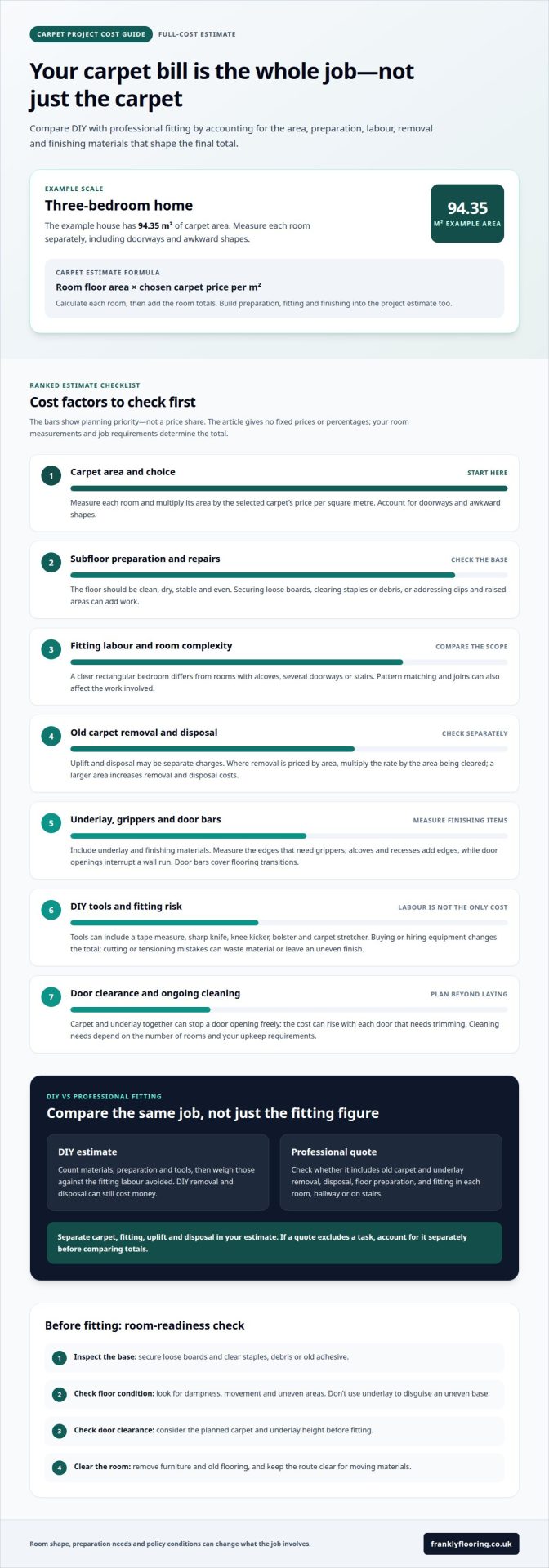
An example three-bedroom house has 94.35 m² of carpet area. Estimate each room separately by multiplying its measured floor area by the chosen carpet’s price per square metre. Add the room totals, allowing for doorways and awkward shapes when measuring.
A fitter’s time, room layout and preparation needs all affect the comparison with DIY.
Warranty and insurance terms depend on the wording of each policy. Read any conditions about fitting before you start, and keep your purchase and installation records.
On stairs, make sure the carpet is secure, with no loose edges or uneven joins that could cause trips. Pay particular attention to the tread edges and turns.
Additional and Ongoing Costs
Your additional costs include materials and upkeep beyond the carpet itself. Underlay, grippers, door bars and floor preparation can all increase the total.
Include underlay and any subfloor work in your estimate, then account for cleaning. The number of rooms and your cleaning needs will shape this ongoing cost.
DIY Installation Costs and Tools
DIY installation costs include materials, preparation and tools. Your saving depends on the fitting labour you avoid, weighed against the equipment you need.
Carpet fitting can require a tape measure, sharp knife, knee kicker, bolster and carpet stretcher. Buying or hiring tools changes the total, especially if you need specialist equipment for a single room—services like Pahrump Rentals & Hardware illustrate how sourcing rental equipment can save on one-off hardware purchases. Add underlay, grippers and door bars to your materials list; the carpet type and room dimensions determine what you need.
There’s no single DIY cost without knowing the room measurements, carpet choice and tools required. Cutting or tensioning mistakes can waste material or leave an uneven finish. A simple rectangular room is generally more manageable than one with alcoves, several doorways or stairs. Low-pile carpet is usually easier to handle than thick, patterned carpet.
Subfloor preparation and door adjustments
Carpet needs a suitable base and enough clearance beneath each door. Plan for both before fitting, as preparation and adjustments can add work beyond the carpet itself.
Preparing the Subfloor
Subfloor preparation means making sure the floor is clean, dry, stable and even before laying carpet. Loose boards, debris or raised edges can affect the finish and feel underfoot. Check timber boards for movement, and remove old adhesive or staples that could catch the new carpet. On concrete, clear away dust and ensure the surface is dry before laying underlay.
Preparation depends on the existing floor. A loose floorboard may need securing, while dips or raised sections may need attention before they’re covered. Don’t use underlay to disguise an uneven base. If the surface needs levelling or repair, include that work in your project cost rather than counting carpet fitting as the only expense.
Preparing the Room and Adjusting Doors
Prepare the room by clearing furniture and checking door clearance before fitting carpet and underlay. Empty the space, remove old floor coverings and keep the route to the room clear for moving materials. Check each door against the new floor height, as carpet and underlay together can stop a door opening freely.
The cost can rise with each door that needs trimming. Remove doors carefully before work begins, and account for the carpet edge where it meets another floor covering or a doorway.
Use this preparation check before fitting:
- Secure loose boards and clear staples or debris.
- Check the floor for dampness, movement and uneven areas.
- Measure door clearance with the planned carpet and underlay in mind.
- Clear furniture and old flooring from the room.
These checks help you distinguish simple room preparation from repairs or door work that add labour. If you’re choosing new flooring, browse carpet options alongside your room measurements.
Carpet fitting charges
A professional fitting charge covers the labour of laying carpet, but the full job can include separate tasks. Compare what’s included, not just the headline fitting figure. For example, a quote that excludes old-carpet removal and disposal won’t show the full cost of replacing a room’s flooring.
Fitting time depends on the job. A clear, rectangular bedroom is different from a room with alcoves, several doorways or stairs, which need additional measuring and careful cutting. Pattern matching and joins can also affect the work involved. List each room and note its shape before comparing professional fitting with DIY.
Old-carpet removal may be charged separately. Multiply each rate by the area being cleared to estimate the cost. A larger carpeted area increases both removal and disposal costs, so include them even if you plan to fit the replacement yourself.
Check whether the fitting quote accounts for the following tasks:
- Removing existing carpet and underlay.
- Disposing of the old flooring.
- Preparing the floor before fitting.
- Fitting carpet in separate rooms, hallways or on stairs.
These items help you compare like with like. If a quote includes removal but excludes disposal, add the disposal charge separately. DIY removal and disposal can still cost money, and you’ll also take on measuring, cutting and fitting. The labour saving is only one part of the comparison.
For a practical estimate, record each room’s area and required tasks, then separate carpet, fitting, uplift and disposal. This shows which charges DIY might avoid and which costs remain either way. If you decide that hiring a specialist is the right choice, services like tradesmannearyou.co.uk can help you find and compare quotes from local trade professionals.
Grippers and door bars
Grippers and door bars are small finishing materials, but both belong in your carpet budget. Grippers hold carpet at room edges, while door bars cover transitions between flooring surfaces or carpeted areas.
Estimate the quantity by measuring the edges where the carpet needs securing, then multiply the total length by the rate per metre. Room shape affects the measurement: alcoves and recesses add edges, while door openings interrupt a wall run. Measure each separate carpeted room rather than estimating from floor area alone.
Check the perimeter before buying grippers. Old strips may be damaged or unsuitable for reuse, while bare sections need new material. Measure the lengths around the room and note awkward corners, where careful fitting helps keep carpet edges secure. An inaccurate estimate can leave you short or with unused lengths.
Count the thresholds where carpet meets another floor covering or where carpet sections need a finished join. A doorway between two rooms may need a bar, depending on the flooring layout; a room with several entrances can need more than one. Count bars separately from gripper length, as the materials are measured differently.
Before buying, make a simple materials list:
- Record the carpeted room edges that need grippers, in metres.
- Count each doorway or floor transition requiring a door bar.
This separates edge-fixing costs from threshold finishing and makes your DIY materials estimate more complete. If you’re planning a new carpet project, browse carpet options and consider the room edges and doorways alongside your measurements.
Frankly Flooring: LVT
Frankly Flooring offers carpets and furniture to help you plan the room beyond the fitting decision. If your comparison points towards buying carpet, you can consider flooring choices alongside furnishings rather than treating each purchase in isolation.
Think about how you use the room, what you want underfoot and how the furniture will sit in the space. These considerations can help narrow down the carpet and overall look that suit your home. When you’re ready to explore carpet options, Frankly Flooring is a straightforward next step.
Browse the available choices at franklyflooring.co.uk or contact Frankly Flooring.
Choose the approach that suits your home
When weighing whether it is cheaper to fit your own carpet, consider more than the initial saving. Your time, confidence with the work and the finish you want all matter. Choose flooring to suit how you use the room, not just how it looks on a sample. Taking time to decide can help you feel confident about the work involved and the result you’re aiming for.
Frankly Flooring offers carpet, LVT and wood, so you can explore different flooring options for your home. Think about the feel and appearance you want, then consider which material suits your preferences. Compare the options before deciding what works for your room.
For personal guidance as you consider carpet, contact Frankly Flooring for carpet advice. A considered choice is a good start to a room you’ll enjoy using.
Frequently Asked Questions
How much does professional carpet fitting cost per square metre in the UK?
The total labour depends on the rooms and work involved, including stairs, awkward layouts and preparation. For a useful comparison, separate fitting labour from carpet, removal and disposal, then compare the complete job with the work you’d take on yourself.
How much do carpet grippers, underlay, door bars and other fitting materials cost in the UK?
Costs vary by material and the quantity your rooms need. Measure floor coverage for underlay, edge length for grippers and the number of thresholds for bars. Add any other required materials separately so you don’t overlook them.
Can UK carpet retailers charge extra for fitting, removal or disposal of old carpet?
Fitting, uplift and disposal may appear as separate charges rather than one combined figure. A quote might include fitting but list removal or waste disposal separately. Check the itemised total and what each charge covers, so you can compare the full replacement cost rather than labour alone.
How difficult is it to fit carpet yourself, and what are the steps involved?
DIY carpet fitting takes careful measuring, cutting and tensioning, and is more demanding on stairs or around irregular room shapes. The work generally involves clearing the room, preparing the floor, fitting grippers and underlay, cutting the carpet to size, stretching it into place, then trimming and finishing the edges. Pattern matching or joining sections requires extra precision, as inaccurate cuts can waste carpet.
How much can you save by fitting your own carpet compared with using a professional?
Your potential saving is mainly the fitting labour you avoid, minus tools, materials, preparation and any replacement carpet needed after mistakes. There’s no single saving that applies to every room. A simple room and tools you already own may compare very differently from a staircase that needs careful cuts. To decide whether it is cheaper to fit your own carpet, compare the complete project costs for both options.