
The lowest-tog carpet isn’t automatically the right choice for every room. Understanding tog ratings for carpet means looking beyond one figure: carpet and underlay work together, and their combined thermal resistance can affect how well underfloor heating performs.
If tog numbers seem unfamiliar, it’s easy to focus on the carpet specification and overlook the underlay. Both matter when you’re choosing a suitable combination.
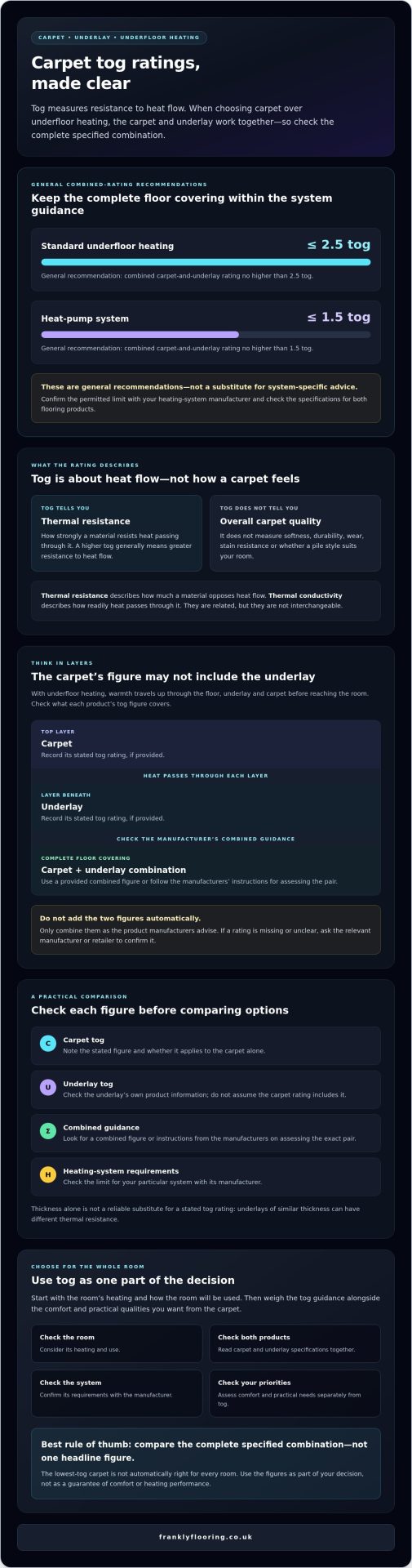
This guide explains what tog measures, how to compare carpet and underlay ratings, and what to check before deciding. As a general recommendation, the combined rating should be no higher than 2.5 tog for standard underfloor heating or 1.5 tog for a heat-pump system. Always confirm the limits for your particular system with its manufacturer, and check the specifications for both flooring products. Comfort and practical room requirements matter too, so use the figures as part of your decision rather than choosing on tog alone.
Key Takeaways
- Understanding tog ratings for carpet starts with recognising that tog measures resistance to heat flow, not softness or overall quality.
- Check the carpet and underlay specifications together, and combine their figures only as the manufacturers advise.
- If you have underfloor heating, check your system type and confirm the suitable carpet-and-underlay combination with the relevant manufacturers.
- Start with the room’s heating and use, then weigh tog alongside the comfort and practical qualities you want from the carpet.
- Before deciding, check the carpet rating, underlay rating, combined guidance and heating-system requirements rather than relying on one headline figure.
What does a tog rating for carpet actually measure?
A carpet tog rating measures thermal resistance: how strongly the carpet resists heat passing through it. A higher tog generally means more resistance to heat flow. It describes an insulating property, not carpet quality, softness or durability. When understanding tog ratings for carpet, check whether the figure applies to the carpet alone or to a carpet-and-underlay combination.
This distinction matters because flooring is layered. A carpet specification may give the tog rating for the carpet alone, without including the underlay beneath it. The complete floor covering can therefore have a different overall thermal resistance. Check the product information and follow the manufacturers’ guidance before comparing figures or choosing materials.
With underfloor heating, warmth travels up through the floor, underlay and carpet before reaching the room. The carpet’s figure alone won’t describe the whole route if you’re also using underlay. The suitable combination depends on the room and heating system, so don’t assume one rating is right for every home.
What does a higher carpet tog rating mean?
A higher rating generally indicates greater resistance to heat moving through the carpet. That matters when heat needs to pass through a carpeted floor, but it doesn’t determine whether the carpet is a good choice. Tog doesn’t tell you how well a carpet will wear, resist stains, feel underfoot or suit a particular pile style. Assess those qualities separately against the room’s needs.
Is tog the same as thermal conductivity?
No. Thermal resistance describes how much a material opposes heat flow; thermal conductivity describes how readily heat passes through it. They are related but not interchangeable: a more resistant material makes it harder for heat to pass through. The scientific idea behind the rating is a measure of thermal resistance, though carpet tog specifications are presented in their own product context.
Use tog as one part of the specification, not as a shortcut for judging every aspect of a carpet. Compare like with like, check whether the underlay is included, and confirm with the carpet, underlay and heating-system manufacturers how to assess the complete combination. This gives you a clearer basis for choosing without assuming that one number guarantees a particular level of warmth or heating performance.
How carpet and underlay tog ratings work together
Carpet and underlay form a layered floor covering, so check both specifications rather than relying on the carpet’s figure alone. Heat passes through each layer, and the combined resistance can affect how readily warmth moves from the floor into the room.
Use this table to record what each figure describes. The placeholders are intentional: product ratings vary, so use the current information supplied for the specific carpet and underlay you’re considering.
| Specification | What to record | What to check |
|---|---|---|
| Carpet tog | [Carpet figure, if stated] | Does it apply to the carpet alone? |
| Underlay tog | [Underlay figure, if stated] | Does it apply to the underlay alone? |
| Combined figure | [Combined figure, if stated] | Is it provided or calculated as the manufacturers direct? |
Does carpet tog include the underlay?
Not necessarily. A carpet page or technical sheet may state the carpet’s rating separately, while an underlay listing gives its own figure. Read the wording and notes to see which layer each number covers. If a figure is missing or the information is unclear, ask the relevant manufacturer or retailer to confirm before comparing options. Don’t assume the carpet rating includes underlay just because both products are being considered together.
How should you compare carpet and underlay specifications?
Start with the exact carpet and underlay you’re considering. Find each product’s stated tog information, then check whether the manufacturers provide a combined figure or instructions for assessing the pair. Don’t add the figures automatically unless product guidance says to do so. Thickness alone isn’t a reliable substitute for a stated tog rating: materials and construction differ, so underlays of similar thickness may have different thermal resistance.
Finally, check that the proposed combination suits your heating system. Its manufacturer may set a maximum combined thermal resistance, and requirements can vary by system. This is central to understanding tog ratings for carpet: compare the complete specified combination, not a headline number in isolation.
If you’re comparing options, browse carpet and underlay and check the current specifications for each product before deciding.
Carpet tog ratings and underfloor heating: what to check
Underfloor heating needs to transfer warmth through the floor covering. Carpet and underlay both add thermal resistance, so a higher combined rating can make heat transfer more difficult. That doesn’t automatically rule out carpet, but it does mean you should check the full combination against the heating system rather than selecting carpet by its rating alone.
As a general reference, the Underfloor Heating Manufacturers Association (UHMA) recommends a combined carpet-and-underlay rating of no more than 2.5 tog for standard systems and 1.5 tog for systems run by a heat pump. Treat these as recommendations, not a guarantee of compatibility. Requirements can differ by system and product, so check your specific heating-system instructions and the current carpet and underlay specifications before deciding.
Can you use carpet over underfloor heating?
It depends on the carpet, underlay and heating system as a combination. A carpet may be suitable with one underlay or system but not another. Look for underfloor-heating guidance in the carpet and underlay product documentation, then confirm it with the heating-system manufacturer. If documents give different limits or don’t explain whether figures are combined, ask the relevant manufacturers to clarify before ordering.
What should you confirm before choosing the underlay?
Check the underlay’s stated thermal resistance and whether its manufacturer identifies it as suitable for your type of heating. Review the carpet specification alongside it. The heating-system manufacturer may specify a maximum combined resistance, particular installation conditions or temperature limits. Don’t assume a general recommendation overrides the instructions for your system.
- Check whether the heating is a standard system or heat-pump system.
- Find the stated thermal-resistance figures for both carpet and underlay.
- Confirm how the figures should be assessed together and whether the combination is approved for your system.
- Ask for clarification if the specifications are missing, unclear or inconsistent.
Before ordering, verify that the specific carpet-and-underlay combination is compatible with your underfloor-heating system. Tog helps you assess resistance to heat flow, but the manufacturers’ guidance determines whether the proposed floor build-up suits your system. Check the details rather than assuming a particular room temperature, running cost or heating performance.
How to choose carpet by tog rating without overlooking comfort
Tog helps you assess heat resistance, but it shouldn’t make the whole decision for you. Start with your heating system and the room’s day-to-day use, then compare suitable carpet and underlay options as a complete combination. This keeps heating requirements in view while leaving room to consider comfort, appearance and upkeep.
- Identify the heating type. Note whether the room has underfloor heating and check the system manufacturer’s requirements. If there’s no underfloor heating, consider how the room is heated and whether insulation underfoot is a priority.
- Think about how the room is used. A bedroom may call for a different feel from a hallway or family room. These are practical differences, not automatic rules about which tog rating to choose.
- Decide what matters underfoot. Consider whether you prefer a softer feel, how much foot traffic the carpet will get, and how much cleaning it may need. Pile and fibre affect these practical qualities, so compare them alongside tog.
- Check the full specification. Read the carpet and underlay details together. Confirm what each tog figure covers, whether the manufacturers provide combined guidance, and whether the pairing suits your heating system.
- Resolve gaps before choosing. Check any stated installation conditions or temperature limits. If guidance is missing or unclear, seek confirmation from the relevant manufacturer before placing an order.
Which room factors matter alongside tog?
Room use shapes the balance. In a bedroom, a comfortable feel may be high on your list; in a busy room, cleaning needs and carpet construction may carry more weight. Neither room type automatically calls for a particular tog rating. For broader help weighing style and durability, read this carpet buying guide.
What details should you check on a product specification?
Look for the carpet’s stated tog rating and check whether it applies to the carpet alone. Check the underlay’s figure separately, along with any compatibility information or recommended pairings. For underfloor heating, look for system-specific guidance and conditions. If the complete combination isn’t explained, ask for clarification rather than estimating from thickness or appearance.
Use tog to assess thermal resistance, then weigh it against the room and the qualities you want from the floor. Once you know what specifications to compare, browse carpet options and check each product’s current details.
Your next steps for choosing carpet and underlay with confidence
Before ordering, bring the carpet and underlay details together with your heating-system guidance. Tog helps assess thermal resistance, but it’s only one part of a carpet’s specification. Comfort, construction, room use and care requirements matter too. A final check helps you make a considered choice without treating one number as a verdict on overall quality.
What information should you have before ordering?
Keep the relevant product details together so you can assess the complete floor covering. Your checklist should include:
- Heating type: Note whether the room has underfloor heating and identify the system guidance that applies.
- Carpet specification: Record the stated tog figure and check whether it covers the carpet alone.
- Proposed underlay: Find its stated figure and any compatibility information for the chosen carpet.
- Combined guidance: Check whether the manufacturers explain how to assess the two products together.
- System approval: Confirm the proposed combination meets the heating-system manufacturer’s requirements, including any stated conditions or limits.
If a figure is missing, combined guidance is unclear, or product instructions appear to conflict, ask the relevant carpet, underlay or heating-system manufacturer for clarification before ordering. Don’t estimate a combined rating from thickness or rely on a general rule in place of product-specific advice.
Where can you find help choosing carpet?
Frankly Flooring is a family-run online retailer with over 20 years of flooring-industry experience, selling carpet and flooring accessories, including underlay. Its product categories let you compare options and review the specifications provided. For fitting components such as grippers, consult the carpet gripper guide, and check that any component suits your particular flooring requirements.
Understanding tog ratings for carpet means knowing what the figure tells you, what it leaves out, and how the chosen carpet and underlay fit your room and heating system. Gather the relevant guidance before comparing your options.
Browse Frankly Flooring’s carpet and flooring options and review the current product specifications as you compare products.
Choose your carpet and underlay with confidence
Understanding tog ratings for carpet means looking at the full floor covering, not just the carpet’s headline figure. Tog describes resistance to heat flow, and the underlay adds its own contribution. If you have underfloor heating, check the carpet and underlay specifications against the guidance for your specific system before choosing.
Keep comfort, room use and maintenance in the decision too. Tog is one useful specification, not a measure of overall carpet quality. Comparing the figures and product guidance can help you narrow your options without relying on assumptions.
Frankly Flooring is a family-run online retailer with over 20 years of flooring-industry experience, offering carpet and flooring accessories, including underlay. Browse carpet and flooring at Frankly Flooring, and review the current product specifications as you compare options. Check the details before settling on a combination.
Frequently Asked Questions
What does a tog rating mean for carpet?
A carpet tog rating indicates how much the carpet resists heat passing through it. A higher figure generally means greater thermal resistance, so heat moves through the material less readily. It doesn’t measure softness, durability or overall quality. Check whether the stated figure applies to the carpet alone or to a carpet-and-underlay combination, as this affects how useful it is when assessing the complete floor covering.
Is a higher tog rating better for carpet?
Not automatically. A higher tog means greater resistance to heat flow, which may suit some flooring needs but could be a consideration with underfloor heating. Tog doesn’t tell you whether a carpet will wear well, resist stains or feel comfortable underfoot. Choose based on the room, your practical priorities and, where relevant, your heating system’s requirements. Treat the rating as one specification among several, not a quality score.
Can you use carpet with underfloor heating?
Carpet can be suitable for some underfloor-heating systems, but suitability depends on the specific carpet, underlay and system. Their combined thermal resistance can affect how readily heat passes through the floor covering. Check the carpet and underlay documentation alongside the heating-system manufacturer’s guidance, including any requirements or limits. Verify that the exact combination you’re considering is compatible before ordering, rather than relying on a general rule alone.
What carpet tog rating is suitable for underfloor heating?
There isn’t one figure that suits every system. The Underfloor Heating Manufacturers Association recommends a combined carpet-and-underlay rating of no more than 2.5 tog for standard systems and 1.5 tog for heat-pump systems. These are recommendations, not a substitute for product-specific approval. Check how the figures should be assessed and confirm the permitted combination with your heating-system manufacturer, as requirements may vary.
Does carpet tog affect how warm a room feels?
Tog describes resistance to heat passing through carpet, so it can affect heat transfer through a carpeted floor, particularly with underfloor heating. But the rating alone can’t predict a room’s temperature or how warm it will feel. The heating system, room and complete floor covering all matter. Consider the carpet’s underfoot feel separately, since tog isn’t a measure of softness or comfort.
How do I compare tog ratings for carpet and underlay?
Understanding tog ratings for carpet means checking what each number describes before comparing products. Note the carpet’s figure and the underlay’s figure separately, then look for manufacturer guidance on the combined specification. Don’t add the ratings unless the relevant guidance says to do so. If you’re choosing for underfloor heating, compare the complete combination with your system’s requirements and ask the manufacturers to clarify any missing or conflicting information.