
The most impressive floor isn’t always the glossiest. Flooring that will impress guests should suit the room as well as the occasion, balancing appearance with easy care, durability and a comfortable feel underfoot. Carpet can add warmth and soften sound, while hard flooring makes spills easier to wipe away.
It’s natural to want a welcoming floor that doesn’t create extra work before and after every gathering. The right choice depends on the room, how much foot traffic it gets and its exposure to dirt, moisture and everyday wear.
This guide compares carpet, wood, laminate, vinyl and luxury vinyl tile by cleaning needs, slip resistance, maintenance and longer-term value. You’ll also see where different materials make sense, what can affect their lifespan and how to weigh style against practical demands before choosing.
Key Takeaways
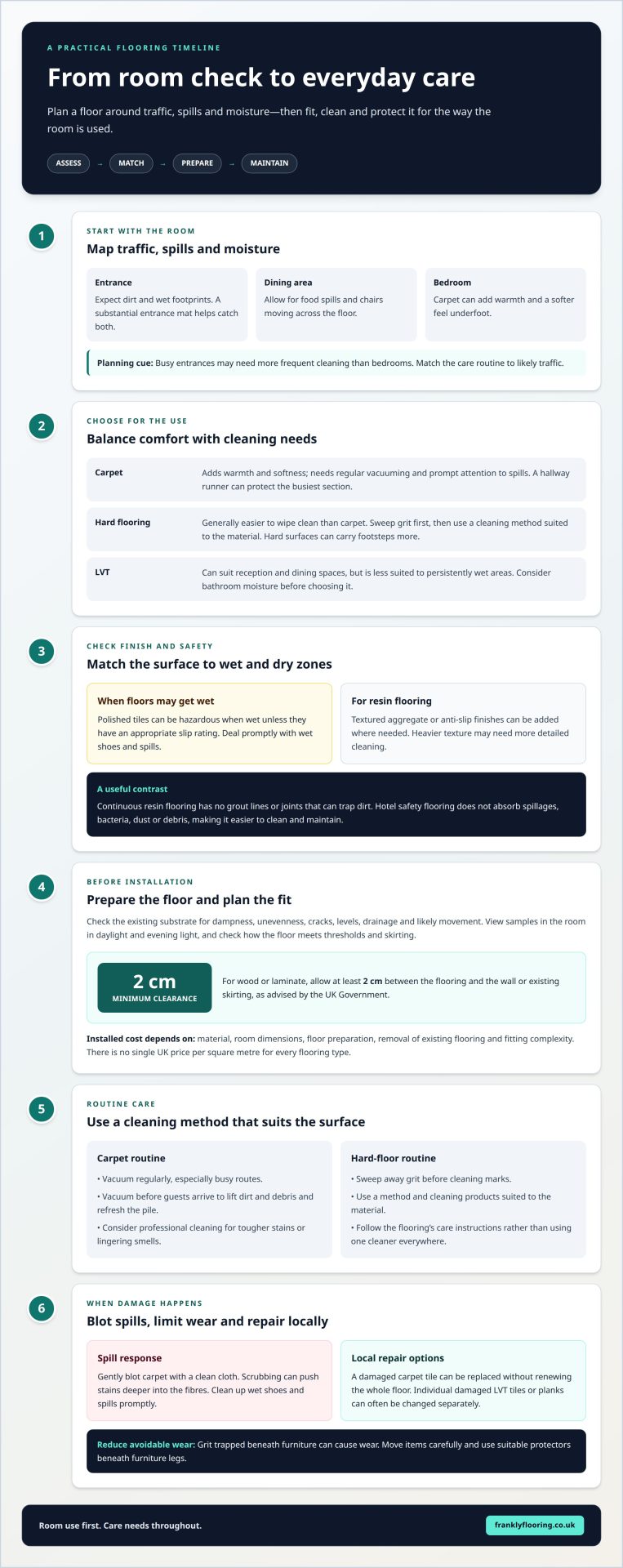
- Match the flooring to the room’s spills, moisture and foot traffic, and consider entrance matting to help limit dirt and wet footprints.
- Compare upkeep over time: some floors need regular sweeping and mopping, while carpet care includes prompt blotting and attention to high-traffic areas.
- Weigh finish against practical use. LVT can suit reception and dining spaces, but persistent moisture and heavy dragging loads can make it less suitable.
- For wood or laminate, allow at least 2 cm between the flooring and the wall or existing skirting, as advised by the UK Government.
1. Cleaning requirements and slip resistance
Hard flooring is generally easier to wipe clean than carpet. Sweep away grit first, then clean marks using a method suited to the material. Carpet needs regular vacuuming, especially along busy routes. Before guests arrive, vacuum to lift dirt and debris and refresh the pile. Blot spills gently with a clean cloth rather than scrubbing, which can push stains deeper.
Room use matters as much as appearance. Carpet can bring warmth and softness to a bedroom, but is less practical in entrances, breakfast areas prone to spills or places exposed to wet weather. A substantial entrance mat helps catch dirt and moisture. In a carpeted hallway, a runner can protect the busiest section while preserving the room’s look.
Consider slip resistance wherever rainwater, food or drinks might reach the floor. Polished tiles can be hazardous when wet unless they have an appropriate slip rating. A glossy statement surface may suit a dry reception area but be less practical beside a busy entrance. Match the finish to how the space is used, and deal promptly with wet shoes and spills.
Statement flooring can also bring trade-offs beyond cleaning. Scratches may be more noticeable on some finishes, while hard surfaces tend to carry footsteps more than carpet. Moisture can also affect flooring that isn’t suited to damp conditions, so consider where spills are likely. For wood or laminate, the UK Government says the flooring should stop at least 2 cm from the wall or existing skirting. That clearance is a practical detail to include in the fitting plan.
For tougher stains or lingering smells before holiday gatherings, professional carpet cleaning is suggested. When spills happen, gently blot carpet with a clean cloth rather than scrub, absorbing liquid without pushing the stain deeper into the fibres. High-performance entrance matting can help protect other flooring from dirt and moisture and reduce slip risks.
Textured aggregate or anti-slip finishes can be added to resin flooring where needed, although more heavily textured finishes may require more detailed cleaning. Continuous resin flooring has no grout lines or joints that can trap dirt, making day-to-day cleaning more straightforward. Hotel safety flooring does not absorb spillages, bacteria, dust or debris, making it easier to clean and maintain.
2. Lifetime costs and maintenance
Flooring costs continue beyond purchase, with cleaning, repairs and eventual replacement all contributing to the total. Compare options by their care routine and likely wear, not appearance alone. A carpeted sitting room needs regular vacuuming and prompt stain treatment; hard flooring needs sweeping and cleaning with a suitable method. These routine tasks affect the time and effort needed to keep a room presentable.
Consider how local damage can be repaired. A damaged carpet tile can be replaced without renewing the whole floor, and individual damaged LVT tiles or planks can often be changed separately. This may limit the work after a localised mishap. On any surface, grit trapped beneath furniture can cause wear, so move items carefully and use suitable protectors beneath furniture legs.
There’s no single UK price per square metre, including installation, for every type of flooring. The total depends on the material, room dimensions, floor preparation, removal of existing flooring and fitting complexity. Compare those costs alongside ongoing cleaning and repair needs. An awkwardly shaped room, for example, may need different preparation and cutting from a simple rectangular space.
Before choosing, consider how the room is used. A busy entrance may need more frequent cleaning than a bedroom, while dining areas face spills and chairs moving across the floor. Match the care routine to likely traffic. Use cleaning products suited to the surface and follow the flooring’s care instructions rather than applying one cleaner everywhere. This helps avoid unnecessary damage and keeps maintenance manageable.
Comfort also affects long-term satisfaction. A rug can soften a hard floor underfoot, while furniture placement can help define a sitting area without covering the whole surface. Include these choices in the maintenance plan: movable rugs can be cleaned separately, and furniture protectors help reduce scuffs. For a coordinated room, explore furniture choices alongside the flooring’s upkeep needs.
The installed cost depends on the flooring material, room size, preparation and removal work, and fitting complexity.
3. Luxury flooring materials and finishes
In a living room, wood brings natural character, while carpet adds softness and warmth. LVT offers another look, with finishes that can suit reception rooms and dining spaces. In kitchens, choose a surface that’s easy to clean after food spills. LVT is less suited to persistently wet areas, so consider bathroom moisture carefully before choosing it; professional remodelers like Silver Tile & Stone, LLC often favour durable tile or stone solutions for these demanding zones.
There isn’t one flooring style that defines the UK in 2026. A considered finish starts with the room’s use, then brings colour and texture into balance. For example, a subtle wood effect can give a lounge a welcoming feel, while patterned flooring can make a hallway more distinctive. Choose a design you’ll enjoy beyond a single season, rather than relying on a short-lived look.
Light colours and continuous-looking surfaces can help a compact room feel more open. In a narrow hallway, boards laid lengthways can draw the eye forward; a bold pattern can make the floor a focal point. For a more luxurious look, pair a restrained floor colour with rich furnishings or a textured rug. View samples in the room in both daylight and evening light to see how the colours change.
Good preparation helps a new floor look finished. Before installation, assess the existing substrate for dampness, unevenness, cracks, levels, drainage and likely movement. These conditions affect which material and finish will work. View samples in place, check how the floor meets thresholds and skirting, and plan furniture placement. The finish should suit the room’s light, colours and everyday use, not just look appealing in a sample.
Looks suited to 2026 include subtle wood effects, distinctive patterns, light colours and continuous-looking surfaces. Lengthwise boards can suit narrow hallways, while restrained floor tones paired with rich furnishings or a textured rug create a more luxurious feel.
LVT is used in some hotel reception areas and restaurants or cafés. It is less suited to persistently wet areas or spaces with very heavy dragging loads.
4. Balancing durability and appearance
Start with how each room is used, then choose a finish that suits its character. A busy family sitting room needs a durable surface for regular foot traffic, while a quiet bedroom may call for softness underfoot. Flooring that will impress guests should also stand up to each space’s everyday wear, not just look striking on arrival.
To complement furniture, wall colours and period features, decide which element should lead. In a room with an ornate fireplace, a restrained floor lets the feature stand out. With plain walls and simple furniture, a stronger grain or pattern can add interest. Choose flooring that will impress guests by balancing the room’s existing character with a finish that feels at home.
Durability matters in commercial spaces as well as homes. Fit-out specialists such as Fintouch Decor often utilise hospitality carpet tiles made from heavy-duty materials suited to sustained foot traffic, helping soften the feel of a room underfoot. LVT has a layered construction designed to resist scratches and withstand heavy traffic, making it a practical option for busy rooms. Persistent moisture and heavy dragging loads are less suitable conditions for LVT.
Fitting details contribute to the finished appearance. Clean transitions at doorways, neat edges around skirting and a level surface all affect how complete a room looks. The existing substrate matters too: dampness, cracks or uneven areas can influence the material choice and preparation. In a period home, retain distinctive features and choose flooring that supports rather than competes with their proportions and colours.
Before deciding, view samples beside the room’s furniture and wall colours in both daytime and evening light. This gives a clearer sense of how the finish will look across the space. Explore flooring and furniture choices to bring the practical and visual considerations together.
Frankly Flooring
Frankly Flooring can help you weigh flooring choices against how each room looks, feels and functions. Its range includes LVT, wood and carpet, with furniture to help bring a room together. Consider the likely foot traffic, cleaning routine and existing furnishings before settling on a style; these practical details can help narrow the options without losing sight of the overall aesthetic. A carpet may suit a quieter bedroom, while a hard surface may better match a busy living space. The aim is a considered choice that fits your home and the way you use it. For help exploring suitable options, contact Frankly Flooring.
Make your next flooring choice with confidence
The right flooring that will impress guests should also suit everyday life. Before deciding, picture the room during an ordinary week, not just when it’s dressed for visitors. Think about how you move through it, where furniture sits and which details you want guests to notice. This gives you a practical starting point for choosing a floor that feels considered, not purely decorative.
You don’t need to settle every detail at once. Narrow down the look and feel you want, then weigh those preferences against the room’s practical demands. Knowing your priorities makes the next decision more straightforward.
If you’re ready to explore suitable options for your home, contact Frankly Flooring for flooring advice. Take the next step at your own pace, with a clearer sense of what matters in each room.
Frequently Asked Questions
Which flooring types make the strongest impression in a UK home?
Wood, patterned carpet and carefully chosen LVT can each make a distinctive impression in a UK home. The strongest choice depends on the room’s character: natural-looking wood can complement period details, while bold carpet can bring colour to a staircase or lounge. For a more consistent feel, coordinate flooring across connected spaces and use rugs to define separate areas.
How do hardwood, engineered wood, luxury vinyl, porcelain tile and polished concrete compare in appearance and durability?
Hardwood brings natural grain and character, while engineered wood offers a similar wood-led appearance with a different construction. LVT can reproduce wood or stone looks, and its layered structure is designed to resist scratches and heavy foot traffic. Porcelain tile resists moisture and is easy to wipe clean. Polished concrete creates a pared-back finish but needs proper sealing and periodic care.