
If you think Luxury Vinyl Tile is just a fancy name for the flimsy lino found in 1990s kitchens, you are about to be pleasantly surprised. By 2026, LVT has become the UK’s most sought-after flooring category, but it is not a magic solution for every single room. Choosing the right foundation for your home is a big decision. You likely want the timeless look of oak without the stress of water damage or the high cost of constant sanding and sealing. It is completely natural to worry about technical jargon or the hidden costs of subfloor preparation before the first plank even arrives.
Many customers ask if they should pay the premium for big names like Karndean or Amtico. Frankly, you’re often paying for their massive marketing budgets and glossy brochures. While their designs are beautiful, you can find high-quality alternatives with identical technical specifications for a better price. When comparing products, ignore the logo and look at the wear layer. A 0.55mm wear layer is the professional standard for high-traffic homes. Prioritize a stable core and a thick wear layer over a fancy brand name to ensure your lvt flooring pros and cons balance out in your favour. We focus on the quality of the material and the precision of the fitting—a standard also upheld by specialists like GW Flooring—ensuring your floor remains a foundational element of your home’s character for decades.
Frankly, you deserve a straight answer about whether this material lives up to the hype. This guide breaks down the essential lvt flooring pros and cons to give you total confidence in your investment. We’ll look at why some fittings fail in wet areas, how to manage the installation process, and what a 25-year wear guarantee actually means for your busy household. By the end, you’ll know exactly if LVT is the durable, easy-to-maintain choice your home needs or if you should look elsewhere.
Key Takeaways
- Understand why modern LVT is a high-tech leap from traditional vinyl, offering a durable foundation that mimics natural materials without the maintenance.
- Weigh up the lvt flooring pros and cons by exploring its 100% waterproof nature and superior acoustic performance compared to “clicky” alternatives.
- Learn why the secret to a flawless finish lies in meticulous subfloor preparation and why cutting corners here is a risk not worth taking.
- Discover why LVT is often the “Goldilocks” choice for UK renovations, balancing the aesthetic of real wood with the practical demands of a busy home.
- Get a straightforward framework for calculating your total project budget beyond the price per square metre to ensure a seamless fitting experience.
Understanding Luxury Vinyl Tile: More Than Just Modern Vinyl
Let’s be frank; the mention of vinyl flooring often conjures up images of thin, peeling “lino” in a 1970s kitchen. That’s a world away from the Luxury Vinyl Tile (LVT) we fit today. In 2026, LVT has become the go-to choice for UK homeowners who want the look of natural timber or stone without the high maintenance or the hefty price tag. It’s a high-performance, multi-layered product designed to withstand the chaos of a modern home. Understanding Luxury Vinyl Tile requires looking at how it has evolved from basic plastic sheets into a sophisticated material that uses advanced 3D printing and EIR (Embossed in Register) technology to create textures you can actually feel.
The 2026 market shows a clear shift toward these hyper-realistic finishes. Homeowners are no longer satisfied with a flat print; they want the knots of oak and the clefts of slate to feel authentic underfoot. When weighing up the lvt flooring pros and cons, the primary benefit is this marriage of aesthetics and durability. It provides a waterproof, hard-wearing surface that doesn’t sacrifice style. Whether you’re renovating a busy hallway or a damp bathroom, LVT offers a level of versatility that traditional materials simply can’t match.
The Anatomy of an LVT Plank
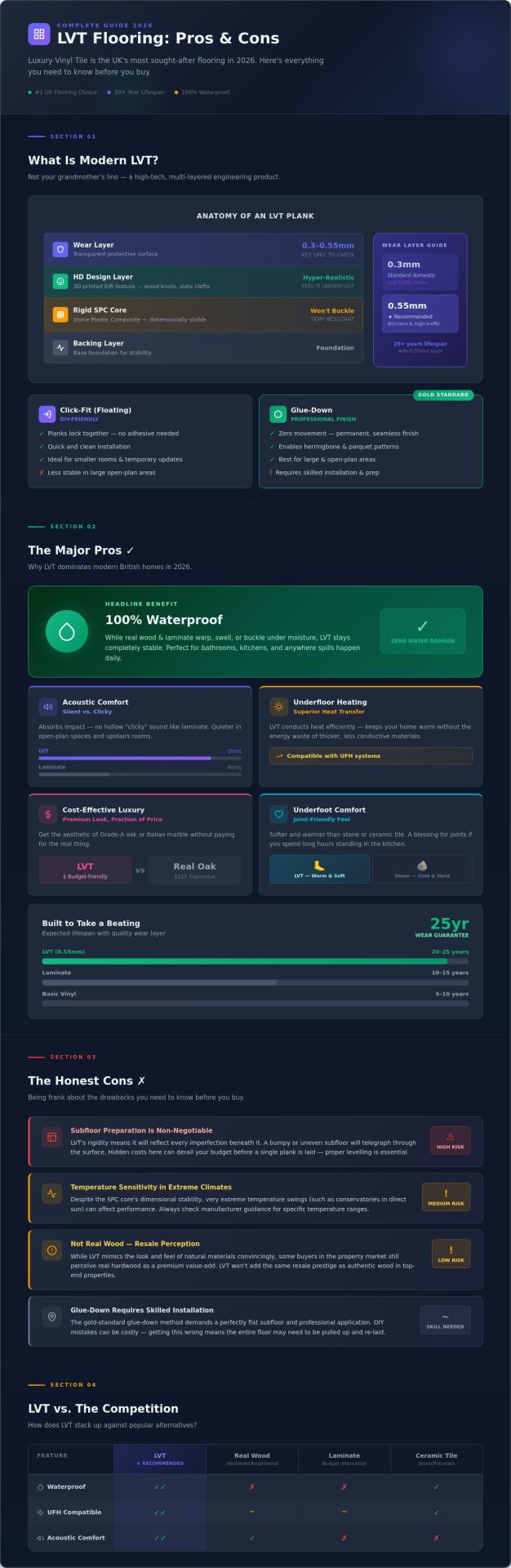
An LVT plank is a sandwich of high-tech materials. At the base is the backing layer, followed by the rigid core, a high-definition design layer, and finally, the transparent wear layer. The wear layer is the most critical specification to check. For a domestic setting, a 0.3mm wear layer is standard, but we recommend a 0.55mm layer for high-traffic areas like kitchens to ensure a lifespan that exceeds 20 years. The rigid core is a dense, dimensionally stable layer, typically made of stone plastic composite (SPC), that prevents the planks from expanding or contracting when temperatures fluctuate. This structural integrity is why LVT stays flat while cheaper alternatives might buckle.
Click-Fit vs. Glue-Down: Which Method Wins?
Choosing the right installation method is just as important as picking the colour. Click-fit LVT, often called a “floating floor,” is popular for DIY projects because the planks simply lock together without being fixed to the subfloor. It’s quick and clean, making it a solid choice for smaller rooms or temporary updates. However, for a permanent, professional finish in large or open-plan areas, glue-down LVT remains the gold standard. It involves securing every tile to a perfectly prepped subfloor using specialist adhesives. This method prevents any movement and allows for bespoke patterns like herringbone or parquet. While it requires more skill, the long-term stability and seamless look are usually worth the extra effort.
The Major Pros: Why LVT Dominates Modern British Homes
Frankly, it’s no surprise that Luxury Vinyl Tile has become the gold standard for UK renovations in 2026. When you weigh up the lvt flooring pros and cons, the practical benefits for a busy family home are hard to ignore. It effectively solves the three biggest headaches homeowners face: water damage, noise, and high maintenance costs.
The most significant advantage is its 100% waterproof construction. While real wood or laminate might warp, swell, or buckle when exposed to moisture, LVT remains completely stable. This makes it the ideal choice for bathrooms and kitchens where spills are a daily reality. Recent results from Good Housekeeping’s flooring tests highlight how modern vinyl planks withstand heavy foot traffic and moisture better than many traditional materials. It also offers superior thermal conductivity. If you’re fitting underfloor heating, LVT transfers heat efficiently, keeping your home warm without the energy waste associated with thicker, less conductive materials.
- Acoustic Comfort: Unlike the hollow, “clicky” sound of laminate, LVT absorbs impact. It creates a much quieter environment, which is a relief in open-plan living spaces or upstairs bedrooms.
- Cost-Effective Luxury: You get the aesthetic of premium Grade-A oak or Italian marble at a fraction of the price of the raw materials.
- Underfoot Feel: It’s softer and warmer than stone or ceramic tile. This is a blessing for your joints if you spend a lot of time standing in the kitchen.
Durability and Maintenance in Busy Households
LVT is built to take a beating. Most high-quality planks feature a 0.55mm wear layer that acts as a shield against scratches from pets and children. You won’t need to worry about specialist oils, sanding, or waxes every few years; a simple sweep and a damp mop are all it takes to keep the floor looking new. The protective coatings used by top manufacturers also provide excellent stain resistance, ensuring that spilled red wine or muddy paw prints don’t leave a permanent mark. If you’re unsure which wear layer suits your home, we’d be happy to give you an honest recommendation based on your specific traffic levels.
Design Versatility: From Herringbone to Stone
The aesthetic range available today is staggering. Many homeowners now opt for herringbone flooring patterns to add a touch of classic elegance to their hallways or lounges. Because LVT is so stable, you can run the same design seamlessly from your kitchen right through to your utility room without needing transition strips. Modern Embossed-in-Register (EIR) technology is a game changer here. It ensures the physical texture of the plank perfectly matches the visual grain of the wood print. When you run your hand over it, you feel the knots and grooves you’d expect from real timber, providing an authentic experience that holds up well in any lvt flooring pros and cons comparison.
The Cons: Being Frank About the Drawbacks of LVT
Honestly, LVT isn’t a magic bullet for every room. While it’s a popular choice for modern UK homes, we believe in being upfront about the compromises you’ll make. Understanding the full picture of lvt flooring pros and cons means looking closely at the work required before the first plank even arrives at your home. It’s often the preparation, rather than the product itself, that catches homeowners off guard.
LVT is a relatively thin, flexible material. It doesn’t hide what’s underneath. If there’s a stray screw head or a slight ridge in your concrete, the LVT will eventually “telegraph” that shape through to the surface. This creates unsightly bumps and can even lead to premature wear on the high points of the floor. You’re also looking at a higher upfront investment. Quality LVT costs significantly more than standard laminate, and the fitting process is more labour-intensive.
Maintenance is easy, but repairs can be a headache. In a glue-down system, replacing a single gouged plank requires a heat gun, specialist scrapers, and a steady hand. It’s not a quick DIY fix. You should also consider the impact of direct sunlight. In rooms with large south-facing bi-fold doors, heavy UV exposure can cause the floor to fade over several years if you don’t use UV-filtering glass or blinds.
The Hidden Cost of Subfloor Preparation
You can’t fit LVT directly onto uneven floorboards or rough concrete. Most UK projects require a layer of 6mm flooring-grade plywood or a self-levelling screed to create a glass-smooth surface. This adds to your total bill and the time on site. For concrete bases, we always check moisture levels using a hygrometer. If the reading is above 75% relative humidity, you’ll need a liquid damp-proof membrane to prevent the adhesive from failing. These steps are non-negotiable for a quality finish.
Environmental and Artificial Considerations
Frankly, LVT is a petroleum-based product. It’s primarily made of PVC, which means it isn’t as eco-friendly as natural timber or stone. While high-end brands offer incredibly realistic textures, cheaper ranges often suffer from a “pattern repeat” issue. You might see the exact same wood grain or stone swirl every six to ten planks, which can look artificial in a large room. There’s also the question of longevity. A well-maintained solid oak floor can last 50 years or more; a high-quality LVT is typically rated for 20 to 25 years before it reaches the end of its life.
LVT vs. The Competition: How It Measures Up
Choosing the right floor involves more than just picking a colour. You need to weigh up how a material handles daily life, from spilled tea to heavy foot traffic. When we look at the lvt flooring pros and cons, it becomes clear why many UK homeowners see it as the “Goldilocks” choice. It offers a middle ground that balances the high-end look of natural timber with the practical, hard-wearing nature of synthetic materials. It’s often the most logical fit for a busy household where time for maintenance is limited.
LVT vs. Laminate: The Battle for the Kitchen
Laminate is often the first choice for those watching their budget. While it’s cheaper upfront, it often falls short in damp environments. If a dishwasher leaks or a dog bowls over their water, laminate’s fibreboard core can swell and blow at the joints. LVT is entirely waterproof, making it the safer bet for kitchens and utility rooms. There’s also the sound to consider. Laminate often has a hollow, “clack-y” noise when walked on in heels or paws. LVT is much denser and feels more solid underfoot. For a deeper dive into the cheaper alternative, read our Frankly guide to laminate.
LVT vs. Engineered Wood: Aesthetics vs. Practicality
If you want the prestige of real timber, engineered wood flooring is hard to beat. It adds genuine value to a property and feels warm to the touch. However, wood is temperamental. It doesn’t like the humidity of a bathroom and requires periodic oiling or sanding to stay looking its best. Modern LVT mimics these wood grains with 95% accuracy but requires zero specialist maintenance. You get the aesthetic without the worry of scratches from furniture or staining from spills. It’s a trade-off between the soul of real wood and the effortless upkeep of vinyl.
In terms of long-term value, LVT holds its own. While a high-quality fitting might cost more than basic laminate, the 25-year residential warranties often found on premium LVT products mean you won’t be replacing it anytime soon. Understanding the lvt flooring pros and cons helps you decide if the extra cost over laminate is worth the peace of mind. It’s a straightforward investment in durability. If you’re ready to see these materials side-by-side, book a consultation at our showroom to feel the difference for yourself.
Making the Decision: Is LVT Right For Your Project?
Choosing a new floor is a significant investment for any UK home. You shouldn’t make that choice based on a tiny swatch in a high-street shop or a filtered photo on social media. To help you weigh up the lvt flooring pros and cons, we’ve put together a straightforward checklist for your home project.
- Subfloor condition: Is your current floor uneven or damp? LVT requires a perfectly flat, dry base.
- Daily traffic: Do you have large dogs, high heels, or muddy boots coming through the door daily?
- Heating: Are you planning to use underfloor heating? LVT is an excellent conductor.
- Lifespan: Are you looking for a five-year aesthetic fix or a twenty-year foundation?
Budgeting involves more than the price per square metre. We often see homeowners caught out by the cost of subfloor preparation, adhesives, and professional fitting labour. A cheap plank often lacks the structural stability of premium options; buying cheap usually results in buying twice when the click joints fail or the surface scuffs within 24 months. Always order physical samples. You need to see the texture in your own natural light at different times of the day. The grey tone that looked perfect in a showroom might look cold in a north-facing kitchen.
Room-by-Room Suitability Guide
LVT is the undisputed king of bathrooms and utility rooms because it’s completely waterproof and warmer underfoot than stone. In bedrooms, it provides a sleek, allergy-friendly alternative to carpets that trap dust and pet dander. If you’re flooring a conservatory, you must be careful. UK glass rooms can swing from 5 to 45 degrees Celsius in a single year. You’ll need a rigid core (SPC) product to prevent the planks from warping or shifting in the peak of summer. It’s about choosing the right specification for the environment.
The Brand Debate: Karndean, Amtico, or Alternatives?
Many customers ask if they should pay the premium for big names like Karndean or Amtico. Frankly, you’re often paying for their massive marketing budgets and glossy brochures. While their designs are beautiful, you can find high-quality alternatives with identical technical specifications for a better price. When comparing products, ignore the logo and look at the wear layer. A 0.55mm wear layer is the professional standard for high-traffic homes. Prioritize a stable core and a thick wear layer over a fancy brand name to ensure your lvt flooring pros and cons balance out in your favour. We focus on the quality of the material and the precision of the fitting, ensuring your floor remains a foundational element of your home’s character for decades.
Taking the Next Step Toward Your New Floor
Choosing the right surface for your home shouldn’t feel like a gamble. When you weigh up the lvt flooring pros and cons, the benefits of 100% waterproof protection and high impact resistance typically result in a floor that lasts up to 25 years in a standard residential setting. Success relies on proper subfloor preparation. Industry data indicates that subfloor irregularities cause over 70% of LVT fitting issues, so getting the base right is essential. Our team brings over 20 years of family-run flooring expertise to your project, ensuring you get the technical details right the first time.
We provide no-nonsense advice on fitting and subfloors because we value your long-term satisfaction over a quick sale. It’s about finding a durable foundation that suits your specific space and lifestyle. We offer direct-to-door UK delivery on all our ranges to make the process as seamless as possible. We don’t hide costs or cut corners; we just deliver quality materials that stand up to the chaos of daily life.
Browse our honest range of LVT flooring and order your samples today
You’re well on your way to a stunning, practical home transformation that will look great for years to come.
Frequently Asked Questions
Is LVT flooring better than laminate?
LVT is generally superior to laminate if you need a floor that handles moisture and heavy foot traffic without swelling. While laminate uses a high-density fibreboard core that absorbs water, LVT is made from synthetic PVC layers that remain stable in humid conditions. It feels warmer and quieter underfoot, making it a more practical choice for busy British households.
Can I lay LVT flooring over my existing floor?
You shouldn’t lay LVT directly over carpets or uneven surfaces because the subfloor must be perfectly flat and clean. For a professional finish, we typically install 6mm plywood over floorboards or apply a smoothing compound to concrete bases. Skipping this preparation often leads to the click system failing or imperfections showing through the surface of your new floor.
Does LVT flooring scratch easily with pets?
LVT is highly resistant to scratches from pet claws thanks to its protective 0.55mm wear layer. While no flooring material is completely scratch-proof, LVT performs significantly better than natural wood or soft vinyl. Keeping your pet’s nails trimmed and using mats in high-traffic entryways will ensure the surface stays in top condition for years.
Is LVT flooring 100% waterproof?
Yes, LVT flooring is 100% waterproof because it’s constructed from synthetic materials that don’t absorb moisture. This makes it the ideal solution for bathrooms and kitchens where spills and humidity are common. When weighing up the lvt flooring pros and cons, this total water resistance is a major advantage over traditional timber or laminate options.
How much does it cost to have LVT flooring fitted in the UK?
According to 2024 data from Checkatrade, the average cost to have LVT fitted in the UK ranges from £15 to £25 per square metre for labour. This figure doesn’t include the price of the flooring itself or the materials needed for subfloor preparation. Total costs depend on your location and whether you choose a simple click system or a more complex glue-down pattern.
Do I need underlay for LVT flooring?
You need underlay for click-system LVT, but glue-down tiles are bonded directly to a prepared subfloor without it. Many modern LVT products now feature an integrated 1mm or 2mm foam underlay already attached to the plank. If your chosen floor doesn’t have this, you must use a specific high-density LVT underlay to support the joints and reduce noise.
How long does LVT flooring actually last?
LVT flooring typically lasts between 25 and 30 years in a residential home when it’s fitted correctly and maintained well. Most premium manufacturers provide a 20-year or 25-year warranty to reflect this expected lifespan. Because the material doesn’t rot or warp, it remains a durable, long-term investment that outlasts many other types of synthetic flooring.
Can LVT be used with underfloor heating?
LVT is perfectly compatible with underfloor heating, provided the system doesn’t exceed a surface temperature of 27 degrees Celsius. It’s an excellent conductor of heat, so your room warms up efficiently and stays comfortable during the winter months. Understanding these lvt flooring pros and cons helps you plan a heating system that works safely with your new floor.