
The most expensive mistake you can make when decorating isn’t choosing the wrong pattern; it’s buying a rug that is two sizes too small. We’ve all seen it: a beautiful “postage stamp” rug floating in the center of a living room, disconnected from every piece of furniture it’s supposed to anchor. It makes the room feel smaller, disjointed, and frankly, unfinished. Understanding how to choose the right size rug is the difference between a space that feels professionally designed and one that feels like a collection of mismatched parts.
Key Takeaways
- Avoid the common “floating rug” mistake by learning why larger rugs are almost always the better choice for anchoring a room.
- Master our step-by-step framework on how to choose the right size rug, including the “masking tape” trick to visualize placement.
- Get specific measurements for every space, such as the essential 60-75cm extra width needed for dining room chairs.
- Protect your investment and your safety by identifying the best underlay for hard surfaces and checking for low-clearing doors.
The Golden Rule of Rug Sizing: Why Bigger is Usually Better
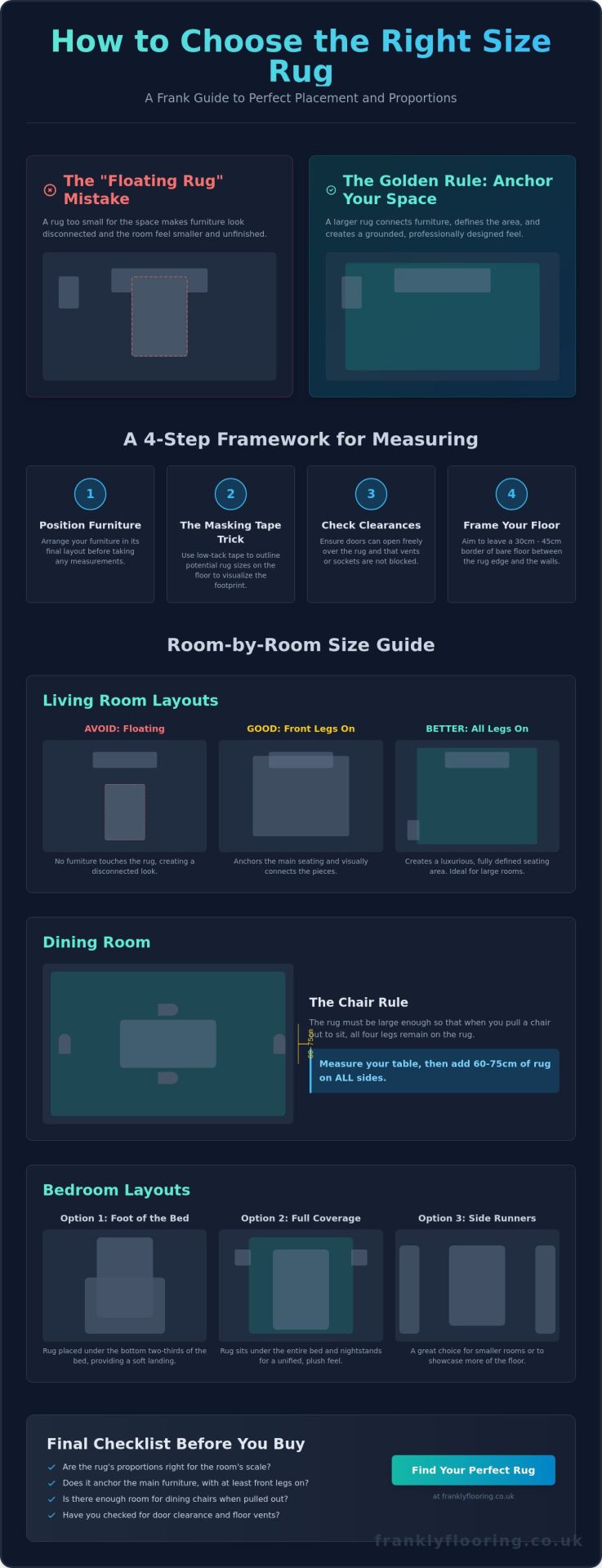
People often hesitate to buy a large rug because they worry about the cost or the prospect of covering up their beautiful floors. However, a rug is much more than just a textile floor covering; it is a structural tool that defines the boundaries of your living space. When you are trying to figure out how to choose the right size rug, the first rule is simple: bigger is almost always better. An undersized rug creates what professionals call “Floating Rug” syndrome. This happens when the rug is too small to touch any of the furniture, sitting like a lonely island in the middle of the room. This makes the space feel disjointed, unfinished, and surprisingly smaller than it actually is.
Beyond aesthetics, the right rug size protects your engineered wood flooring from the daily wear of moving chairs and heavy furniture. A well-placed rug acts as a shield against scratches and dents, preserving the longevity of your investment. To maintain a sense of balance, you should aim to leave approximately 20cm of bare floor visible around the perimeter of the rug to prevent the room from feeling cramped.
The “Postage Stamp” Mistake
Small rugs often make a room look cluttered rather than cosy. When a rug is too small, it fails to anchor the furniture, which makes your sofa and chairs look like they are drifting away. This “undersizing” negatively impacts the perceived quality of your furniture; even a premium sofa can look cheap if it is paired with a rug that resembles a postage stamp. You can identify if your current rug is working against your room’s flow by looking at the legs of your furniture. If none of the legs are touching the rug, the scale is likely wrong. A rug should feel like a foundation, not an afterthought.
Creating Visual Boundaries
In many UK homes, especially those with open-plan layouts, rugs are essential for “zoning.” They create distinct visual boundaries between the dining area and the lounge without the need for physical walls. By 2026, design trends are moving even further toward a “wall-to-wall” feel with area rugs, where the rug covers the vast majority of the floor space to create a grounded, serene environment. This approach helps to dampen sound and adds a layer of warmth that is particularly welcome in larger, multi-functional spaces. When you know how to choose the right size rug for these zones, you create a home that feels organized and intentional. The relationship between the rug edges and your wall perimeters should be consistent, ensuring the rug feels like it belongs to the architecture of the room rather than just being dropped into it.
This principle of using design to define a space is also vital in business; for instance, companies like LK Florist specialize in professional arrangements that help anchor the aesthetic of corporate environments, demonstrating how intentional decor can define a professional atmosphere regardless of the setting.
How to Measure Your Space: A Frank Framework
Measuring for a rug is where most people go wrong. They rely on imagination rather than physical evidence. To get this right, you must follow a logical sequence. Start by clearing your floor space and moving your furniture into its permanent position. Don’t measure based on where you think the sofa might go. Measure where it actually sits. Once the layout is fixed, you can begin the process of understanding how to choose the right size rug by physically outlining potential dimensions on your floor.
A critical detail often overlooked is the floor border. For a balanced look, you should aim to leave between 30cm and 45cm of visible flooring between the edge of the rug and the walls. This creates a frame that highlights your floor’s finish while ensuring the rug doesn’t look like it was cut to fit the room poorly. While you’re at it, check for floor vents or floor-mounted sockets that a rug might obstruct. It’s better to find these obstacles now than when you’re trying to lay down a heavy piece of wool.
The Masking Tape Trick
Visualising a rug’s footprint is difficult with just a metal tape measure. Instead, use low-tack masking tape to “draw” different rug sizes directly onto your floor. This allows you to test standard UK sizes, such as 120x170cm or 160x230cm, in situ. Once the tape is down, walk around the room. Does the edge of the “rug” sit where you might trip over it? Does it allow for a natural walkway? If the tape feels too small under your feet, the rug will feel even smaller once it arrives. If you find you need a specific size to fit your space perfectly, you can always view our selection of rugs to find the right match.
Accounting for Door Swings and Transitions
One of the most frustrating mistakes is buying a beautiful rug only to realise the lounge door won’t open over it. Measure the gap between the bottom of your door and the floor surface. If you have a particularly low-clearing door, you will need to stick to low-pile options or flatweaves. You also need to consider the transition between rooms. If your rug sits close to a doorway, ensure it doesn’t interfere with the door bar or the threshold strip. A rug that overlaps a transition point can become a trip hazard. It will also wear out prematurely at the edge. For high-traffic entryways, choosing a rug that stops well short of the door swing is a practical necessity that saves both your rug and your sanity.
Room-by-Room Size Guide: Living, Dining, and Bedroom
Once you have mastered the basics of measurement, the next challenge is applying those figures to specific furniture layouts. Every room has a different functional requirement. A rug in a lounge needs to anchor a seating area, while a rug in a dining room must facilitate movement. Knowing how to choose the right size rug for these varied environments requires a shift in perspective from pure floor coverage to furniture interaction. In the UK, where room sizes can be compact, finding the balance between a rug that is too small and one that overwhelms the space is a common hurdle.
The Living Room Anchor
In the living room, your rug should act as the glue that holds your seating arrangement together. There are three standard approaches. The “All Legs On” rule requires a large rug where every piece of furniture sits entirely on the textile. This creates a cohesive, high-end feel but requires significant floor space. The “Front Legs On” rule is the most popular choice for British homes; it anchors the furniture by tucking about 20-30cm of the rug under the front of the sofa and chairs. This still defines the zone without needing a massive rug. The “Coffee Table Only” approach should be avoided if possible, as it often leads back to the floating rug issue discussed earlier. Balancing your rug with your quality furniture ensures the room feels proportional and intentional rather than cluttered.
The Dining Room Clearance
The dining room is where most sizing errors occur. You aren’t just measuring the table; you are measuring the chairs in use. The “Chair Pull-Out” rule is non-negotiable. You must add at least 60cm to 75cm to all sides of your table dimensions. This ensures that when a guest pulls their chair out to sit down, the back legs stay on the rug. If the rug is too small, chairs will catch on the edge, creating a “danger zone” for trips and damaged rug borders. We recommend flatweave rugs for this space. They allow chairs to slide easily and are much simpler to clean than deep-pile alternatives.
Bedroom Comfort Zones
A bedroom rug is about the “soft landing” when you wake up. For a king or queen bed, the most effective layout is placing a large rug horizontally under the bottom two-thirds of the bed. This allows the rug to extend at least 45cm beyond the sides and foot of the bed, giving you plenty of room to walk on. If your room is too narrow for this, the “Twin Runner” alternative is a frank and practical solution. Placing a long runner on either side of the bed provides that same comfort without the expense of a large area rug that is mostly hidden under the mattress. For hallways, ensure your runner leaves a consistent border of floor on all sides to maintain a clean, architectural look.
Rug Sizing for Different Floor Types
Choosing a rug isn’t just about the furniture sitting above it; it’s about the technical requirements of the floor beneath it. When you are learning how to choose the right size rug, you must consider how that textile interacts with hard surfaces. A rug that is too large might hide the very floor you invested in, while one that is too small can look like an afterthought on a vast expanse of wood or vinyl. The goal is to create a symbiotic relationship where the rug protects the floor while allowing its natural character to shine through.
Technical considerations are equally important. For instance, the weight and size of your rug can impact the performance of floating floors. While area rugs are generally safe, an exceptionally heavy, oversized rug can occasionally pin the floorboards too tightly, potentially restricting the natural expansion and contraction required by the expansion gap. Additionally, rug backing material matters for LVT floors because certain rubber or latex backings can cause permanent chemical discolouration through plasticizer migration. Always check that your rug is compatible with your specific floor type before laying it down.
Rugs on LVT and Laminate
If you have recently installed high-quality laminate flooring, you likely want to show it off. The frank truth is that you don’t need to cover every square inch to protect your home. We recommend leaving a generous border of the underlying floor visible, particularly in hallways and lounges. This allows the floor’s texture and grain to frame the rug, creating a layered look that feels more sophisticated. In high-traffic areas, use a rug size that covers the primary walking path to prevent surface scratches, but ensure the rug stops at least 20cm before any transitions to keep the floor’s character visible.
The Role of Underlay
A rug is only as good as the underlay beneath it. On hard surfaces like vinyl or laminate, an anti-slip underlay is a safety necessity. It also serves a structural purpose in your sizing strategy. Underlay effectively adds “size” to your rug by preventing it from bunching, shifting, or curling at the corners, which are common issues that make a rug look smaller and messier than it actually is. When purchasing, always size your underlay to be slightly smaller than the rug itself, approximately 2-5cm shorter on all sides. This ensures the underlay remains completely hidden while providing a firm, flat foundation. If you are looking to finish your room with the perfect anchor, you can find the right rug for your floor within our curated collection.
Final Checklist: Before You Hit “Buy”
Before you commit to a purchase, take a breath. You’ve followed the steps to understand how to choose the right size rug, but a final verification prevents a logistical headache later. Go back to your masking tape outlines. Measure the tape itself with a metal rule. Don’t rely on the dimensions you thought you were taping; verify what’s actually on the floor. It’s much easier to adjust a tape line now than it is to repackage a heavy 3-metre rug for return.
Check the pile height against your door clearances one last time. A rug that looks perfect in a photo might be a nightmare if it prevents your lounge door from opening more than halfway. Beyond physical size, consider the material’s resilience. A high-traffic hallway needs a durable synthetic or flatweave, whereas a bedroom can handle a plush, high-pile wool. If the material doesn’t match the room’s purpose, even the perfect size won’t save the rug from premature wear. Ensure the rug material suits the level of activity in the space to guarantee its longevity.
Standard UK Rug Sizes Reference
While custom sizes exist, most homes will utilize standard dimensions. Understanding these common benchmarks helps you map out your furniture placement more effectively:
- Small (approx 80x150cm): These are best suited for bedsides, small entryways, or as a soft landing in a walk-in wardrobe.
- Medium (approx 120x170cm): A versatile choice that works well for small coffee table zones or to define a reading nook.
- Large (approx 160x230cm): This is the standard choice for most UK living rooms, allowing for the “front legs on” rule for most standard 3-seater sofas.
- Extra Large (approx 200x300cm+): Ideal for anchoring large furniture sets or creating a “wall-to-wall” feel in spacious open-plan areas.
The Frankly Flooring Approach
We believe in straightforward advice and quality materials. We view a rug as a foundational element of your home’s character. It is not just an accessory; it is a structural anchor that defines how you live in a space. Our commitment is to help you find the right fit for your home by providing the technical depth you need without the corporate coldness of typical retailers. We value your floor’s longevity as much as its style, and we take pride in offering products that stand the test of time. If you are ready to complete your room with a rug that actually fits, browse our full range of rugs and flooring today.
Anchor Your Space with Confidence
Selecting a rug is about more than just matching colours; it’s about creating a structural foundation for your home. By prioritising scale and avoiding the “floating rug” mistake, you ensure your furniture feels connected and your room feels intentional. We’ve covered the technical side of how to choose the right size rug, from the masking tape trick to checking door clearances and floor compatibility. Now, you have the framework to make a choice that stands the test of time.
At Frankly Flooring, we believe in giving you the straight facts without the sales pressure. As a family-run business with over 20 years of experience, we provide transparent, direct advice on all flooring solutions. We offer national UK delivery on our entire range of rugs and accessories to make your project as stress-free as possible. Find your perfect rug at Frankly Flooring and give your room the grounded, professional finish it deserves. Your ideal layout is just a few measurements away.
Frequently Asked Questions
What is the most common rug size for a living room?
The most common size for a standard living room is 8’x10′ (approximately 240x300cm). This dimension is the industry standard because it comfortably accommodates the front legs of a sofa and two armchairs. It provides enough surface area to anchor the room without overwhelming the floor space. If you’re unsure how to choose the right size rug, starting with this standard measurement is a safe bet for most medium-sized British homes.
Should a rug be wider than the sofa?
A rug should definitely be wider than your sofa. Aim for the rug to extend at least 15cm to 20cm beyond both ends of the seating. This extra width creates a visual frame for the furniture. Without it, the sofa looks like it’s falling off the edges, which makes the entire seating arrangement feel unstable and poorly planned.
How much floor should show around a rug?
You should aim to show between 45cm and 60cm of bare floor around the perimeter in larger rooms. In more compact UK layouts, a border of 20cm to 30cm is often sufficient to maintain balance. This gap ensures the rug looks like an intentional design element rather than a piece of carpet that didn’t quite reach the walls. It helps maintain the architectural lines of your room.
Can a rug be too big for a room?
A rug is too big if it touches the skirting boards or covers the expansion gaps of your laminate or wood flooring. If there is no visible floor border, the room can feel suffocating and the rug starts to look like a poorly fitted carpet. You want the rug to define a specific zone, not replace the entire floor surface.
How do I choose a rug size for a round dining table?
For a round dining table, you should select a round rug that is at least 120cm larger than the table’s diameter. This allows for 60cm of rug on all sides, ensuring that chairs stay on the textile even when guests push them back to stand up. A round rug mirrors the shape of the furniture, creating a harmonious look that rectangular rugs often struggle to achieve in this scenario.
Do I need a rug on top of my carpet?
Layering a rug over a carpet is a practical way to define a space or add texture to a room. It’s particularly useful for protecting your main carpet in high-traffic zones, such as under a coffee table or in a child’s play area. Just ensure you use a specific rug-to-carpet underlay to prevent the top rug from “creeping” or bunching up as people walk across it.
What size rug do I need for a king-size bed?
A king-size bed typically requires a rug that is at least 8’x10′ (240x300cm) or 9’x12′ (270x360cm). The rug should be placed horizontally under the bed, extending about 45cm to 60cm on either side. This provides a comfortable, soft surface for your feet when you wake up. If the rug is smaller than this, it will disappear under the mattress and lose its functional benefit. Knowing how to choose the right size rug for the bedroom is mostly about ensuring that soft landing.
How do I stop my rug from moving on a hard floor?
The only reliable way to stop a rug from sliding is to use a dedicated anti-slip underlay. These pads provide the necessary friction between the rug backing and your hard floor. Beyond safety, underlay prevents the rug from stretching or warping over time. It’s a frank necessity for any rug placed on LVT, laminate, or wood to protect both the user and the floor finish.