
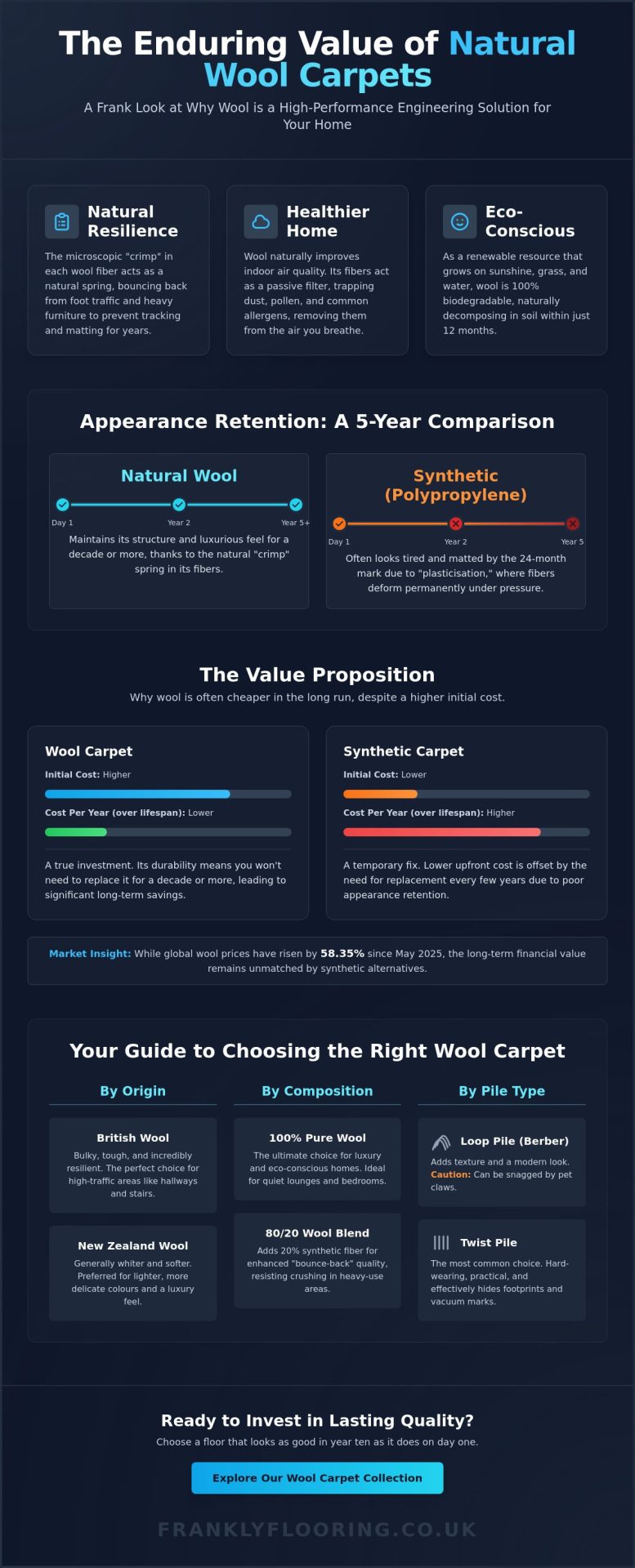
Most people view a premium wool pile as a luxury splurge, but it’s actually a high-performance engineering solution for your home. While global wool prices have risen by 58.35% since May 2025, the long-term financial value remains unmatched by synthetic alternatives. Understanding the natural wool carpet benefits is about more than just a soft feel underfoot. It’s about choosing a material that naturally regulates your indoor environment and stands up to a decade of heavy foot traffic.
We know the common concerns that make homeowners hesitate. You’re likely weighing up 80/20 blends against pure wool, or perhaps you’re worried about the threat of moths and the difficulty of cleaning accidental spills. It’s a lot to consider when you want a floor that looks as good in year ten as it does on day one. We believe in being straight with you about what actually works and what doesn’t.
This guide provides a frank look at why wool remains the gold standard for British homes. You’ll discover how this natural fiber provides superior insulation and a healthier living space, alongside practical advice for protecting your investment. We’ll cover everything from stain management to the reality of choosing long-term quality over a cheap, temporary fix.
Key Takeaways
- Learn how the microscopic “crimp” in wool fibers acts as a natural spring to prevent tracking and keep your floor looking new for years.
- Discover the natural wool carpet benefits for your home’s air quality, including how the material acts as a passive filter for common allergens.
- Understand the sustainable lifecycle of wool and why it’s a truly biodegradable choice that breaks down in soil within just 12 months.
- Get a frank breakdown of the long-term value proposition by comparing the “cost per year” of wool against cheaper synthetic alternatives.
- Identify the practical differences between resilient British wool and softer New Zealand varieties to find the right material for your specific room.
What Is Natural Wool Carpet and Why Does It Matter?
At its core, natural wool is a protein-based fibre called keratin. It’s the same material found in human hair, harvested from sheep through annual shearing that has served as the standard for British flooring for centuries. While synthetic alternatives have flooded the market over the last fifty years, they often struggle to match the inherent performance of this biological marvel. It’s a sustainable, renewable resource that grows back every year, requiring only sunshine, water, and grass.
You’ll typically encounter two main varieties when browsing. British wool is known for being bulky and incredibly resilient. These sheep live on rugged hillsides, so their wool is evolved to be tough and springy. New Zealand wool is generally whiter and softer. It’s the preferred choice for lighter, more delicate colours because the base fibre is so clean. Understanding these differences is one of the key natural wool carpet benefits, as it allows you to pick a material suited to your specific home environment.
The 100% Pure Wool vs. 80/20 Blend Debate
Choosing between these two isn’t a matter of “good” versus “bad.” It’s about finding the right tool for the job. A 100% pure wool carpet is the ultimate choice for eco-conscious homeowners. It’s entirely natural and offers a level of underfoot luxury that’s hard to beat in a bedroom or a quiet lounge. However, don’t be a “blend snob.” The popular 80/20 mix, which incorporates wool-blends in modern carpet, adds about 20% synthetic fibre like nylon. This small addition provides a “bounce-back” quality that’s vital for high-traffic areas like hallways and stairs. It helps the pile resist crushing in the spots where you walk the most.
Understanding Wool Pile Types: Twist, Loop, and Berber
The way the wool is spun and cut dictates how it feels and how long it lasts. A “Twist” pile is the most common British choice. It’s hard-wearing, practical, and hides footprints effectively. “Loop” piles, often referred to as Berbers, are fantastic for adding texture and a modern, architectural look to a room. However, we have to be frank about pets. If you have cats or dogs with long claws, a loop pile is a risky choice. Claws can easily snag the loops, causing pulls that are difficult to repair. For a busy family home, a dense twist or a low-profile loop usually offers the best balance of aesthetics and longevity. Matching the pile type to your room’s usage is the straightforward way to ensure your investment pays off over the next decade.
Natural Resilience: The Science of the “Crimp”
Under a microscope, each wool fibre possesses a complex, three-dimensional spiral structure known as the “crimp.” This isn’t just a physical trait; it’s a sophisticated piece of biological engineering that acts exactly like a coiled spring. When you walk across the room, these fibres compress under your weight and then immediately bounce back to their original position. This mechanical memory is one of the most significant natural wool carpet benefits. It prevents the unsightly “tracking” or “shading” often found in synthetic floors where the pile permanently leans in one direction after only a few months of use.
While a polypropylene carpet might look impressive on the day of fitting, it often begins to look tired and matted by the 24-month mark. Wool is famous for its superior appearance retention, often looking as good in year five as it did in month one. This longevity is supported by a thin, waxy coating of lanolin that surrounds each fibre. This coating provides an inherent barrier against dry soil and grit. It’s a core principle of environmentally conscious design; choosing a material that performs naturally rather than relying on heavy industrial processing to mimic durability.
Crush Resistance and Furniture Recovery
Furniture recovery is where the natural spring of wool truly shines. If you’ve ever moved a heavy sideboard and found deep, permanent indents in a synthetic carpet, you’ve witnessed “plasticisation.” Because synthetic fibres are essentially plastic, they can deform permanently under sustained pressure. Wool fibres are different. Even after years of supporting a heavy sofa, the pile can be revived. A small amount of steam from a kettle or a damp cloth and a warm iron can “reset” the keratin bonds in the fibre, encouraging the pile to stand back up. If you want a floor that handles a changing room layout, you should browse our latest carpet collections to see this resilience in person.
Natural Soil Resistance vs. Chemical Coatings
Wool is naturally harder to soil than it is to clean. The outer layer of the fibre, called the epicuticle, is naturally water-repellent. If you spill a drink, the liquid will often bead on the surface for several seconds rather than soaking in immediately. This provides a vital window to blot the spill before it becomes a permanent stain. Because this protection is built-in by nature, you don’t need the aggressive chemical soil-repellents often sprayed onto synthetic carpets during manufacturing. It’s a straightforward, honest approach to cleanliness that relies on the fibre’s own chemistry rather than a temporary factory coating.
Health and Wellbeing: More Than Just Softness
Choosing a floor for your home isn’t just an aesthetic decision; it’s a choice about the environment you breathe in every day. While we’ve discussed the physical toughness of the fibre, the natural wool carpet benefits extend into the invisible atmosphere of your rooms. Wool acts as a passive air purifier, filtering the air 24 hours a day without requiring a single watt of electricity. It doesn’t just sit there; it actively works to make your home a healthier place to live.
One of the most impressive traits of wool is its ability to trap common allergens. On a hard floor, dust, pollen, and pet dander are easily disturbed by footsteps or draughts, sending them swirling back into your breathing zone. Wool’s complex pile structure captures these particles and holds them securely until you remove them with a vacuum cleaner. This makes it a surprisingly effective choice for allergy sufferers, provided you maintain a regular cleaning routine. Additionally, wool is naturally flame retardant. It has a high ignition temperature and is self-extinguishing, meaning it won’t melt like synthetic fibres if a coal from the fire or a dropped match touches the surface.
Improving Indoor Air Quality (IAQ)
Modern homes are often filled with Volatile Organic Compounds (VOCs) from cleaning products, paints, and new furniture. Wool fibres have a unique ability to absorb and neutralise these common indoor pollutants, including Formaldehyde, Nitrogen Dioxide, and Sulphur Dioxide. According to data from the International Wool Textile Organisation, wool doesn’t just trap these gases; it chemically bonds with them so they aren’t re-released. You can read more about the Benefits of Wool Carpets regarding air filtration. This absorption can continue for up to 30 years, making wool an ideal choice for nurseries and homes with asthmatics where air purity is a priority.
Thermal Insulation and Sound Dampening
The “quiet home” factor is something many people overlook until they experience it. Wool is an exceptional sound absorber, reducing impact noise from footsteps and dampening the ambient echo in large rooms. Beyond the acoustics, it’s a powerful insulator with a high R-value. It prevents heat from escaping through the floorboards, which can lead to a noticeable reduction in energy bills during the colder British months. We always remind our customers that choosing the right carpet involves weighing these invisible performance benefits alongside the colour and texture. It’s about creating a space that feels warm, sounds peaceful, and supports your family’s long-term wellbeing.
Sustainability and the “Frank” Truth About Maintenance
Wool is arguably the most sustainable flooring material on the planet. It’s grown using a simple recipe of sunshine, grass, water, and sheep. Unlike synthetic carpets that rely on petroleum and complex chemical processing, wool is a renewable resource that doesn’t deplete the earth’s reserves. This is a core part of the natural wool carpet benefits that often get overshadowed by talk of soft textures. When a wool carpet eventually reaches the end of its life, it doesn’t have to sit in a landfill for centuries. It’s fully biodegradable; a pure wool pile will break down in soil within 12 months, releasing nitrogen and other nutrients back into the earth.
At Frankly Flooring, we prioritise quality over the “fast fashion” approach to home interiors. Choosing a durable wool floor means you aren’t replacing your carpet every three to five years, which significantly reduces your household’s total carbon footprint. It’s an honest investment in a circular economy where products are designed to last and then return to nature without leaving a trace of microplastics behind. We believe in selling products that stand the test of time rather than those designed for a quick turnover.
The Eco-Friendly Lifecycle
When you compare the carbon footprint of wool to petroleum-based synthetics, the difference is stark. Manufacturing a synthetic carpet requires high-energy industrial processes to turn oil into plastic fibres. In contrast, sheep produce wool naturally every year. This makes wool the ultimate “circular economy” material for flooring. It’s a straightforward choice for anyone looking to reduce their environmental impact without compromising on the comfort or character of their home. We only stock materials that align with this commitment to longevity and environmental responsibility.
Moths, Shedding, and Cleaning: The Honest Guide
Frankly speaking, new wool carpets shed. It’s a common concern for homeowners who see their vacuum bag filling up with fluff in the first few weeks. This isn’t a manufacturing defect; it’s simply the release of short fibres that weren’t fully spun into the yarn. For most high-quality wools, this process stops within about 6 weeks of fitting. To keep the pile looking its best, we recommend using a vacuum with a beater bar. This gently agitates the fibres to lift out grit that can act like sandpaper on the wool. If you don’t remove that grit, it will eventually cut the fibres and lead to premature wear.
We also need to talk about moths. It’s a reality that these pests are attracted to natural proteins like keratin. However, modern manufacturing has solved this. Most reputable brands now treat their yarn with moth-resistant coatings during the dyeing process. When you view our wool carpet range, you’ll find that we only source from manufacturers who take these preventative steps seriously. It’s about giving you peace of mind that your investment is protected from the day it’s fitted. Regular vacuuming and keeping rooms well-ventilated are the most effective ways to ensure your floor remains a moth-free zone for years to come.
The Value Proposition: Why Wool Is Cheaper in the Long Run
We need to be frank about the price tag. When you’re looking at a wool carpet at £40 per square metre alongside a synthetic option for £15, the cheaper choice is tempting. However, the true natural wool carpet benefits are only visible when you look at the cost per year. A high-quality wool floor has a typical lifespan of 15 years if it’s looked after. A cheap polypropylene alternative often looks flat and tired within five to seven years. By the time you’ve replaced that synthetic carpet twice, you’ve spent more on materials and fitting fees than if you’d invested in quality from the start.
Beyond the simple math, wool adds tangible value to your home. When a surveyor or a potential buyer walks into a room, the presence of natural materials makes a statement about the property’s upkeep. It suggests a home where quality was prioritised over quick fixes. To protect this investment, we always recommend a high-quality underlay. Think of it as an insurance policy for your floor; it absorbs the impact of footsteps and prevents the backing of the carpet from rubbing against the subfloor, which can extend the life of your wool pile by several years.
Calculating Your Return on Investment (ROI)
When you factor in the disruption of moving furniture and the recurring cost of fitters, the “buy once, buy well” philosophy makes perfect sense. Choosing a quality engineered wood floor or a premium wool carpet are the two best long-term value choices for any British homeowner. These materials don’t just survive; they age gracefully. While plastic-based fibres “ugly out” as they lose their texture, wool maintains its character and continues to provide thermal and acoustic benefits for over a decade.
Buying Wool Carpet Online with Confidence
Buying flooring without seeing it in your own home is a mistake. We always suggest ordering samples to check the “handle” of the wool and see how the colour changes in your specific light. A shade that looks creamy in a bright showroom might look quite different in a north-facing bedroom. Once you’ve made your choice, don’t forget the small details that ensure a professional finish. Using a quality carpet gripper is essential for keeping the tension correct and preventing the carpet from rucking over time. Browse our wool collection today for an honest, straightforward approach to quality flooring.
Investing in Your Home’s Future Character
Choosing a new floor is a significant decision that impacts your home’s comfort for the next decade. We’ve explored how the natural wool carpet benefits extend from the microscopic crimp of the fibre to the measurable reduction in your energy bills. It’s a material that works as hard as you do; it actively filters your indoor air while bouncing back after years of heavy foot traffic. By choosing wool, you’re investing in a floor that ages with grace rather than one that needs replacing every five years.
As a family-run business with over 20 years of expertise, we don’t believe in high-pressure sales or hiding the truth about maintenance. We offer direct-to-consumer prices on premium wool blends because we want long-term quality to be accessible for every British homeowner. You’ll always receive honest, no-nonsense advice on every product we sell, ensuring you find the right fit for your specific lifestyle without the corporate fluff found elsewhere.
Ready to upgrade your space? Browse our honest range of quality wool carpets and discover a floor that truly lasts. We’re here to help you get it right the first time.
Common Questions About Natural Wool Carpet
Is wool carpet hard to keep clean?
Wool is naturally soil-resistant because of its protective lanolin coating and complex fibre structure. Most liquid spills will bead on the surface for several seconds, giving you a vital window to blot them before a stain forms. A regular vacuuming routine removes about 80% of dry soil before it can damage the pile. We recommend using cleaners approved by The WoolSafe Organisation to maintain the natural protection without using harsh, stripping chemicals.
Do wool carpets shed a lot of fluff?
New wool carpets will shed short fibres during the initial 6 weeks after fitting. This is a standard part of the material’s lifecycle and isn’t a sign of a poor-quality product. You can manage this by vacuuming twice a week with a suction-only head or a gentle beater bar. Once these loose, unspun fibres are cleared from the pile, the shedding stops almost entirely.
Are wool carpets suitable for underfloor heating?
Wool works well with underfloor heating as long as the combined TOG rating of the carpet and underlay stays below 2.5. This limit ensures heat passes through the floor effectively without making your heating system work too hard. Because wool is a natural insulator, it helps retain that warmth for longer once the heating is turned off, which can help lower your energy bills during the winter months.
How do I prevent moths in my wool carpet?
Prevention starts with buying a carpet that has been factory-treated with a moth-resistant finish during the dyeing process. Beyond this, the best defence is regular vacuuming under heavy furniture and in dark corners where moths prefer to hide. Moths thrive in undisturbed, dusty areas; keeping the air circulating and the floor clean removes the environment they need to breed and protects your investment.
Is 80/20 wool mix better than 100% wool?
The best choice depends on the room’s foot traffic. An 80/20 blend is often the superior choice for stairs and hallways because the 20% synthetic content adds extra “bounce-back” and durability. For bedrooms or quiet lounges, 100% pure wool offers a softer feel and better environmental credentials. Both options deliver the core natural wool carpet benefits like air purification and thermal insulation, so your choice should be based on the specific room’s usage.
Why is wool carpet more expensive than synthetic?
Wool is a premium natural resource that requires annual shearing, scouring, and spinning; a process far more labour-intensive than extruding plastic. While global wool prices rose by 58.35% between May 2025 and May 2026, the material’s long lifespan makes it a smarter financial choice. You’re paying for a fibre that grows naturally on sheep rather than a petroleum-based product that mimics quality with temporary factory coatings.
Can wool carpets help with allergies and asthma?
Wool carpets actively improve indoor air quality by trapping dust and pollen in the pile until they are vacuumed away. This prevents these allergens from floating in the air where they can be inhaled by family members. Research from the International Wool Textile Organisation confirms that wool also absorbs and neutralises common indoor pollutants like Formaldehyde, making it a healthier choice for nurseries and homes with asthmatics.
How long should a wool carpet last in a busy home?
A quality wool carpet should last between 10 and 15 years in a typical family home if it’s maintained correctly. Its natural resilience, provided by the microscopic “crimp” in the fibre, prevents the pile from flattening or “uglying out” as quickly as synthetic alternatives. Proper fitting with a high-density underlay and regular cleaning are the two biggest factors in ensuring your floor reaches this double-digit lifespan.