
The cheapest carpet you can buy is often the most expensive mistake a landlord can make. Let’s be frank: if you are still fitting budget “landlord specials” only to replace them every eighteen months, you aren’t saving money; you are hemorrhaging it through skip fees and avoidable void periods. Finding the best flooring for a rental property uk is no longer just about the lowest price point. With the Renters’ Rights Act 2025 now in full effect and Section 21 evictions abolished, tenant retention is the new priority. A property that feels like a home rather than a temporary stopgap is your best asset for maintaining a steady yield.
We understand the frustration of discovering water-damaged kitchen floors or frayed bedroom carpets during a checkout inspection. It’s a cycle that leads to constant deposit disputes and unnecessary stress. This guide will show you how to invest in durability without overspending. We will compare hard-wearing options like LVT and laminate against traditional choices, ensuring your property meets modern safety standards while looking premium enough to command the best possible rent. You’ll learn exactly which surfaces survive the reality of daily life and which ones are best left on the shelf.
Key Takeaways
- Identify why LVT has become the leading choice for modern rentals, combining water resistance with a high-end look that appeals to long-term tenants.
- Calculate the true value of the best flooring for a rental property uk by looking past the purchase price to the total cost of ownership over several tenancies.
- Navigate room-specific challenges with targeted recommendations for moisture-prone areas like kitchens and high-impact zones like hallways.
- Future-proof your investment by selecting materials that meet 2026 demands for pet-friendly living and improved energy efficiency.
- Understand how the right underlay and fitting choices can prevent subfloor damage and keep your property compliant with UK noise regulations.
The Landlord’s Dilemma: Balancing Cost, Durability, and Yield
In the UK rental market, flooring is the hardest-working asset you own. It faces a relentless barrage of foot traffic, furniture drags, and the occasional red wine spill. Unlike a boiler that sits in a cupboard or a roof that stays out of sight, your floor is the foundation of a tenant’s daily experience. If it looks tired, the whole property feels neglected. In 2026, the expectation for “home-standard” finishes has become the baseline. Tenants are staying longer due to the abolition of fixed-term tenancies, and they want a space that feels permanent rather than a temporary stopgap.
The best flooring for a rental property uk is a surface that balances extreme durability and moisture resistance with a neutral aesthetic appeal that complements any furniture.
When we talk about the “best” choice, we aren’t just looking at the price tag on the day of purchase. We evaluate it through a specific lens of utility. For a landlord, a successful flooring choice must tick three boxes:
- Lifecycle Cost: How many tenancies can this floor survive before it needs replacing?
- Speed of Install: How quickly can the material be sourced and fitted to minimize void periods?
- Tenant Demand: Does the floor make the property look premium enough to justify a higher asking price?
Understanding ‘Fair Wear and Tear’ in 2026
The distinction between wear and damage is often where landlord-tenant relationships sour. A “shabby” floor might be considered fair wear and tear by an adjudicator, meaning you cannot claim for it. However, a “damaged” floor, such as a deep gouge in cheap laminate or a burn in a budget carpet, is a different story. Using high-quality LVT significantly reduces these disputes because it is inherently harder to damage than lower-grade common flooring materials. When a floor maintains its integrity over five or six years, you avoid the messy “grey area” of whether a scratch is accidental or through negligence.
Initial Investment vs. Lifecycle Cost
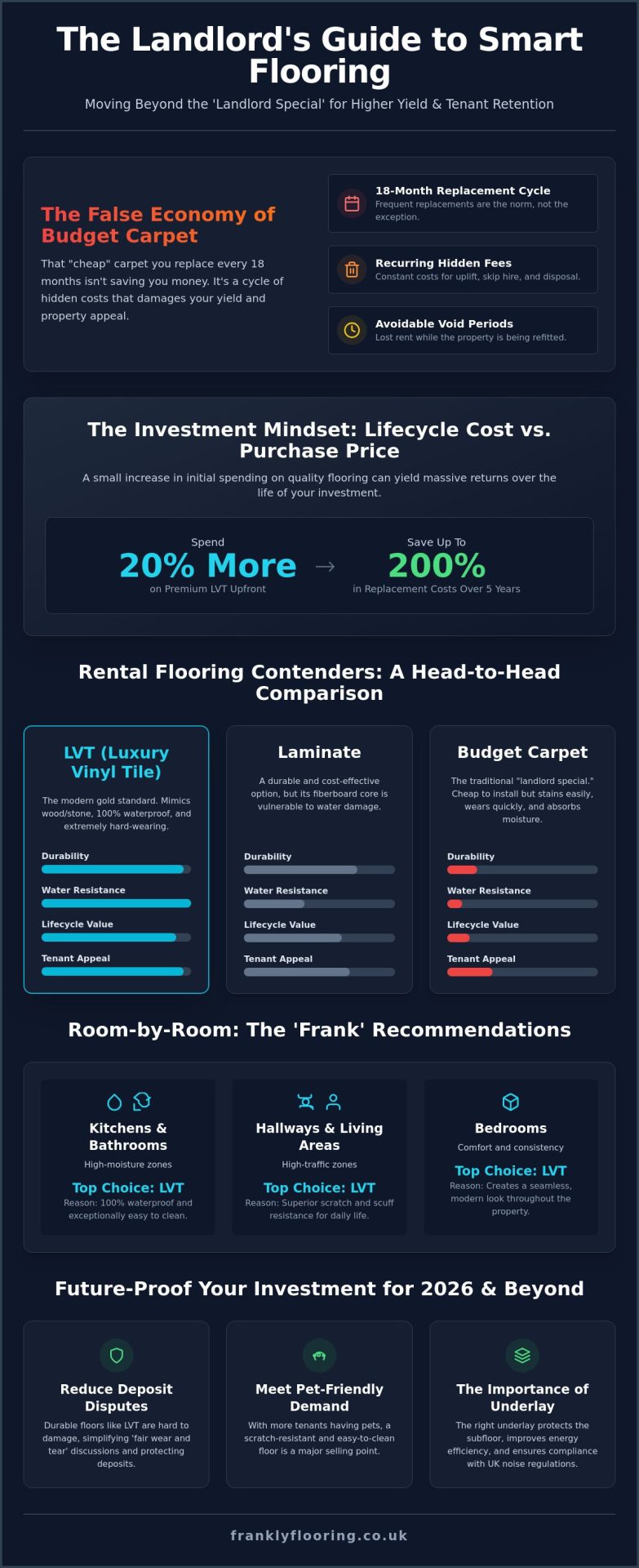
Choosing the cheapest option is rarely the smartest financial move. If you spend 20% more on a premium LVT or a high-spec laminate today, you could save 200% in replacement costs over the next five years. This isn’t just about the price of the material. Every time you replace a floor, you pay for uplift, disposal, and professional fitting. You also risk longer void periods. A property with premium flooring snaps up tenants faster because it looks “move-in ready.” Protecting that investment means getting the basics right, from using the correct underlay to ensuring your fitter uses a high-quality carpet gripper to keep edges secure and professional. Investing in quality now creates a stress-free experience for years to come.
Comparing the Top Rental Contenders: LVT vs. Laminate vs. Carpet
Selecting the right material requires a balance between the room’s function and your long-term maintenance strategy. While the Decent Homes Standard doesn’t strictly mandate specific floor coverings, it does require that all surfaces are safe and suitable for habitation. This means addressing trip hazards like torn carpets or cracked tiles before a new tenant moves in. In 2026, four main categories dominate the UK rental market: LVT, laminate, carpet, and sheet vinyl.
Why LVT is Dominating the 2026 Rental Market
Luxury Vinyl Tile (LVT) has become the gold standard for a reason. It offers unrivalled moisture resistance, which is vital for modern open-plan layouts where the kitchen, dining, and living areas merge. If you are still asking what is LVT flooring, it is essentially a high-performance, multi-layered floor that mimics wood or stone with incredible accuracy. For landlords, the “click” system is popular for its speed of installation. However, glue-down LVT can be a smarter choice for long-term rentals because individual planks can be replaced if a tenant manages to damage them, without lifting the entire floor. It is arguably the best flooring for a rental property uk if you want to attract high-quality tenants who value a premium look.
When to Stick with Carpet
Carpet still holds a vital place in the UK rental sector, particularly in bedrooms. There is a psychological “cosy” factor that hard floors simply cannot replicate. More importantly, carpet is often a necessity for upper-floor flats to comply with noise reduction regulations. To ensure your investment lasts, avoid loop pile carpets which can snag easily. Instead, opt for a polypropylene twist pile. It is exceptionally hard-wearing and can often be cleaned with a mild bleach solution, making it much easier to manage during tenant turnovers. If you are looking for a deal on durable rolls, you can browse our latest flooring bargains to keep your costs down.
Laminate: When It Makes Sense
Laminate remains a strong contender for hallways and living rooms. Recent advancements have introduced water-resistant laminates that can handle the odd spill, although they aren’t as waterproof as LVT. The main advantage of laminate is its surface hardness. It is typically more scratch-resistant than vinyl, which is a major plus if your tenants have pets or heavy furniture. Before you buy, check out our laminate flooring guide to understand AC ratings and thickness, ensuring the product is up to the task of a busy rental home. For high-turnover units where budget is the primary driver, standard sheet vinyl remains a practical solution for bathrooms, though it lacks the premium feel that modern tenants often expect.
Room-by-Room Breakdown: The ‘Frank’ Recommendations
Every room in a rental property faces a different set of challenges. While a bedroom might only see a pair of slippers, the hallway is a battleground of muddy shoes and heavy deliveries. To find the best flooring for a rental property uk, you have to match the material to the specific abuse it will receive. Understanding the fair wear and tear principle is essential here. You cannot expect a cheap carpet in a hallway to last five years, but a high-quality LVT might look brand new after ten.
Hallways are your “first impression” zone. If a prospective tenant walks in and sees frayed edges or stained pile, they’ve already decided the property is poorly maintained. We recommend LVT or a high-grade laminate for these areas. These surfaces are easy to mop and won’t show the “traffic lanes” that plague even the most expensive carpets.
The ‘Wet Room’ Challenge
Kitchens and bathrooms are where many landlords make the mistake of choosing ceramic or stone tiles. Tiles crack. Grout discolours. Once a tile is broken, it becomes a trip hazard and a point of entry for water damage to the subfloor. We consistently recommend LVT or high-quality sheet vinyl over traditional tiles. These materials are warmer underfoot and much more forgiving if a tenant drops a heavy pan. When selecting these, pay attention to slip resistance ratings. Look for an R10 rating as a minimum. This ensures your tenants stay safe on wet surfaces while protecting you from potential liability claims.
Open-Plan Living: Zoning with Flooring
Modern UK apartments often feature open-plan lounge and kitchen areas. Using a single, seamless floor type throughout these zones is a clever trick to make smaller spaces feel significantly larger. LVT is perfect for this. It handles the moisture of the kitchen while providing the aesthetic warmth needed for the living area. When choosing a colour, stick to mid-toned oaks or neutral greys. These are the most versatile options for tenants, providing a clean backdrop that works with any quality furniture they might bring into the home.
Bedrooms remain the one area where comfort should trump pure utility. While you can install hard flooring throughout, a durable twist-pile carpet provides the warmth and noise insulation that tenants appreciate. It’s a simple way to make a rental feel like a home rather than a commercial unit. By choosing the right material for the right room, you reduce your long-term maintenance costs and keep your tenants happy.
Keeping tenants happy often involves these small, thoughtful touches; for instance, some landlords provide welcome packs with high-quality ingredients, and you can learn more about sourcing such premium food products directly from international manufacturers.
Installation and Maintenance: Protecting Your Asset
Buying the best flooring for a rental property uk is only half the battle; how it is installed determines whether that investment lasts five years or fifteen. Professional fitting is generally a tax-deductible revenue expense for UK landlords. This means there is very little financial reason to risk a DIY job that might leave gaps or uneven edges. A poorly fitted floor is not just an eyesore. It is a trip hazard that could lead to liability claims or a failed inspection under the Homes (Fitness for Human Habitation) Act.
Underlay is the unsung hero of a durable rental. It acts as a shock absorber, protecting the delicate click-joints of LVT and laminate from the constant pressure of heavy furniture and foot traffic. Selecting the correct high-quality underlay can extend the service life of a rental floor by up to 30%. It also provides essential sound insulation, which is a legal requirement in many flat conversions to prevent noise complaints from neighbours below.
Subfloor Preparation: The Hidden Cost
You cannot simply lay new flooring over old, damaged surfaces and expect a professional finish. In older UK properties, subfloors are often uneven or prone to rising damp. If you are installing LVT or laminate, the surface must be perfectly level. Even a minor dip can cause the planks to “bounce,” eventually snapping the locking mechanisms. In ground-floor units, a Damp-Proof Membrane (DPM) is a non-negotiable requirement. It prevents moisture from the ground from warping your new floor from the bottom up. Skipping this step is a guaranteed way to ensure your floor fails within twelve months.
The Maintenance Clause
Protection continues after the fitters have left. We recommend including a specific floor care clause in your tenancy agreement. This should outline basic expectations, such as the use of felt pads under heavy furniture legs and the immediate cleaning of spills. To make this easier for your tenants, consider providing a small “Tenant Care Package” on move-in day. A bottle of the correct pH-neutral cleaner and a pack of furniture pads costs very little but sends a clear message that you value the property. This proactive approach makes it much easier to have a frank conversation about damages during the checkout process. If you want to ensure your property is ready for its next tenant, you can browse our full range of durable flooring and accessories to find the right match for your unit.
Future-Proofing: Pet-Friendly and Eco-Trends for 2026
The Renters’ Rights Act 2025 has fundamentally changed how landlords view their properties. With the abolition of “no-fault” evictions and fixed-term tenancies, you are likely looking at longer tenancies and a greater demand for pet-friendly living. While some landlords fear pets will destroy their investment, the savvy ones are using it to command a premium. By selecting the best flooring for a rental property uk, you can open your doors to a wider pool of reliable tenants without worrying about scratched skirting or ruined carpets. Hard-wearing LVT and high-spec laminates are the ultimate “hacks” here. They are virtually claw-proof and don’t trap the allergens or odours that can lead to deep-cleaning costs at the end of a tenancy.
Designing for the ‘Renters Reform’ Era
Longer tenancies mean your flooring needs to survive more than just a couple of years. It needs to last a decade. This is where modular flooring becomes your best friend. If a tenant manages to damage a specific area, being able to replace individual planks of LVT or laminate is much cheaper than recarpeting an entire room. This “modular” approach reduces your long-term maintenance overhead and keeps the property looking fresh for the next inspection. For high-end rentals where a premium feel is non-negotiable, engineered wood flooring provides the luxury tenants expect with a far more stable construction than solid timber, making it less prone to warping in the unpredictable UK climate.
Sustainability and EPC Ratings
The UK government has confirmed that rental properties must reach a minimum EPC rating of C by October 2030. While flooring isn’t the primary driver of these ratings, it plays a supporting role in thermal efficiency. High-quality underlay acts as an extra layer of insulation, helping to keep heat in and energy bills down. This is a major selling point for “Gen Z” and “Millennial” renters who prioritise eco-conscious living. Choosing recyclable materials or those with high recycled content isn’t just good for the planet; it’s a strategic move to attract the modern, value-driven tenant.
Final Checklist: 5 Things to Check Before You Buy
- Wear Layer: Ensure your LVT has a minimum 0.5mm wear layer for high-traffic rental use.
- Moisture Resistance: Stick to waterproof options for kitchens and “all-room” seamless layouts.
- Noise Compliance: Check the decibel rating of your underlay if the property is an upper-floor flat.
- Modular Repair: Confirm that the flooring system allows for single-plank replacement.
- Aesthetic Neutrality: Avoid “trendy” patterns; stick to mid-toned oaks that won’t look dated in 2030.
Investing in quality today ensures a hassle-free tomorrow. When you choose materials based on lifecycle value rather than just the initial price, you protect your yield and your peace of mind.
Secure Your Rental Yield with Smarter Flooring Choices
Success in the 2026 rental market depends on property standards that respect the tenant’s need for a home and the landlord’s need for durability. We have explored how LVT offers the ultimate protection against moisture and pets, why professional installation is a non-negotiable for asset protection, and how the right underlay can significantly extend the life of your purchase. Choosing the best flooring for a rental property uk is ultimately about seeing beyond the initial invoice and focusing on the lifecycle value of the material. A floor that survives three tenancies without needing a skip is the only one truly worth your investment.
As a family-run business with over 20 years of industry experience, we pride ourselves on providing the kind of frank, expert advice you won’t find in a corporate brochure. We offer direct-to-door UK delivery to keep your renovation projects moving without delay. Every product page on our site is designed to give you the honest technical specs you need to make an informed decision. Browse our Landlord-Ready LVT and Carpet Collections today to find a solution that balances cost, style, and survival. You have the knowledge; now it’s time to build a property that stands the test of time.
Frequently Asked Questions
What is the most durable flooring for a rental property?
LVT (Luxury Vinyl Tile) is the most durable choice because it’s built to withstand heavy foot traffic and moisture. Its multi-layered construction, specifically a thick wear layer, prevents the scratches and dents that often ruin other materials. While wood might warp and carpet might stain, LVT remains stable and easy to clean over multiple tenancies. It is the practical choice for landlords who want to fit a floor once and forget about it for a decade.
Is carpet or laminate better for a rental property in the UK?
Laminate is generally superior for living rooms and hallways because it doesn’t trap allergens and is easier to maintain between tenancies. Carpet is better for bedrooms where comfort and noise reduction are the main priorities. In the UK, many leasehold flats require carpet on upper floors to comply with noise regulations. Combining both materials allows you to balance tenant appeal with long-term durability across the whole property.
Can a landlord charge a tenant for new carpet?
You cannot charge a tenant for the full cost of a new carpet due to “betterment” rules. If a tenant damages a carpet beyond fair wear and tear, you can only claim a proportional amount based on its remaining lifespan. Most deposit schemes estimate a rental carpet lasts about five years. If a two-year-old carpet is ruined, you would typically only be entitled to claim roughly 60% of its original value. To maximize this lifespan, professional deep cleaning is essential; specialists like Super Clean Carpets demonstrate how expert care can keep carpets in peak condition for many years.
What colour flooring is best for a rental property?
Mid-toned neutrals are the safest bet for maximizing appeal while hiding daily grime. Avoid very light colours like cream, which show every stain, or very dark colours that highlight every speck of dust. A “greige” or a natural oak finish works well because it complements almost any furniture style a tenant might bring. This versatility helps reduce void periods by making the space feel instantly move-in ready for anyone.
Do I need special flooring for an HMO (House in Multiple Occupation)?
HMOs require flooring that meets stricter fire safety and acoustic standards due to higher occupancy levels. You should look for materials with a high slip resistance rating and enhanced sound-dampening properties to prevent disputes between housemates. Commercial-grade LVT is often the best flooring for a rental property uk when dealing with the heavy traffic and communal usage patterns of a multi-tenant house.
How long should flooring last in a rental property?
Lifespans vary significantly by material and how well the property is maintained. A mid-range carpet typically lasts five to eight years in a rental environment before looking shabby. High-quality laminate should provide ten to fifteen years of service. If you invest in premium LVT, you can expect it to remain in good condition for twenty years or more, provided it was installed correctly on a perfectly level subfloor.
Is LVT worth the extra cost for a landlord?
LVT is absolutely worth the investment because it offers the lowest lifecycle cost of any surface. While the initial purchase price is higher than budget vinyl or carpet, you won’t be paying for replacements every few years. It survives leaks, pet claws, and heavy furniture, which protects your rental yield over time. It is widely considered the best flooring for a rental property uk because it attracts high-quality, long-term tenants.
What is the best flooring for a pet-friendly rental?
LVT is the undisputed winner for pet-friendly properties. It is completely waterproof, meaning accidents won’t soak into the subfloor or cause lingering odours. The tough top layer is also highly resistant to scratches from claws that would ruin real wood or laminate. Providing a pet-friendly floor allows you to tap into a huge market of renters while keeping your maintenance risks and end-of-tenancy cleaning costs to an absolute minimum.