
Choosing the wrong type of flooring is the quickest way to turn a £2,500 room renovation into a permanent headache. You want a floor that looks professional and stands the test of time, yet the debate over glue down vs click lvt often leaves homeowners stuck in a cycle of indecision. It’s completely natural to worry about planks clicking underfoot or edges lifting after just a few months of use. You shouldn’t have to guess whether your subfloor is ready or if you’re about to make an expensive error.
Frankly, you deserve a straightforward answer without the usual corporate sales fluff. We’ve put together this honest comparison to help you decide which LVT fits your specific room and your budget. We’ll explore the technical nuances of subfloor preparation, the long-term durability of each method, and the real-world difference between a DIY project and a professional fitting. This guide provides the clarity you need to ensure your new floor stays seamless and secure for years.
Key Takeaways
- Understand why proper subfloor preparation is the most overlooked part of a project and how it prevents imperfections from showing through.
- Learn the truth about the total cost of glue down vs click lvt, including why cheaper tiles can often lead to higher fitting bills.
- Discover how British temperature shifts affect click-lock joints compared to the rock-solid stability of a bonded, glue-down floor.
- Get a straightforward guide on choosing between fitting speed and long-term durability based on your specific room and budget.
- Find out why investing in a quality foundation and professional fitting is the only way to ensure your new floor stands the test of time.
Understanding the Basics: What is the Difference Between Glue Down and Click LVT?
Choosing the right flooring is a foundational decision for any home renovation. Luxury Vinyl Tile (LVT) has become the go-to alternative for wood or stone because it survives the spills and thrills of a busy UK household. It’s a modern, high-performance material that won’t warp like laminate when it gets wet. Whether you’re looking for a rustic oak effect or a sleek marble finish, LVT provides a durable surface that handles heavy foot traffic without breaking a sweat.
The primary difference between glue down vs click lvt lies in how the product secures itself to your house. Glue down LVT involves bonding individual tiles or planks directly to the subfloor using a specialist high-temperature adhesive. This creates a permanent, immovable surface. Conversely, click LVT features a tongue-and-groove locking system. The planks snap together to create a “floating floor” that sits on top of the subfloor without being physically attached to it.
You’ll find that modern LVT is a significant step up from traditional Vinyl composition tile, offering a more realistic aesthetic and better longevity. Every choice you make regarding these two methods will impact the final feel of your home. Glue down floors feel incredibly solid and quiet underfoot, while click systems are often praised for their straightforward fitting process. The decision doesn’t just change the look; it dictates the level of subfloor preparation required and the total project cost.
The Anatomy of a Glue Down Tile
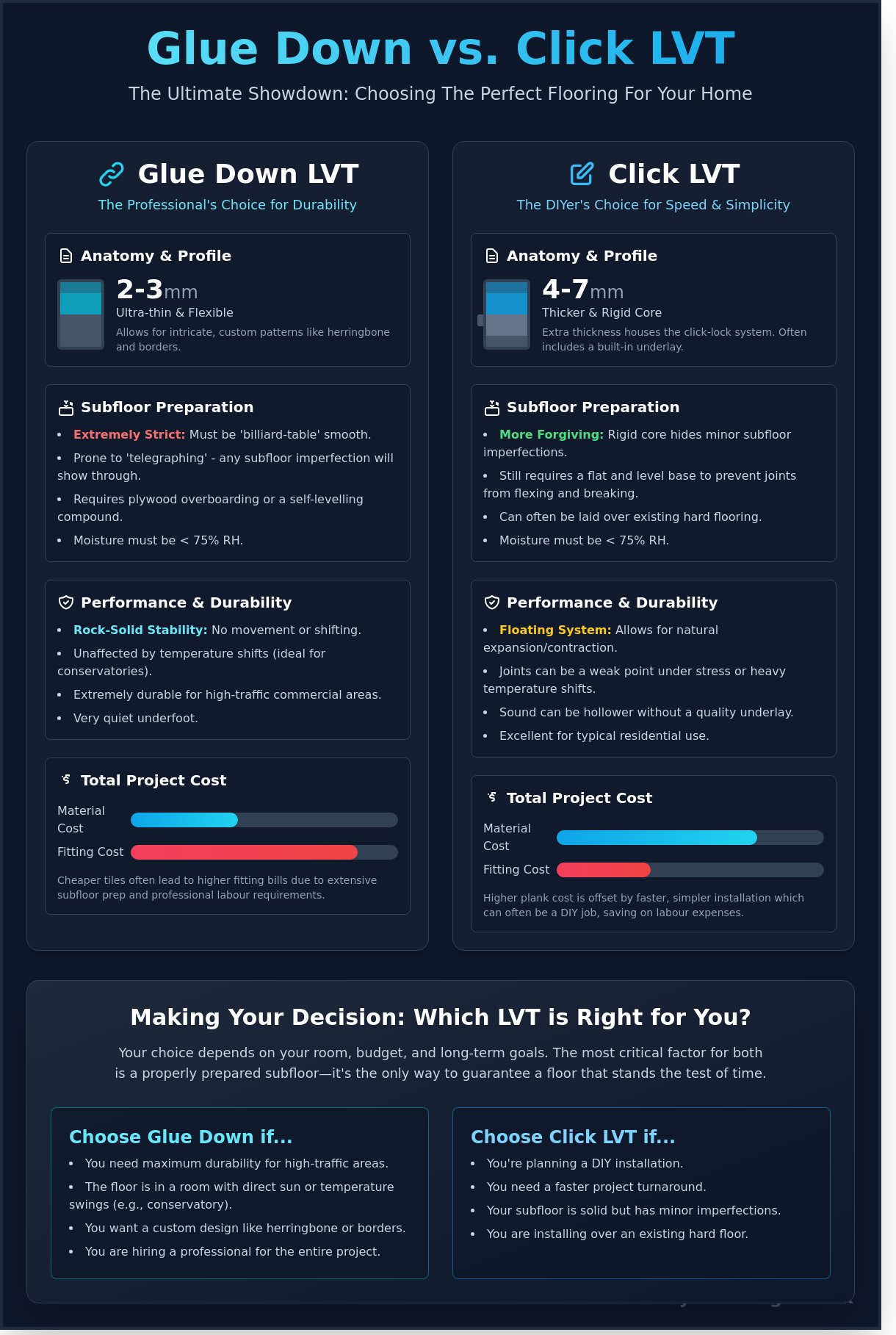
These tiles are deceptively thin, usually ranging between 2mm and 3mm in total thickness. They don’t need the extra bulk required for a locking mechanism, which makes them highly flexible. This flexibility is a massive advantage if you want a bespoke look, such as a herringbone pattern or unique border details. A 0.55mm wear layer typically sits on top of the decorative design, providing a tough barrier against scratches and daily wear while keeping the profile slim and sleek.
The Anatomy of a Click LVT Plank
Click planks are beefier, typically measuring between 4mm and 7mm thick. This extra depth is necessary to house the precision-engineered click-lock joint. Most quality click products now use rigid core technologies like SPC (Stone Plastic Composite), which ensures the floor remains stable even in areas with temperature fluctuations. Many of these planks feature an integrated underlay, which simplifies the fitting process and provides a built-in cushion that helps with sound reduction between floors.
The Frank Truth About Fitting: Subfloors and Preparation
The subfloor is the foundation of your entire project, yet it is frequently the most overlooked element of a home renovation. Skipping the prep work to save a few quid often leads to a floor that fails within months. When weighing up glue down vs click lvt, the condition of your existing floorboards or concrete slab is the primary factor that decides which product is viable for your space.
Glue down LVT is a thin, flexible product, usually around 2mm to 3mm thick. Because it bonds directly to the surface, it is prone to a phenomenon known as “telegraphing.” If there is a single stray screw head, a ridge in the plywood, or a tiny pebble left on the screed, it will eventually show through the surface of the vinyl. You will see every imperfection reflected in the finish. Click LVT is generally 5mm to 7mm thick and features a rigid core, making it more forgiving of minor unevenness. However, even a click system requires a level base to prevent the joints from bouncing and eventually snapping under foot traffic.
In the UK, moisture is a constant concern for any flooring professional. Whether you live in a Victorian terrace with no damp-proof course or a new build with a fresh concrete slab, moisture testing is mandatory. The Contract Flooring Association (CFA) sets the industry standards for these installations, highlighting that subfloor moisture should be below 75% relative humidity before fitting starts. If your floor exceeds this, you will need a damp-proof membrane to prevent the adhesive from failing or the click planks from warping.
Preparing for Glue Down LVT
For a successful glue down finish, the surface must be “billiard-table smooth.” This usually involves over-boarding timber floors with 6mm flooring-grade plywood or applying a high-quality smoothing compound over concrete. Because the adhesive sets quickly and the tiles must be perfectly aligned, we almost always recommend professional fitting. It is also essential to use the correct carpet adhesive spray or a high-temperature glue in rooms with large south-facing windows to prevent the tiles from lifting in the sun.
Preparing for Click LVT
Click-fit is the standard choice for DIY enthusiasts because it avoids the mess and precision required by adhesives. You can often install it over existing ceramic tiles or old floorboards, provided they are level within a 3mm tolerance over a 2-metre area. The most critical step here is the expansion gap. You must leave a 5mm to 10mm gap around the perimeter of the room. British homes experience significant temperature shifts, and without this gap, your floor has nowhere to go when it expands, leading to unsightly buckling. If you want a second opinion on your floor’s condition, you can book a home survey with our team for a straightforward assessment.
Performance and Longevity: Which LVT Stands the Test of Time?
Choosing between glue down vs click lvt isn’t just about the fitting day. It’s about how the floor behaves five or ten years down the line. A bonded floor is essentially part of the building’s structure. Because it’s glued directly to the subfloor, it doesn’t move. Floating click floors sit on top of an underlay, meaning they rely on their own weight and the strength of their joints to stay put. For a floor that feels solid underfoot, glue down wins every time.
The UK climate brings its own challenges. Our homes experience significant temperature shifts between damp winters and humid summers. Click-lock joints are sensitive to these changes. If the floor expands too much, it can peak at the seams. If it contracts, gaps may appear. Glue down LVT remains stable because the adhesive restricts this movement. We always recommend following the Contract Flooring Association installation guidelines to ensure your subfloor is dry and level before any planks go down.
There’s a common myth that click floors sound “hollow” or “clicky” when you walk on them. This usually happens when the subfloor isn’t perfectly flat, leaving tiny air pockets under the planks. While a high-quality underlay can dampen this, a glued floor is naturally quieter because there’s no void for sound to echo in. Both types are technically waterproof, but glue down is better for bathrooms. Since there are no “floating” gaps, water is less likely to seep through to the subfloor and cause hidden issues.
Durability in High-Traffic Areas
Glue down LVT is the industry standard for shops and busy hallways for a reason. It doesn’t shift under heavy footfall. Click LVT is robust, but the locking joints are its weakest point. If your subfloor has even a 3mm deviation, the constant pressure of walking can cause those joints to snap over time. To ensure your lvt flooring lasts, look for a wear layer of at least 0.55mm. This thickness provides the protection needed to withstand pets, children, and heavy furniture without wearing thin.
Maintenance and Easy Repairs
Let’s be frank about damage. If you drop a heavy cast iron pan and gouge a click plank in the centre of your kitchen, you have a problem. To fix it, you often have to “unzip” the floor from the nearest wall, taking up dozens of perfectly good planks just to reach the broken one. With glue down LVT, the process is straightforward. You can heat the single damaged tile with a hairdryer to soften the glue, lift it out, and scrape away the old adhesive. You then simply pop a new tile in its place. To keep both types looking new, follow these steps:
- Use a soft-bristle brush or vacuum to remove grit that can scratch the wear layer.
- Mop with a pH-neutral cleaner; avoid harsh bleach or “mop and shine” products that leave a dull film.
- Place felt pads under furniture legs to prevent deep indentations.
Cost and Practicality: Choosing the Right Floor for Your Room
Choosing between glue down vs click lvt isn’t just about the price tag on the sample board. To get an honest picture of the investment, you have to look at the “fully fitted” cost. Glue down LVT is usually cheaper to buy, with many high-quality options starting around £18 to £25 per square metre. Click systems often sit higher, typically ranging from £30 to £50 per square metre because the locking mechanism adds to the manufacturing cost.
The balance shifts when you factor in the subfloor. Glue down LVT is unforgiving. It requires a surface as smooth as glass, which often means installing 6mm SP101 plywood over timber or applying a self-levelling smoothing compound over concrete. These materials and the professional labour required can add £15 to £20 per square metre to your budget. Click LVT is more thick and rigid, meaning it can sometimes mask minor floor imperfections, potentially saving you a fortune on preparation.
Room choice also dictates the most practical path. We recommend glue down for conservatories and kitchens. In a south-facing conservatory, temperatures can exceed 40°C in the summer. A click floor might expand and buckle under that heat, whereas glue down LVT, fitted with high-temperature adhesive, stays exactly where it’s put. For bathrooms, glue down is also superior because there are no voids under the planks where moisture can sit and stagnate.
The DIY vs Professional Labour Debate
If you’re a confident DIYer, click LVT is your best friend. You can save roughly £15 per square metre by fitting it yourself. However, don’t try to DIY a herringbone pattern. These require complex calculations and precise cuts that usually end in a headache for the uninitiated. If you need a professional, look for a specialist who understands the nuances of laminate flooring and LVT fitting to ensure your warranty remains valid.
LVT in Underfloor Heating Systems
Glue down LVT is the gold standard for underfloor heating. Because the plank is bonded directly to the screed, there’s no air gap to act as an insulator. This results in much faster heat transfer and better energy efficiency. Click LVT works, but it requires a specific low-resistance underlay. Regardless of the system, you must keep the floor temperature below 27°C. Exceeding this limit can soften the adhesive or warp the click joints, leading to a costly failure.
Ready to see the samples in person? Visit our showroom for a frank discussion about your project.
Making Your Decision: Why Quality LVT is a Foundation for Your Home
Deciding between glue down vs click lvt usually comes down to a simple trade-off: speed versus permanence. At Frankly Flooring, we don’t believe in pushing the most expensive option. We believe in the right option for your specific room. If you’re looking for a floor that stays put for twenty years, glue down is the gold standard. If you need a fresh look before a housewarming party next Saturday, click is your best friend.
One truth we always share is that cutting corners on subfloor preparation is a recipe for disaster. Industry data suggests that roughly 90% of flooring complaints in the UK are caused by poor subfloor conditions rather than the product itself. Whether you choose glue down or click, ensure your base is dry, level, and clean. A botched subfloor always costs more to fix later than it does to prepare correctly now. It’s a false economy to skip the self-levelling compound if your floor is uneven.
Before you commit, order samples. A colour that looks vibrant in a bright showroom might look muted in a dimly lit hallway. We provide samples so you can check the texture and tone against your own furniture and lighting. Our role is to provide the expertise and the fitting, leaving you with a result that looks as good in five years as it does on day one. We handle the technical details so you don’t have to worry about the “how,” just the “when.”
When to Choose Glue Down
Glue down is the professional’s choice for large, open-plan kitchen and dining areas. Because it’s bonded directly to the subfloor, it doesn’t expand or contract as much as a floating floor, providing a seamless finish across huge spans. It’s the only way to go if you want the timeless look of herringbone flooring, as the individual blocks need that secure bond to maintain their intricate pattern. It’s a permanent investment for a forever home where longevity is the priority.
When to Choose Click
Click LVT is the ultimate problem-solver for quick renovations. It’s perfect for rental properties where you want a high-end look without a permanent commitment, or for rooms where you might want to refresh the style in five years. While glue down requires a near-perfect surface, the rigid core in many click products can bridge minor imperfections in a subfloor. This often removes the need for a full screed, saving you both time and money during a fast-paced weekend project.
Step Into a Floor Built to Last
Deciding between glue down vs click lvt depends on your specific room and the condition of your subfloor. While glue down offers permanent stability and incredible longevity, click LVT provides a faster, versatile solution for many modern UK homes. We’ve spent 20 years as a family-run business refining our expertise to ensure you get the right fit every time. You won’t find any high-pressure sales tactics here; just frank, honest advice based on two decades of professional craftsmanship. We handle the technical details so you can focus on the final look of your space. With national UK delivery on all flooring and accessories, getting a premium product to your doorstep is straightforward and reliable. Choosing quality LVT isn’t just a quick upgrade; it’s an investment in your home’s character and comfort for years to come.
Browse our full range of Glue Down and Click LVT at Frankly Flooring
We’re ready to help you find a floor you’ll love coming home to.
Frequently Asked Questions
Is glue down LVT better than click?
Honestly, neither is “better” in every scenario, but glue down is the professional standard for longevity. It stays put better in high-traffic areas and doesn’t bounce underfoot. While click LVT is popular for quick DIY projects, glue down offers a more permanent feel and is easier to repair if a single plank gets damaged. It’s the choice we recommend for a “forever home” finish.
Can I lay click LVT over existing floor tiles?
You can lay click LVT over existing tiles provided the surface is perfectly level and the tiles are secure. However, deep grout lines can “telegraph” through the vinyl over time, creating visible dips. If your grout lines are wider than 3mm or deeper than 2mm, you’ll need to use a smoothing compound first to ensure a flat finish. This prevents the click joints from snapping under pressure.
Does glue down LVT need an underlay?
No, glue down LVT does not use a traditional underlay. Instead, it requires a meticulously prepared subfloor, often involving a 6mm plywood base or a smoothing compound. This direct bond is what gives the floor its stability. If you’re comparing glue down vs click lvt, remember that click often has underlay built-in, whereas glue down relies entirely on the quality of your subfloor preparation for its performance.
How much does it cost to fit LVT in the UK?
Fitting costs for LVT typically range between £15 and £25 per square metre for labour alone, according to 2024 UK trade estimates. This price excludes the cost of materials and necessary subfloor preparation like screeding or ply-boarding. Complex patterns like herringbone often command a premium, sometimes increasing the fitting rate by 50% due to the extra precision required. Every hallway and room shape will impact the final quote.
Is click LVT really 100% waterproof?
The planks themselves are 100% waterproof because they’re made of PVC, but the joints between them are not always airtight. If water sits on a click floor for more than 24 hours, it can seep through the seams and trap moisture underneath, leading to mould. For bathrooms or utility rooms, glue down LVT provides a more reliable moisture barrier because the adhesive seals the entire subfloor against occasional spills.
Which LVT is best for a conservatory with large temperature changes?
Glue down LVT is the only choice for conservatories where temperatures can swing from 10°C to over 35°C in a single day. You must use a specialist high-temperature adhesive to prevent the planks from shifting. Click LVT expands and contracts as a single “raft,” which often leads to buckling or gaps when exposed to direct sunlight through large glass doors. We always advise glue down for sun-drenched spaces.
Can I fit glue down LVT myself?
You can fit it yourself, but we wouldn’t recommend it for a first-timer. Achieving a professional finish requires expert subfloor preparation and precise adhesive application. If the subfloor has a deviation of more than 3mm over a 2-metre radius, the planks won’t sit flush. Most homeowners find click systems much more manageable for a weekend DIY project, whereas glue down is best left to a professional fitter.
What is the best wear layer for home use?
A 0.55mm wear layer is the gold standard for a busy family home. While a 0.3mm layer is sufficient for low-traffic bedrooms, the thicker 0.55mm option provides 80% more protection against scratches and dents from pets or furniture. Most premium LVT ranges sold in the UK carry a 20-year or 25-year residential guarantee when the wear layer is 0.5mm or thicker, ensuring your floor stays looking fresh.