
The most expensive floor in the shop isn’t always the best one for your hallway. Most homeowners assume that a higher price tag guarantees a better result, but the truth is that the best material depends entirely on your specific room and subfloor. Choosing between lvt vs laminate flooring shouldn’t feel like you’re studying for an engineering degree. You’re likely staring at technical jargon like AC ratings, SPC cores, and wear layers while worrying if a kitchen leak will ruin your investment. It’s exhausting to feel like you’re one technicality away from a floor failure.
We believe in giving it to you straight. At Frankly Flooring, we’ve spent 20 years helping people cut through the marketing fluff to find what actually works in a busy home. This guide provides an honest, expert breakdown of the pros, cons, and real-world performance of both materials to help you make a confident choice. We’ll show you which options handle moisture best, which are truly DIY-friendly, and where to put your budget to ensure your floor looks great for a decade or more. It’s about finding the right tool for the job without the high-pressure sales tactics.
Key Takeaways
- Learn why LVT is the only frank choice for wet areas like bathrooms, while modern laminate remains a top contender for dry living spaces.
- Understand the core differences between PVC and HDF materials to ensure your floor can handle your household’s daily traffic.
- Uncover the hidden costs of subfloor preparation that often make the total price of lvt vs laminate flooring higher than the sticker price suggests.
- Identify which flooring type is truly easier for a DIY weekend project and why the right underlay is non-negotiable for a professional finish.
- Get a clear verdict on which material wins for your specific budget and room type to avoid the fear of a long-term investment failing.
The Great Flooring Debate: Defining LVT and Laminate in 2026
The 2026 flooring market is a master of disguise. If you place a premium plank of LVT next to a top-tier laminate, even a seasoned professional might need to flip them over to be sure which is which. This visual parity is exactly why the lvt vs laminate flooring debate has become so confusing for homeowners. You aren’t choosing between looks anymore; you’re choosing between two entirely different chemical and structural compositions that react uniquely to your home’s environment.
LVT is a synthetic product built for resilience. Laminate is a wood-based product built for realistic texture and impact resistance. The price gap often seen between these two options isn’t just a marketing trick. It reflects the cost of the raw materials and the complex bonding processes required to make a floor completely waterproof versus just water-resistant. We believe in giving it to you straight. Your choice between lvt vs laminate flooring likely depends on your subfloor and the room’s moisture levels rather than just the price tag on the box.
What Exactly is LVT?
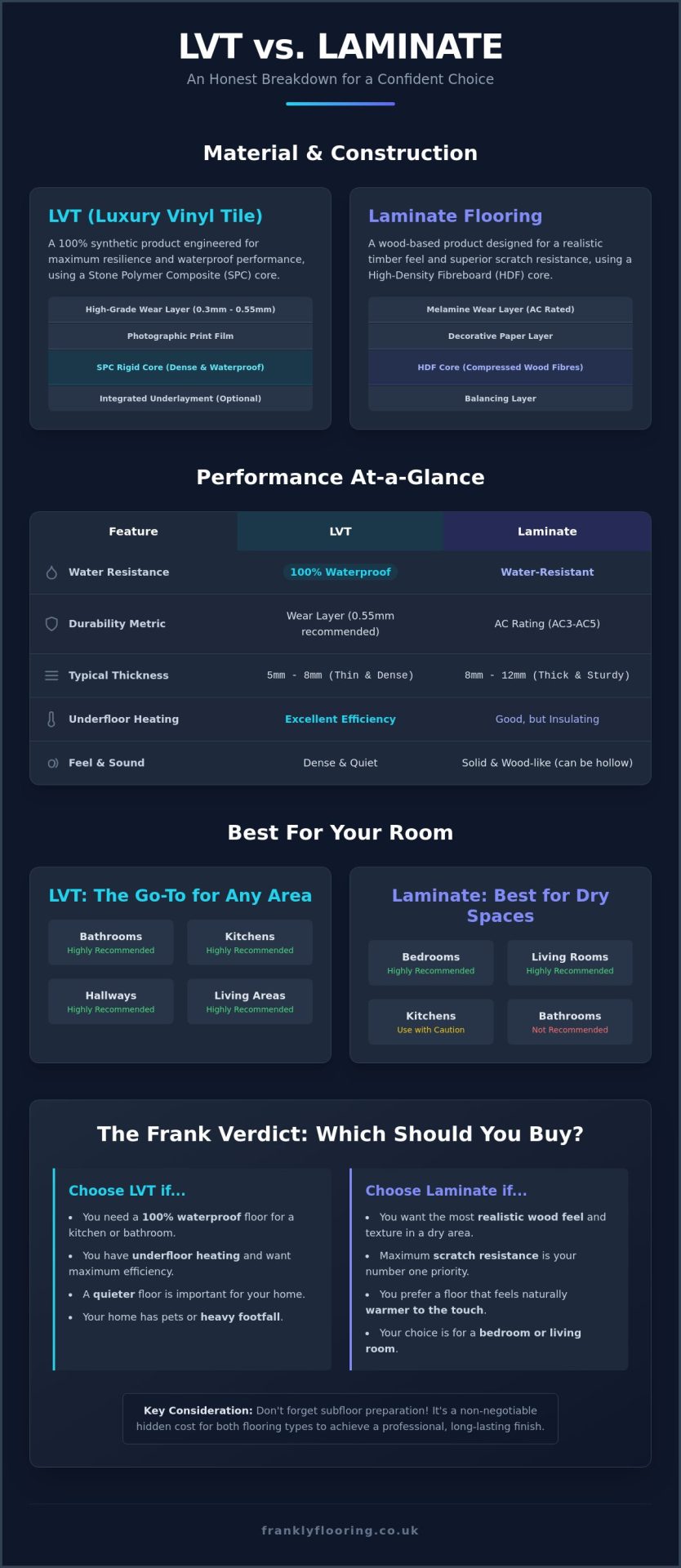
To understand What is LVT flooring, you have to look past the surface. It is a multi-layered sandwich of PVC and other stabilising materials. The Luxury in the name isn’t just fluff. It refers to the high-grade wear layer that protects the photographic print film from scuffs and stains. In 2026, the industry has shifted heavily toward rigid core technology. Most high-quality options now use Stone Polymer Composite (SPC) or Wood Polymer Composite (WPC). These cores make the planks incredibly stable; they won’t expand or contract significantly when your central heating kicks in or the sun hits the floor.
The Evolution of Modern Laminate
Laminate has come a long way from the hollow, clicky floors of the 1990s. Today’s options rely on a High-Density Fibreboard (HDF) core, which consists of highly compressed wood fibres and resin. This core gives the floor a solid, substantial feel underfoot that mimics real timber. On top, a melamine-infused wear layer provides some of the best scratch resistance in the industry. It’s a natural-feeling product that offers warmth and realistic grain textures. This makes it a favourite for bedrooms and living areas where comfort and a traditional wood feel are the priorities. While it remains a wood-based product at its heart, the precision of modern manufacturing has made it more durable than ever before.
Material Science: How LVT and Laminate Differ Under the Surface
Understanding the internal structure of your floor is the only way to predict how it will behave in three years. When comparing lvt vs laminate flooring, the biggest difference lies in the core. LVT uses a synthetic core, typically Stone Polymer Composite (SPC), which makes the plank thin but incredibly dense and waterproof. Laminate relies on a High-Density Fibreboard (HDF) core, which is essentially compressed wood fibres and resin. This makes laminate planks thicker, usually between 8mm and 12mm, providing a more traditional wood feel underfoot.
It’s a common mistake to assume that a thicker plank is always a better plank. In the world of LVT, a 5mm SPC plank is often far more durable and stable than a 10mm budget laminate. LVT is designed for density; it doesn’t need bulk to provide strength. Laminate needs that extra thickness to maintain structural integrity and to provide enough depth for the click-lock system to function without snapping. Regarding sound, laminate can sometimes produce a hollow click when walked on; whereas the dense composition of LVT naturally absorbs more footfall noise, making it the quieter choice for upstairs rooms.
Durability Decoded: AC Ratings vs Wear Layers
Laminate durability is measured by its Abrasion Class (AC) rating. Most homes need AC3 for general use, while AC4 or AC5 is reserved for high-traffic areas or commercial spaces. LVT uses a different metric entirely: the wear layer, measured in millimetres or microns. A 0.3mm wear layer is standard for domestic use, but we recommend 0.55mm for homes with pets or heavy footfall. A frank truth many retailers hide is that a high AC5 rated laminate can sometimes out-scratch a mid-range LVT because the melamine surface on laminate is exceptionally hard, even if it isn’t waterproof.
Thermal Properties and Underfloor Heating
If you have underfloor heating, LVT is the clear champion. Because it is thin and dense, heat transfers through the material almost immediately, making your system more efficient. Laminate acts as a natural insulator because of its wood-based core. While it stays warmer to the touch when the heating is off, it takes longer to warm up once the system is running. You should also consider expansion; laminate expands more with humidity, while LVT is more sensitive to extreme direct heat from floor-to-ceiling windows. Choosing the right flooring accessories and underlay is essential to manage these physical shifts and protect your investment.
The Water Test: Why Room Suitability Dictates Your Choice
Choosing between lvt vs laminate flooring often comes down to a single question: will this floor get wet? In the flooring industry, the terms “waterproof” and “water-resistant” are frequently swapped by sales teams, but they mean very different things for your home. Waterproof means the material itself cannot be damaged by water. Water-resistant means the material can withstand a spill for a limited time before it starts to fail. Understanding this distinction is the difference between a floor that lasts twenty years and one that needs replacing after a single plumbing mishap.
The 2026 market has seen massive improvements in the way laminate handles moisture, but the fundamental chemistry hasn’t changed. Laminate is still a wood-based product at its heart. LVT, on the other hand, is a synthetic powerhouse. When we talk about lvt vs laminate flooring in high-moisture environments, we aren’t just comparing brands; we’re comparing how plastic and wood react to a puddle. For some rooms, the choice is a matter of style; for others, it’s a matter of structural survival.
Bathrooms and Utility Rooms
LVT is the only frank choice for bathrooms, wet rooms, and utility areas. Its PVC core is 100% waterproof. If your kids splash during bath time or a washing machine hose develops a slow drip, the LVT planks will remain completely unaffected. Laminate relies on an HDF core. When moisture penetrates the click-system joints, that wood-based core acts like a sponge. This leads to “peaking,” where the edges of the planks swell and push against each other, creating unsightly ridges that cannot be repaired. Our advice is simple: never put standard laminate in a bathroom. No matter what the warranty claims, the risk of moisture failure is too high for a long-term investment.
Living Areas and Bedrooms
This is where laminate often takes the lead. Because it’s made from compressed wood fibres, it feels naturally warmer and more substantial underfoot than LVT. Modern textures have improved so much that you can feel the grain and knots, giving a bedroom or lounge a genuine sense of cosiness. It also handles minor subfloor imperfections better than thinner materials. If you’re planning a large project for your main living space, checking out a comprehensive laminate flooring guide can help you understand how to manage expansion gaps in open-plan areas. Laminate remains a fantastic, cost-effective winner for dry rooms where comfort and visual depth are your primary goals.
Kitchens and hallways represent the middle ground. A kitchen leak can ruin a laminate floor in hours, yet many homeowners prefer the scratch resistance of an AC5 laminate for high-traffic hallways. If you have a busy household with dogs and muddy boots, LVT provides that extra peace of mind. It handles the transition from the wet garden to the dry hallway without a second thought. If you choose laminate for these areas, ensure you use a high-quality water-resistant range and mop up spills immediately.
Practicalities: Installation, Longevity, and Your Budget
The sticker price on a box of flooring is rarely the final number you’ll see on your bank statement. When weighing up lvt vs laminate flooring, you have to account for the total project cost, which includes underlay, accessories, and the hidden variable of subfloor preparation. A cheap LVT might look like a bargain, but if your subfloor is uneven, the cost of smoothing it out can quickly double your initial estimate. We’ve spent two decades seeing projects stall because these practicalities weren’t considered from the start.
Longevity is another area where honesty is required. A high-quality laminate floor in a bedroom can easily last 15 to 20 years if it stays dry. Premium LVT, particularly rigid core options, often comes with warranties stretching beyond 25 years because the material simply doesn’t degrade like wood-based products. If you’re looking for a “fit and forget” investment for a high-traffic family home, LVT generally offers the best long-term value despite the higher upfront cost.
The Reality of Installation
Laminate is the undisputed king for the weekend warrior. Its thickness and rigid HDF core mean it can “bridge” minor imperfections in your subfloor, making it very forgiving for DIYers. LVT is more demanding. Click-lock LVT is manageable, but glue-down LVT requires a subfloor so flat it looks like a mirror. Any bump or grain in the plywood underneath will eventually “telegraph” through to the surface of the vinyl. To get a professional finish, don’t forget the importance of transitions. Using the right door bars and carpet gripper at the thresholds ensures your new floor meets your existing carpets without a trip hazard.
Maintenance and Long-Term Care
Cleaning these floors requires different approaches. LVT is incredibly hardy; you can use a damp mop and standard floor cleaners without fear. However, you must avoid steam mops, as the intense heat can eventually weaken the adhesive or the core bonds. Laminate is the opposite. It’s more scratch-resistant than most LVT, but it’s vulnerable to moisture. Never use a soaking wet mop on laminate. If water sits in the joints, the HDF core will swell, and the damage is permanent. If a single plank gets damaged, replacing it is possible with both types, but it’s significantly easier with a click-system floor than a glue-down one. To ensure you have everything you need for a successful fit, browse our range of flooring accessories designed for both professional and DIY projects.
The Frank Verdict: Which Floor Should You Actually Buy?
The choice between lvt vs laminate flooring isn’t about finding a “better” product; it’s about finding the right tool for your specific room. We’ve spent 20 years at Frankly Flooring helping homeowners navigate these technical specs, and we’ve learned that the best floor is the one that matches your subfloor and your daily habits. If you try to force a material into an environment it wasn’t designed for, even the most expensive plank will fail within a few years. We want you to feel confident that your investment will stand up to real life.
Laminate remains the champion for dry living areas where comfort and budget are the priorities. It’s the frank choice for bedrooms and lounges because it offers a natural warmth and visual depth that LVT can struggle to replicate at lower price points. If you’re a DIY enthusiast looking for a straightforward weekend project, laminate’s forgiving nature on slightly uneven subfloors makes it the logical winner. It provides a solid, traditional feel underfoot that many people still prefer for their main living spaces.
LVT is the undisputed winner for high-moisture areas and heavy-traffic zones. If you’re flooring a bathroom, kitchen, or a hallway that sees muddy boots and wet paws, the 100% waterproof nature of LVT is non-negotiable. While the upfront cost and subfloor preparation requirements are higher, the long-term value is superior for busy family homes. It’s a “fit and forget” solution that offers incredible stability and durability, making it the best option for those who view their flooring as a 25-year investment rather than a 10-year refresh.
Making Your Final Selection
Before you commit, run through this quick decision matrix to see which way you should lean:
- Choose Laminate if: You’re flooring a bedroom or lounge, working with a tighter budget, or planning to install the floor yourself over an existing subfloor.
- Choose LVT if: You’re flooring a bathroom or kitchen, have underfloor heating, or need a floor that can handle significant spills and high footfall without swelling.
We always recommend ordering samples of both materials. Lighting in a shop or on a screen is never the same as the lighting in your own hallway. Test how the textures feel and how the colours shift as the sun moves across your room. Once you’ve chosen, ensure you have the correct trims to manage the transition between different rooms for a seamless finish.
Start Your Flooring Journey with Frankly Flooring
As a family-run business with national UK delivery, we pride ourselves on providing the straight-talking advice you need to get the job done right. You can browse our extensive LVT flooring collection to find a style that suits your home’s character. If you’re looking to complete the look of your room, we also offer a range of quality furniture built to the same high standards as our floors. Our goal is to make your home renovation as stress-free as possible, from the first click to the final plank. Explore our full range of flooring and accessories today and find the perfect foundation for your home.
Take the Next Step Toward Your Ideal Home
Choosing between lvt vs laminate flooring doesn’t have to be a gamble. You now understand that while laminate offers unmatched warmth and value for bedrooms, LVT is the essential choice for moisture-prone areas like kitchens and bathrooms. It’s about matching the material to the room’s demands and being honest about your subfloor preparation needs before the first plank is laid. Getting the foundation right is the only way to ensure your new floor looks as good in ten years as it does on day one.
At Frankly Flooring, we use our 20+ years of industry expertise to help you find the right fit without the high-pressure sales pitch. As a family-run business, we prioritise integrity and direct-to-consumer savings to ensure your investment lasts for decades. Whether you need a durable rigid core LVT or a scratch-resistant laminate, we’ve got the stock and the accessories to get the job done right. We believe in providing the tools and the truth so you can renovate with total confidence.
Browse our full range of LVT and Laminate flooring with national UK delivery and start your transformation today. We’re here to help you build a home you’re proud of.
Frequently Asked Questions
Is LVT better than laminate for homes with pets?
LVT is the superior choice for households with pets. Its waterproof construction handles liquid accidents without swelling, and the dense PVC core absorbs the sound of clicking claws. While a high AC-rated laminate is very scratch-resistant, the risk of moisture damage from water bowls or accidents makes LVT the safer long-term investment for animal lovers.
Can I lay LVT directly over my old laminate flooring?
No, you should never lay LVT directly over old laminate flooring. Laminate is a floating floor that expands and contracts with temperature changes; placing a new floor on top creates an unstable foundation that will cause the joints to fail. For a professional result, you must remove the old laminate and ensure the subfloor is flat, dry, and structural before starting your LVT installation.
Is laminate flooring cheaper to install than LVT?
Laminate is typically cheaper to install because it is more forgiving of subfloor imperfections. The thicker HDF core can bridge small dips and bumps that would require expensive smoothing compounds if you were fitting LVT. Because laminate is the gold standard for DIY fitting, many homeowners save significantly by avoiding professional installation costs altogether, whereas LVT often requires expert subfloor preparation to prevent “telegraphing” later on.
How long does LVT flooring typically last compared to laminate?
LVT generally offers better longevity, with many premium rigid core products lasting 25 years or more in a domestic setting. Laminate typically has a lifespan of 15 to 20 years. Because LVT is entirely synthetic, it doesn’t suffer from the moisture-related degradation that eventually affects wood-based laminate cores. When comparing lvt vs laminate flooring for a “forever home,” the extra upfront cost of LVT usually pays off through its extended life cycle.
Do I need underlay for both LVT and laminate flooring?
Yes, both flooring types require specific underlay, unless the planks come with a pre-attached backing. Laminate needs underlay to provide a moisture barrier and sound reduction, while LVT requires a high-density, pressure-resistant underlay to support its thinner profile. Using the wrong underlay is a common mistake that can void your warranty and cause the click-locking systems to snap under the weight of foot traffic.
Which flooring is more scratch-resistant if I have heavy furniture?
High-quality laminate with an AC5 rating is often more scratch-resistant than mid-range LVT due to its hard melamine surface. However, LVT with a Stone Polymer Composite (SPC) core is much better at resisting dents from heavy furniture legs. If you choose laminate, use felt pads to prevent surface scratches. For LVT, ensure you select a product with a 0.55mm wear layer to handle the rigours of a busy room.
Can I use a steam mop on LVT or laminate floors?
You should avoid using a steam mop on both LVT and laminate floors. The intense heat and pressurised moisture can weaken the adhesive bonds in LVT or force water into the HDF core of laminate, leading to irreversible swelling and “peaking” at the joints. Stick to a well-wrung damp mop and a manufacturer-approved cleaner to maintain your floor’s finish without risking the structural integrity of the planks.
Is LVT flooring waterproof enough for a kitchen?
LVT is perfectly waterproof and is the most reliable choice for a modern kitchen. Its synthetic construction means it won’t swell or warp if a dishwasher leaks or a drink is spilled. While some modern laminates offer water resistance for a few hours, only LVT provides the total peace of mind required in a room where plumbing mishaps and heavy cleaning are part of daily life.